WB
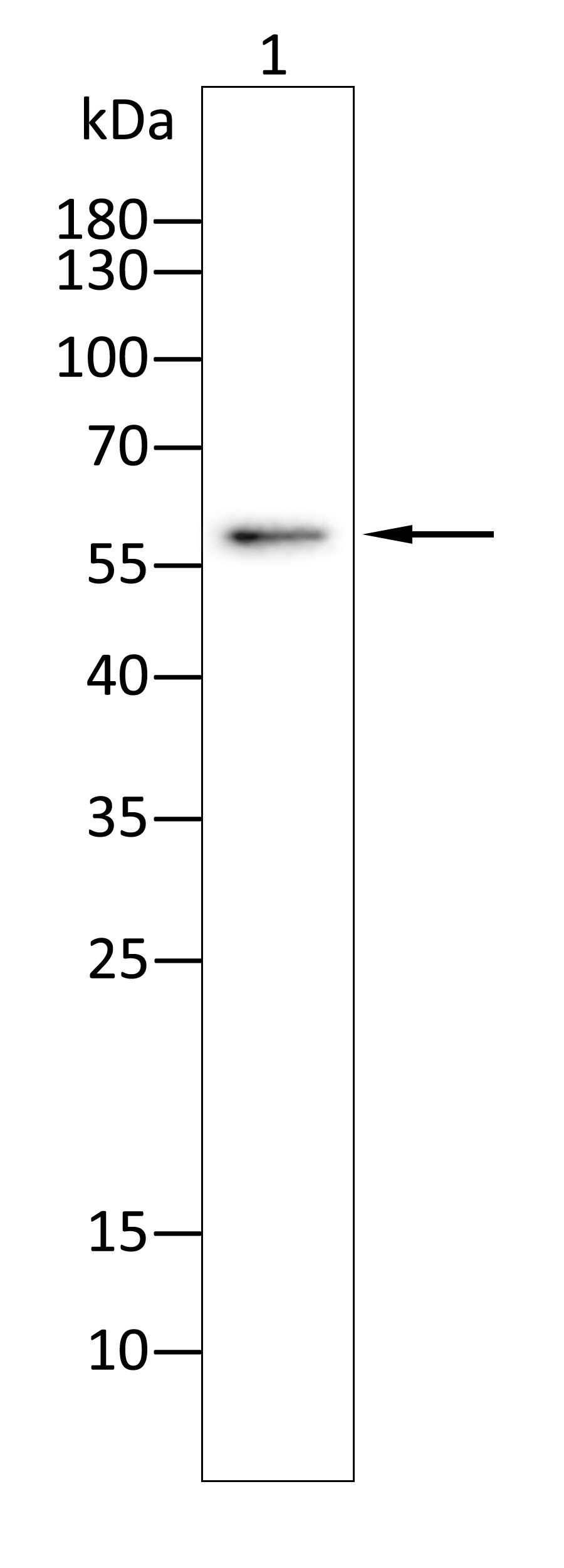
Western blot analysis using OPRL1 antibody against THP-1(1) cell .| Product Name | Anti-OPRL1 antibody-poly-HRP |
|---|---|
| Antibody Type | Primary Antibodies |
| Immunogen | Polypeptide |
| Conjugation | poly-HRP |
| Clonality | Polyclonal |
|---|---|
| Isotype | IgG |
| Host Species | Rabbit |
| Species Reactivity | HumanMouseRat |
| Concentration | 1mg/ml |
| Purification | Protein A |
| Gene Symbol | OPRL1 |
|---|---|
| Gene Synonyms | KOR-3 KOR3 LC132 MOR-C morc NOCIR NOP NOPr OFQR OOR OPRL ORGC ORL1 PNOCR XOR1 |
| Gene Full Name | opioid related nociceptin receptor 1 |
| Gene Summary | The protein encoded by this gene is a member of the 7 transmembrane-spanning G protein-coupled receptor family, and functions as a receptor for the endogenous, opioid-related neuropeptide, nociceptin/orphanin FQ. This receptor-ligand system modulates a variety of biological functions and neurobehavior, including stress responses and anxiety behavior, learning and memory, locomotor activity, and inflammatory and immune responses. A promoter region between this gene and the 5'-adjacent RGS19 (regulator of G-protein signaling 19) gene on the opposite strand functions bi-directionally as a core-promoter for both genes, suggesting co-operative transcriptional regulation of these two functionally related genes. Alternatively spliced transcript variants have been described for this gene. A recent study provided evidence for translational readthrough in this gene, and expression of an additional C-terminally extended isoform via the use of an alternative in-frame translation termination codon. [provided by RefSeq, Dec 2017] |
| Alternative Names | a novel member of the opiod receptor family alternatively spliced variant e of KOR3 G protein-coupled receptor G-protein coupled receptor G-protein-coupled receptor K3 opiate receptor kappa-type 3 opioid receptor kappa3-related opioid receptor KOR-3E KOR3A KOR3B KOR3C LC132 Receptor-Like N/OFQ receptor nociceptin receptor ORL1 nociceptin/ orphaninFQ receptor nociceptin/orphanin FQ receptor opiate receptor-like 1 opioid receptor opioid receptor-like 1 OPPRL1 OPRL1 ORL1 orphanin FQ receptor orphanin FQ receptor-a orphanin FQ receptor-b orphanin FQ receptor-e peptide receptor ROR-C seven transmembrane G protein-coupled receptor splice variant of KOR-3 gene |
| Molecular Weight(MW) | 40kDa(observed:57kDa) |
| Source | Rabbit |
| Cellular Localization | Cell membrane |
| SwissProt ID | P41146 |
|---|
WB
Western blot analysis using OPRL1 antibody against THP-1(1) cell .| Form | Liquid |
|---|---|
| Storage Instructions | Shipped at 4°C. Store at +4°C short term (1-2 weeks). Store at -20°C long term. Avoid freeze / thaw cycle. |
| Storage Buffer | Purified antibody in PBS with 0.05% PC300,40% Glycerol. |


