ICC/IF
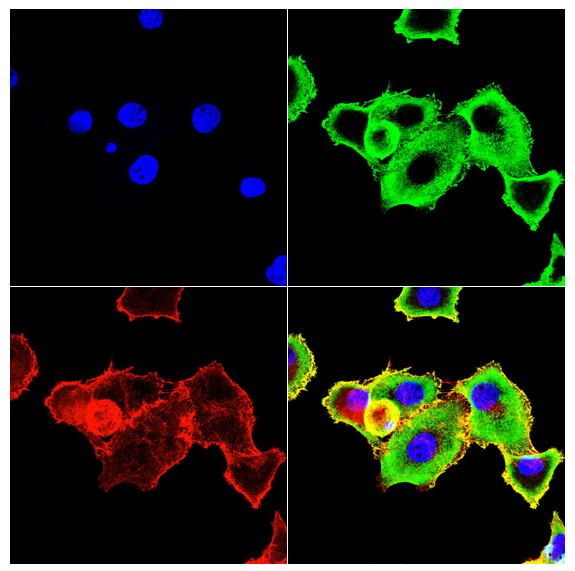
Immunofluorescence analysis of PANC-1 cells using CASP12 antibody (green). Blue: DAPI fluorescent DNA dye. Red: Actin filaments have been labeled with Omnimabs® 594-Phalloidin.| Product Name | Anti-CASP12 antibody-AF488 |
|---|---|
| Antibody Type | Primary Antibodies |
| Immunogen | Polypeptide |
| Conjugation | AF488 |
| Clonality | Polyclonal |
|---|---|
| Isotype | IgG |
| Host Species | Rabbit |
| Species Reactivity | HumanMouseRat |
| Concentration | 1mg/ml |
| Purification | Protein A |
| Gene Symbol | CASP12 |
|---|---|
| Gene Synonyms | CASP-12 CASP12P1 |
| Gene Full Name | caspase 12 (gene/pseudogene) |
| Gene Summary | Caspases are cysteine proteases that cleave C-terminal aspartic acid residues on their substrate molecules. This gene is most highly related to members of the ICE subfamily of caspases that process inflammatory cytokines. In rodents, the homolog of this gene mediates apoptosis in response to endoplasmic reticulum stress. However, in humans this gene contains a polymorphism for the presence or absence of a premature stop codon. The majority of human individuals have the premature stop codon and produce a truncated non-functional protein. The read-through codon occurs primarily in individuals of African descent and carriers have endotoxin hypo-responsiveness and an increased susceptibility to severe sepsis. Several alternatively spliced transcript variants have been noted for this gene. [provided by RefSeq, Feb 2011] |
| Alternative Names | CASP-12 caspase 12 pseudogene 1 OTTMUSP00000045799 OTTMUSP00000045802 OTTMUSP00000045803 UNQ9415 |
| Molecular Weight(MW) | 38kDa |
| Source | Rabbit |
| Cellular Localization | cytoplasm;cytosol;endoplasmic reticulum;NLRP1 inflammasome complex |
| SwissProt ID | Q6UXS9 |
|---|
ICC/IF
Immunofluorescence analysis of PANC-1 cells using CASP12 antibody (green). Blue: DAPI fluorescent DNA dye. Red: Actin filaments have been labeled with Omnimabs® 594-Phalloidin.| Form | Liquid |
|---|---|
| Storage Instructions | Shipped at 4°C. Store at +4°C short term (1-2 weeks). Store at -20°C long term. Avoid freeze / thaw cycle. |
| Storage Buffer | Purified antibody in PBS with 0.05% PC300,40% Glycerol. |


