WB
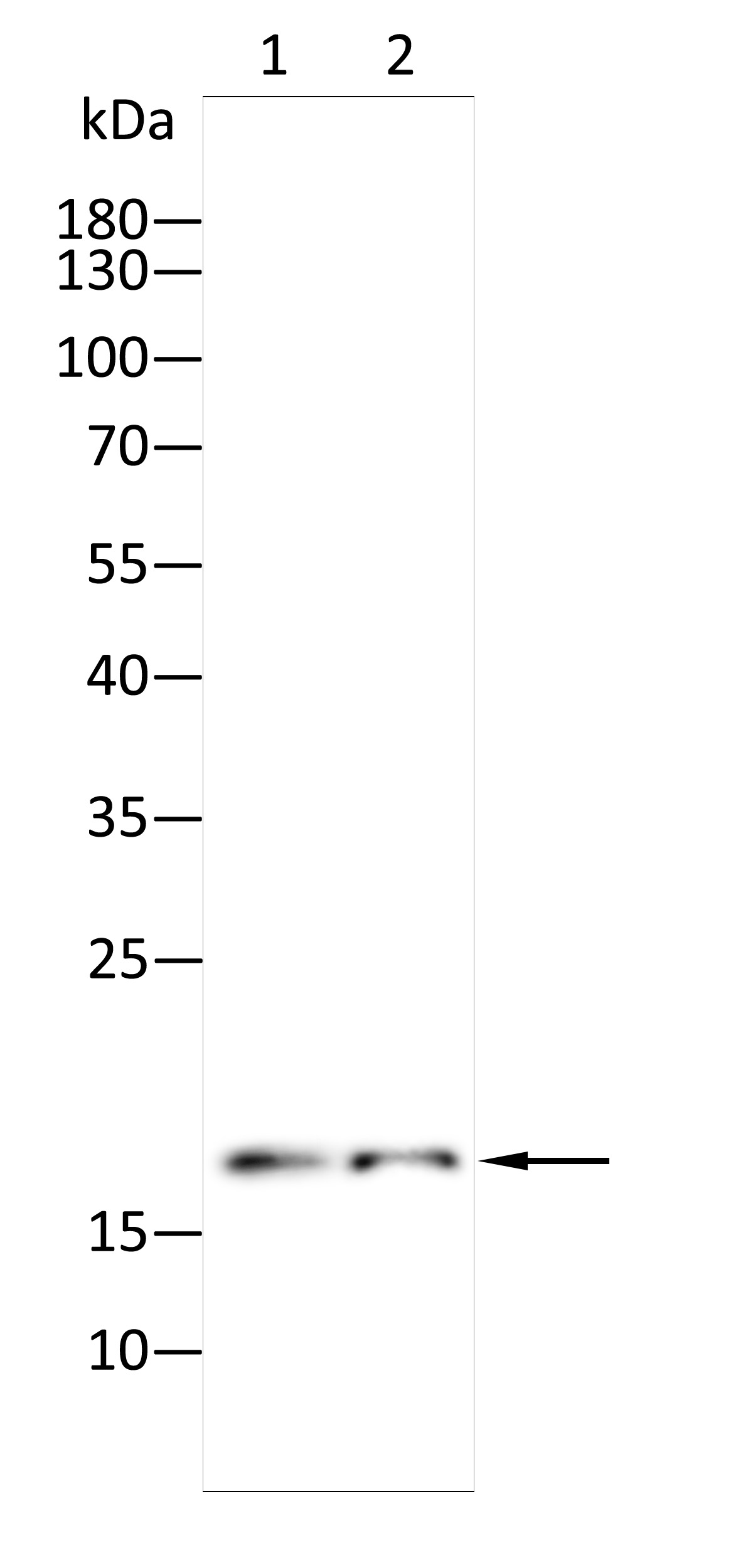
Western blot analysis using SH2D1A antibody against C2C12(1),Huvec(2) cell .| Product Name | Anti-SH2D1A antibody-HRP |
|---|---|
| Antibody Type | Primary Antibodies |
| Immunogen | Polypeptide |
| Conjugation | HRP |
| Clonality | Polyclonal |
|---|---|
| Isotype | IgG |
| Host Species | Rabbit |
| Species Reactivity | HumanMouseRat |
| Concentration | 1mg/ml |
| Purification | Protein A |
| Gene Symbol | SH2D1A |
|---|---|
| Gene Synonyms | DSHP EBVS Gm686 IMD5 LYP MTCP1 RGD1562408 SAP SAP/SH2D1A XLP XLPD XLPD1 |
| Gene Full Name | SH2 domain containing 1A |
| Gene Summary | This gene encodes a protein that plays a major role in the bidirectional stimulation of T and B cells. This protein contains an SH2 domain and a short tail. It associates with the signaling lymphocyte-activation molecule, thereby acting as an inhibitor of this transmembrane protein by blocking the recruitment of the SH2-domain-containing signal-transduction molecule SHP-2 to its docking site. This protein can also bind to other related surface molecules that are expressed on activated T, B and NK cells, thereby modifying signal transduction pathways in these cells. Mutations in this gene cause lymphoproliferative syndrome X-linked type 1 or Duncan disease, a rare immunodeficiency characterized by extreme susceptibility to infection with Epstein-Barr virus, with symptoms including severe mononucleosis and malignant lymphoma. Multiple transcript variants encoding different isoforms have been found for this gene. [provided by RefSeq, Jul 2008] |
| Alternative Names | Duncan disease homolog Duncan disease SH2-protein Duncan's disease FLJ18687 FLJ92177 HGNC:10820 RP5-1052M9.3 SAP SH2 domain protein 1A SH2D1A signaling lymphocyte activation molecule-associated protein signaling lymphocytic activation molecule-associated protein signalling lymhpocyte-activation molecule signalling lymphocyte-activation molecule SLAM associated protein/SH2 domain protein 1A SLAM-associated protein T cell signal transduction molecule SAP T-cell signal transduction molecule SAP |
| Molecular Weight(MW) | 14kDa(observed:17kDa) |
| Source | Rabbit |
| Cellular Localization | Cytoplasm |
| SwissProt ID | O60880 |
|---|
WB
Western blot analysis using SH2D1A antibody against C2C12(1),Huvec(2) cell .| Form | Liquid |
|---|---|
| Storage Instructions | Shipped at 4°C. Store at +4°C short term (1-2 weeks). Store at -20°C long term. Avoid freeze / thaw cycle. |
| Storage Buffer | Purified antibody in PBS with 0.05% PC300,40% Glycerol. |


