WB
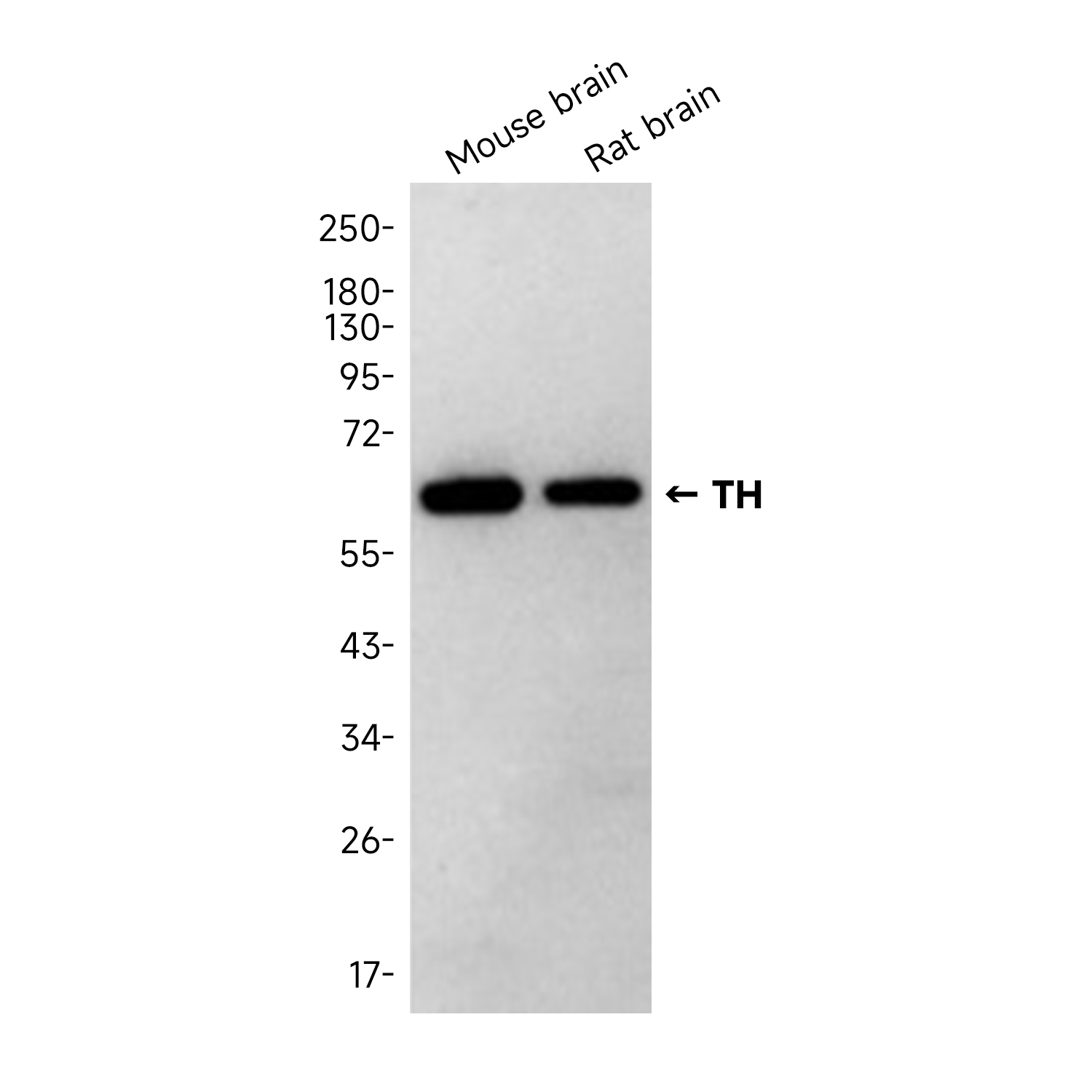
Western blot analysis of TH in mouse brain , rat brain lysates and using TH Goat pAb.IF
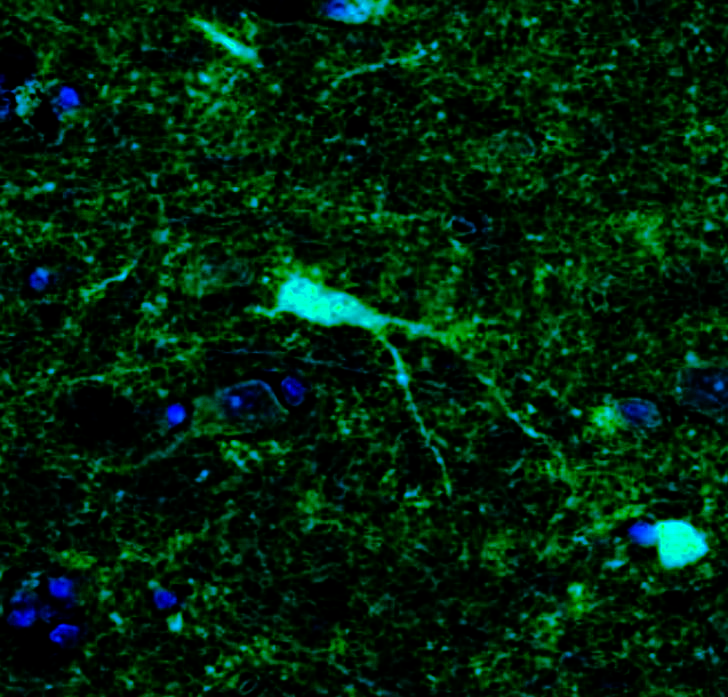
Immunofluorescence analysis of TH(Green) in mouse brain tissue using TH Goat pAb, and DAPI(Blue)IHC
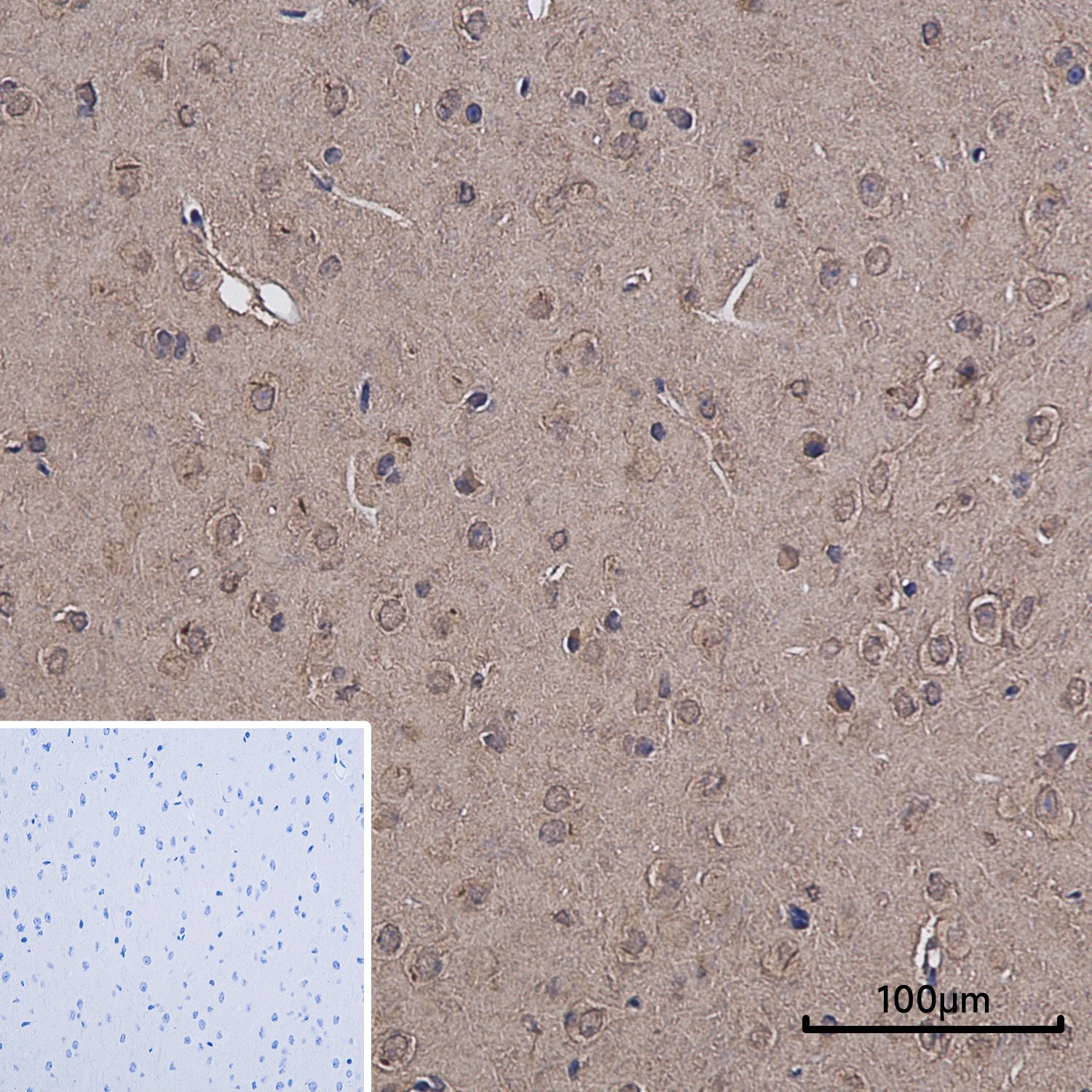
Immunohistochemistry of Paraffin-embedded mouse brain tissue sections using the antibody TH Goat pAb at a dilution of 1/50. Heat-induced epitope retrieval was performed using Tris-EDTA(pH9.0).| Product Name | Tyrosine Hydroxylase Goat pAb |
|---|---|
| Antibody Type | Primary Antibodies |
| Immunogen | Recombinant Human TH |
| Modification | Unmodified |
| Clonality | Polyclonal |
|---|---|
| Isotype | IgG |
| Host Species | Goat |
| Tested Applications | IHCWBIF |
| WB:1:500-1:1000 IHC:1:100-1:500 IF-P:1:100-1:500 ICC/IF:1:100-1:300 |
|
| Species Reactivity | HumanMouseRat |
| Concentration | 1mg/ml |
| Purification | Affinity Purified |
| Gene Symbol | TH |
|---|---|
| Gene Synonyms | TYH DYT14 DYT5b |
| Gene Full Name | tyrosine hydroxylase |
| Gene Summary | The protein encoded by this gene is involved in the conversion of tyrosine to dopamine. It is the rate-limiting enzyme in the synthesis of catecholamines, hence plays a key role in the physiology of adrenergic neurons. Mutations in this gene have been associated with autosomal recessive Segawa syndrome. Alternatively spliced transcript variants encoding different isoforms have been noted for this gene. [provided by RefSeq, Jul 2008] |
| Molecular Weight(MW) | 60 kDa |
| Function | Tyrosine hydroxylase (TH) is an enzyme involved in the synthesis of catecholamine neurotransmitters dopamine, epinephrine, and norepinephrine. In all species, catecholamine synthesis is regulated by the interaction of TH with a cofactor, tetrahydrobiopterin (BH4). BH4 binds to the TH catalytic domain, resulting in enzymatic activity. Unlike TH in non-primate species, four human TH mRNA splice variants (hTH1-hTH4) have been isolated. These variants are identical in their catalytic domain, but differ in their N-terminal, regulatory domains. TH is also responsible for the conversion of L-tyrosine to L-dopa. TH plays a key role in the physiology of adrenergic neurons. The role of TH in the synthesis of catecholamine neurotransmitters suggests a correlation between the enzyme and a number of neuropathogenic diseases including: Parkinson's disease, schizophrenia, Segawa syndrome, and dystonia, as well as a variety of cardiovascular diseases. |
| Cellular Localization | Cell projection,Cytoplasm,Cytoplasmic vesicle,Nucleus,Synapse |
WB
Western blot analysis of TH in mouse brain , rat brain lysates and using TH Goat pAb.
IF
Immunofluorescence analysis of TH(Green) in mouse brain tissue using TH Goat pAb, and DAPI(Blue)
IHC
Immunohistochemistry of Paraffin-embedded mouse brain tissue sections using the antibody TH Goat pAb at a dilution of 1/50. Heat-induced epitope retrieval was performed using Tris-EDTA(pH9.0).| Application Notes | WB:1:500-1:1000 IHC:1:100-1:500 IF-P:1:100-1:500 ICC/IF:1:100-1:300 |
|---|
| Form | Liquid |
|---|---|
| Storage Instructions | Store at 4°C short term. Aliquot and store at -20°C long term. Avoid freeze/thaw cycles. |
| Storage Buffer | Liquid in PBS, 50% glycerol, 0.05% Proclin 300, 0.08%BSA |


