WB
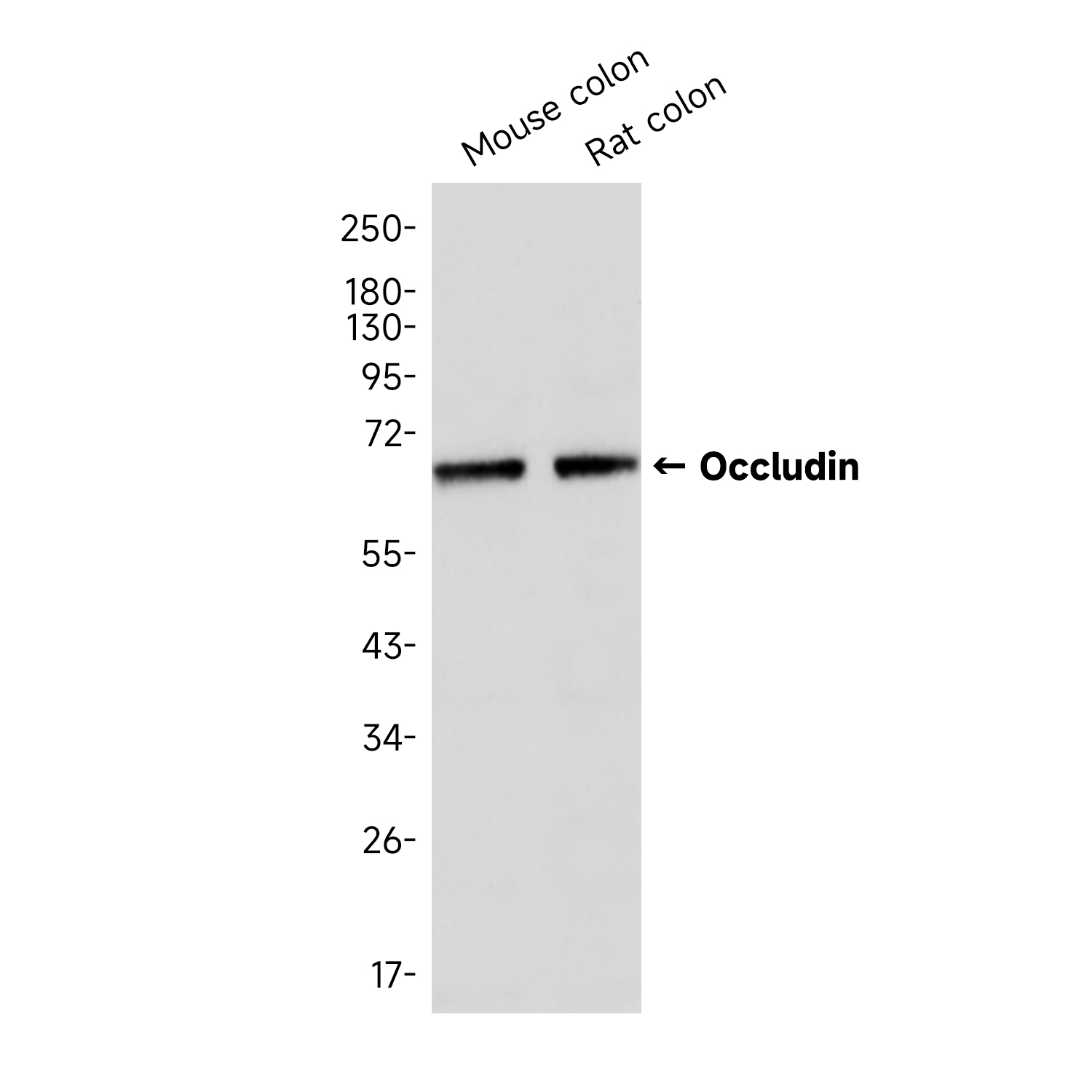
Western blot analysis of Occludin in mouse colon , rat colon lysates and using Occludin Goat pAb.IF
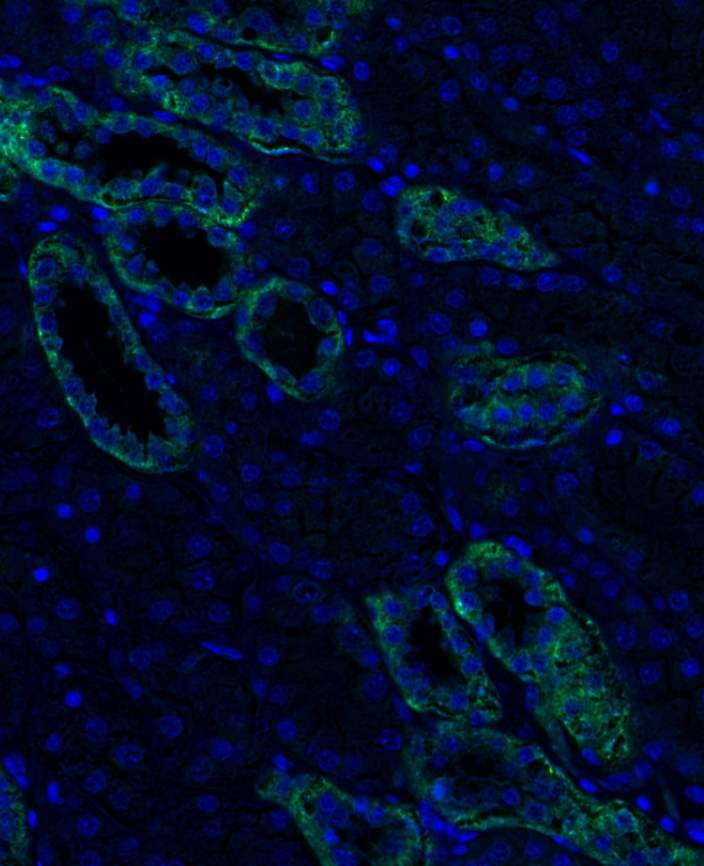
Immunofluorescence analysis of occludin(Green) in mouse colon tissue using Occludin Goat pAb, and DAPI(Blue)IHC
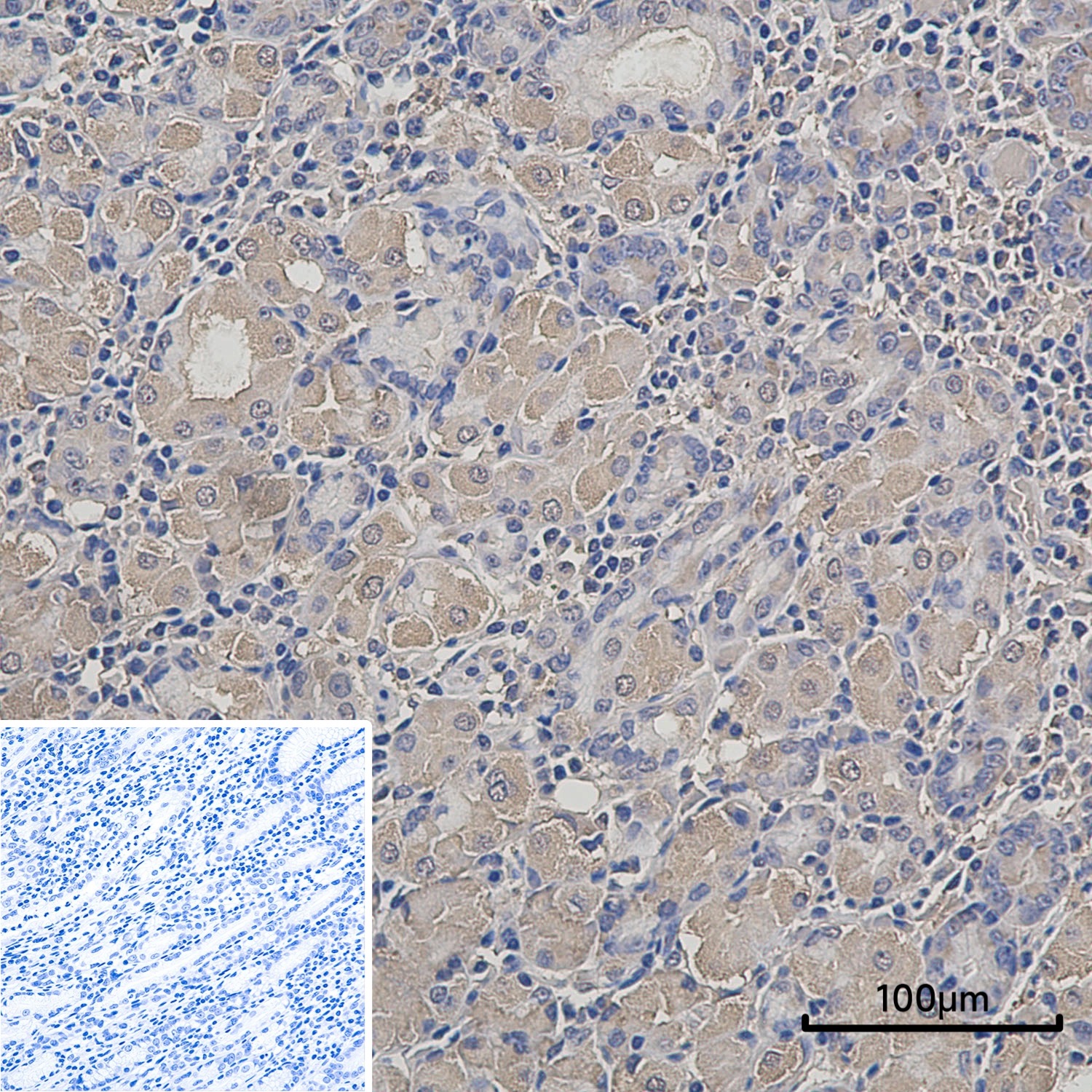
Immunohistochemistry of Paraffin-embedded human stomach tissue sections using the antibody Occludin Goat pAb at a dilution of 1/50. Heat-induced epitope retrieval was performed using Tris-EDTA(pH9.0).| Product Name | Occludin Goat pAb |
|---|---|
| Antibody Type | Primary Antibodies |
| Immunogen | Recombinant Human occludin |
| Modification | Unmodified |
| Clonality | Polyclonal |
|---|---|
| Isotype | IgG |
| Host Species | Goat |
| Tested Applications | IHCWBIF |
| WB:1:500-1:1000 IHC:1:100-1:500 IF-P:1:100-1:500 ICC/IF:1:100-1:300 |
|
| Species Reactivity | HumanMouseRat |
| Concentration | 1mg/ml |
| Purification | Affinity Purified |
| Gene Symbol | OCLN |
|---|---|
| Gene Synonyms | BLCPMG PTORCH1 PPP1R115 |
| Gene Full Name | occludin |
| Gene Summary | This gene encodes an integral membrane protein that is required for cytokine-induced regulation of the tight junction paracellular permeability barrier. Mutations in this gene are thought to be a cause of band-like calcification with simplified gyration and polymicrogyria (BLC-PMG), an autosomal recessive neurologic disorder that is also known as pseudo-TORCH syndrome. Alternative splicing results in multiple transcript variants. A related pseudogene is present 1.5 Mb downstream on the q arm of chromosome 5. [provided by RefSeq, Apr 2011] |
| Molecular Weight(MW) | 60 kDa |
| Function | Occludin is a 65 kDa protein that can exist in a variety of phosphorylated forms, ranging up to approximately 82 kDa. Occludin is thought to be involved in regulating both the localization and the function of occludin. Polyunsaturated fatty acids are known to up-regulate occludin expression, increasing the transendothelial cell resistance and reducing the cellular permeability to large molecules. The level of occludin varies greatly depending on tissue; in brain tissue, occludin is highly and continuously expressed at cell-cell contact sites, whereas non-neural tissues show lower expression and discontinuous distribution. Overall structural features of the occludin protein are highly conserved in all the species examined. Under-expression of tight junction proteins, including occludin, is a key molecular abnormality responsible for the increased permeability of tumor endothelial tight junctions, which contributes to brain tumor edemas. |
| Cellular Localization | Cell junction,Cell membrane,Membrane,Tight junction |
WB
Western blot analysis of Occludin in mouse colon , rat colon lysates and using Occludin Goat pAb.
IF
Immunofluorescence analysis of occludin(Green) in mouse colon tissue using Occludin Goat pAb, and DAPI(Blue)
IHC
Immunohistochemistry of Paraffin-embedded human stomach tissue sections using the antibody Occludin Goat pAb at a dilution of 1/50. Heat-induced epitope retrieval was performed using Tris-EDTA(pH9.0).| Application Notes | WB:1:500-1:1000 IHC:1:100-1:500 IF-P:1:100-1:500 ICC/IF:1:100-1:300 |
|---|
| Form | Liquid |
|---|---|
| Storage Instructions | Store at 4°C short term. Aliquot and store at -20°C long term. Avoid freeze/thaw cycles. |
| Storage Buffer | Liquid in PBS, 50% glycerol, 0.05% Proclin 300, 0.08%BSA |


