WB
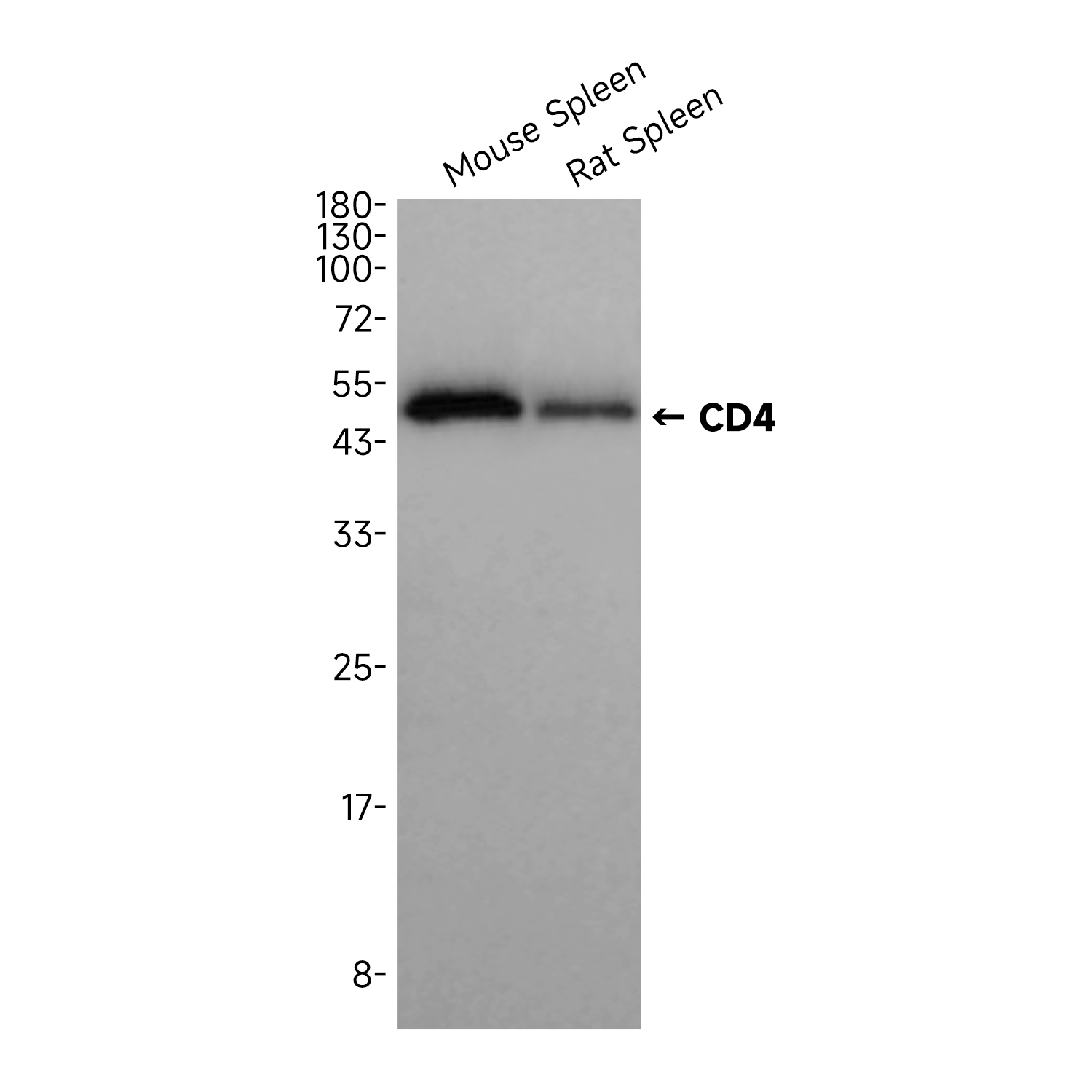
Western blot analysis of Mouse spleen and Rat spleen lysates using CD4 Goat pAbIF
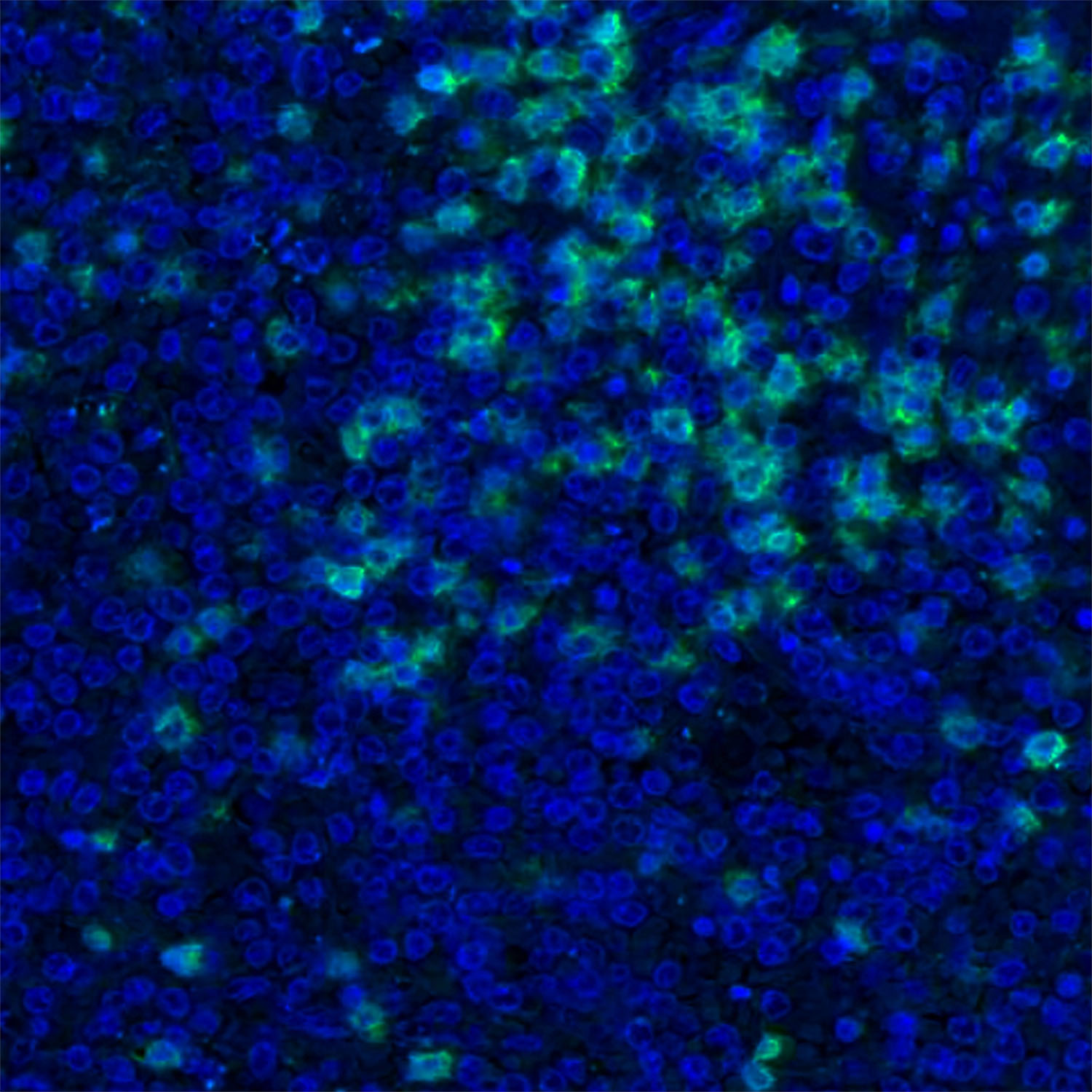
Immunofluorescence analysis of Human Lymphoma cancer tissue using CD4 Goat pAb| Product Name | CD4 Goat pAb |
|---|---|
| Antibody Type | Primary Antibodies |
| Immunogen | Recombinant Human CD4 |
| Modification | Unmodified |
| Clonality | Polyclonal |
|---|---|
| Isotype | IgG |
| Host Species | Goat |
| Tested Applications | WBIF |
| WB:1:500-1:1000 IHC:1:100-1:500 IF-P:1:100-1:500 ICC/IF:1:100-1:300 |
|
| Species Reactivity | HumanMouseRat |
| Concentration | 1mg/ml |
| Purification | Affinity Purified |
| Gene Symbol | Cd4 |
|---|---|
| Gene Synonyms | L3T4 Ly-4 |
| Gene Full Name | CD4 antigen |
| Gene Summary | Predicted to enable several functions, including interleukin-16 binding activity; interleukin-16 receptor activity; and protein homodimerization activity. Involved in cell surface receptor signaling pathway and helper T cell enhancement of adaptive immune response. Acts upstream of or within several processes, including defense response to Gram-negative bacterium; positive regulation of calcium-mediated signaling; and positive regulation of peptidyl-tyrosine phosphorylation. Located in endoplasmic reticulum; external side of plasma membrane; and membrane raft. Is expressed in several structures, including alimentary system; brain; genitourinary system; hemolymphoid system; and liver and biliary system. Used to study glycogen storage disease II. Human ortholog(s) of this gene implicated in immunodeficiency 79. Orthologous to human CD4 (CD4 molecule). [provided by Alliance of Genome Resources, Jul 2025] |
| Molecular Weight(MW) | 51 kDa(Observed band size: 55 kDa) |
| Function | The CD4 antigen is involved in the recognition of MHC class II molecules and is a co-receptor for HIV. CD4 is primarily expressed in a subset of T-lymphocytes, also referred to as T helper cells, but may also be expressed by other cells in the immune system, such as monocytes, macrophages, and dendritic cells. At the tissue level, CD4 expression may be detected in thymus, lymph nodes, tonsils, and spleen, and also in specific regions of the brain, gut, and other non-lymphoid tissues. CD4 functions to initiate or augment the early phase of T-cell activation through its association with the T-cell receptor complex and protein tyrosine kinase, Lck. It may also function as an important mediator of direct neuronal damage in infectious and immune-mediated diseases of the central nervous system. Multiple alternatively spliced transcripts have been identified in this gene [RefSeq, July 2017]. |
| Cellular Localization | Cell membrane,Membrane |
WB
Western blot analysis of Mouse spleen and Rat spleen lysates using CD4 Goat pAb
IF
Immunofluorescence analysis of Human Lymphoma cancer tissue using CD4 Goat pAb| Application Notes | WB:1:500-1:1000 IHC:1:100-1:500 IF-P:1:100-1:500 ICC/IF:1:100-1:300 |
|---|
| Form | Liquid |
|---|---|
| Storage Instructions | Store at 4°C short term. Aliquot and store at -20°C long term. Avoid freeze/thaw cycles. |
| Storage Buffer | Liquid in PBS, 50% glycerol, 0.05% Proclin 300, 0.08%BSA |


