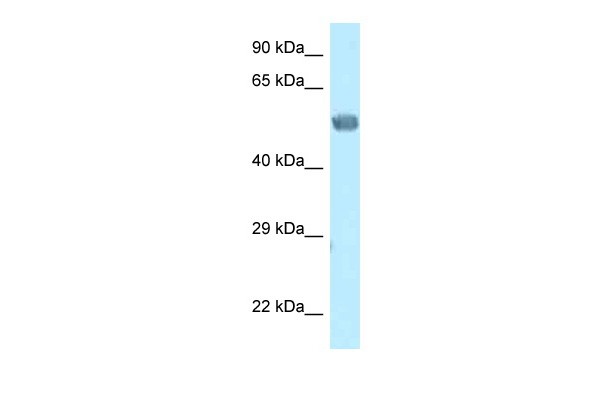
Western blot
Titration: 1.0 ug/mlPositive Control: Mouse Brain| Product Name | Rabbit anti-Eed polyclonal antibody - N-terminal region |
|---|---|
| Antibody Type | Primary Antibodies |
| Antigen Alias | ENSMUSG00000039373, l(7)5Rn, l7Rn5, lusk |
| Clonality | Polyclonal |
|---|---|
| Isotype | IgG |
| Host Species | Rabbit |
| Tested Applications | WB |
| WB:1:500~1:2000 Notes:Optimal dilutions/concentrations should be determined by the researcher. |
|
| Species Reactivity | BovineDogGuinea PigHumanMouseRabbitRatZebra Fish |
| Concentration | 1mg/ml |
| Purification | Affinity purified |
| Gene Symbol | Eed |
|---|---|
| Gene Synonyms | ENSMUSG00000039373 l(7)5Rn l7Rn5 lusk |
| Gene Full Name | Embryonic ectoderm development |
| Gene Summary | Eed is a polycomb group (PcG) protein. It is a component of the PRC2/EED-EZH2 complex, which methylates 'Lys-9' and 'Lys-27' of histone H3, leading to transcriptional repression of the affected target gene. The PRC2/EED-EZH2 complex may also serve as a recruiting platform for DNA methyltransferases, thereby linking two epigenetic repression systems. Genes repressed by the PRC2/EED-EZH2 complex include HOXA7, HOXB6 and HOXC8. Eed plays a role in X chromosome inactivation (XCI), in which one of the two X chromosomes in female mammals is transcriptionally silenced to equalize X-linked gene dosage with XY males. Eed is required for stable maintenance of XCI in both embryonic and extra-embryonic tissues. Eed may prevent transcriptional activation of facultative heterochromatin during differentiation. Eed is required for development of secondary trophoblast giant cells during placental development. Eed may regulate hippocampal synaptic plasticity in the developing brain. |
| Alternative Names | ENSMUSG00000039373 l(7)5Rn l7Rn5 lusk |
| Molecular Weight(MW) | 50kDa |
| Sequence | 441 amino acids |
Western blot
Titration: 1.0 ug/mlPositive Control: Mouse Brain| Application Notes | WB:1:500~1:2000 Notes:Optimal dilutions/concentrations should be determined by the researcher. |
|---|
| Form | Liquid |
|---|---|
| Storage Instructions | Aliquot and store at -20°C. Avoid repeated freeze / thaw cycles |
| Storage Buffer | phosphate buffered saline , pH 7.4, 150mM NaCl, 0.02% sodium azide and 50% glycerol. |


