Application
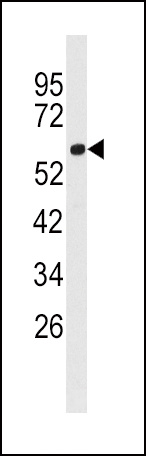
Western blot analysis of anti-FACL3 Antibody (N-term) in 293 cell line lysates (35ug/lane). FACL3 (arrow) was detected using the purified Pab.| Product Name | ACSL3 (FACL3) Antibody (N-term) |
|---|---|
| Antibody Type | Primary Antibodies |
| Antigen Alias | ACSL3; ACS3; FACL3; LACS3; Long-chain-fatty-acid--CoA ligase 3; Long-chain acyl-CoA synthetase 3 |
| Clonality | Polyclonal |
|---|---|
| Isotype | Ig |
| Host Species | Rabbit |
| Tested Applications | WB |
| WB:1:100~500 |
|
| Species Reactivity | Human |
| Concentration | 1mg/ml |
| Gene Synonyms | ACS3 FACL3 LACS3 |
|---|---|
| Alternative Names | ACSL3 ACS3 FACL3 LACS3 Long-chain-fatty-acid--CoA ligase 3 Long-chain acyl-CoA synthetase 3 |
| Molecular Weight(MW) | 80420 Da |
| Function | Acyl-CoA synthetases (ACSL) activates long-chain fatty acids for both synthesis of cellular lipids, and degradation via beta-oxidation. ACSL3 mediates hepatic lipogenesis (By similarity). Preferentially uses myristate, laurate, arachidonate and eicosapentaenoate as substrates (By similarity). Has mainly an anabolic role in energy metabolism. Required for the incorporation of fatty acids into phosphatidylcholine, the major phospholipid located on the surface of VLDL (very low density lipoproteins) |
| Tissue Specificity | This ACSL3 (FACL3) antibody is generated from rabbits immunized with a KLH conjugated synthetic peptide between 1~30 amino acids from the N-terminal region of human FACL3. |
| Cellular Localization | Mitochondrion outer membrane; Single-pass type III membrane protein (By similarity). Peroxisome membrane; Single-pass type III membrane protein (By similarity). Microsome membrane; Single-pass type III membrane protein (By similarity) Endoplasmic reticulum membrane; Single-pass type III membrane protein (By similarity) |
| Entrez Gene | 2181 |
|---|
Application
Western blot analysis of anti-FACL3 Antibody (N-term) in 293 cell line lysates (35ug/lane). FACL3 (arrow) was detected using the purified Pab.| Application Notes | WB:1:100~500 |
|---|
| Form | Liquid |
|---|---|
| Storage Instructions | For short-term storage, store at 4° C. For long-term storage, aliquot and store at -20ºC or below. Avoid multiple freeze-thaw cycles. |
| Storage Buffer | Purified polyclonal antibody supplied in PBS with 0.09% (W/V) sodium azide. This antibody is purified through a protein G column, eluted with high and low pH buffers and neutralized immediately, followed by dialysis against PBS. |


