Application
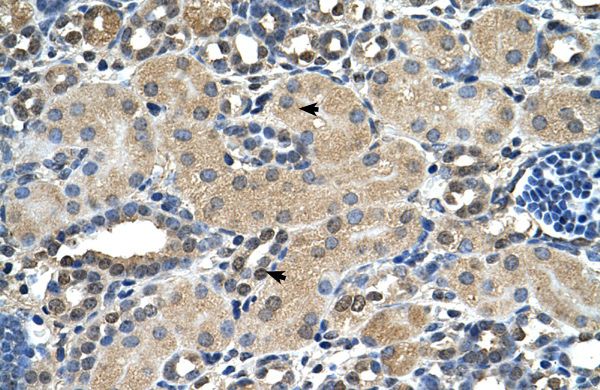
IHC-P analysis of human kidney tissue using ASPH antibody at 4.0-8.0μg/ml.Application
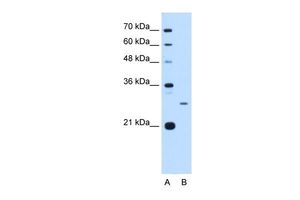
WB analysis of HepG2 cells using ASPH antibody at 2.5μg/ml. Lane A: marker Lane B: HepG2 cells| Product Name | ASPH antibody, N-term |
|---|---|
| Antibody Type | Primary Antibodies |
| Product description | Rabbit Polyclonal antibody to ASPHThis gene is thought to play an important role in calcium homeostasis. The gene is expressed from two promoters and undergoes extensive alternative splicing. The encoded set of proteins share varying amounts of overlap near their N-termini but have substantial variations in their C-terminal domains resulting in distinct functional properties. The longest isoforms (a and f) include a C-terminal Aspartyl/Asparaginyl beta-hydroxylase domain that hydroxylates aspartic acid or asparagine residues in the epidermal growth factor (EGF)-like domains of some proteins, including protein C, coagulation factors VII, IX, and X, and the complement factors C1R and C1S. Other isoforms differ primarily in the C-terminal sequence and lack the hydroxylase domain, and some have been localized to the endoplasmic and sarcoplasmic reticulum. Some of these isoforms are found in complexes with calsequestrin, triadin, and the ryanodine receptor, and have been shown to regulate calcium release from the sarcoplasmic reticulum. Some isoforms have been implicated in metastasis. [provided by RefSeq, Sep 2009] |
| Immunogen | A synthetic peptide corresponding to a N-terminal region of Human ASPH |
| Clonality | Polyclonal |
|---|---|
| Isotype | IgG |
| Host Species | Rabbit |
| Tested Applications | IHC-PWB |
| *Optimal dilutions/concentrations should be determined by the researcher.
: |
|
| Species Reactivity | Human |
| Predicted Reactivity | Dog: 93%; Horse: 83%; Human: 100%; Mouse: 86%; Pig: 93%; Rabbit: 86%; Rat: 86% |
| Concentration | 1mg/ml |
| Purification | Protein A |
| Gene Synonyms | BAH JCTN CASQ2BP1 AAH ASPH JUNCTIN HAAH |
|---|---|
| Target | ASPH |
| Molecular Weight(MW) | 86 KDa (note) |
Application
IHC-P analysis of human kidney tissue using ASPH antibody at 4.0-8.0μg/ml.
Application
WB analysis of HepG2 cells using ASPH antibody at 2.5μg/ml. Lane A: marker Lane B: HepG2 cells| Positive Control | HepG2 |
|---|---|
| Application Notes | *Optimal dilutions/concentrations should be determined by the researcher.
: |
| Form | Liquid |
|---|---|
| Storage Instructions | Keep as concentrated solution. For short-term storage, store at 4ºC. For long-term storage, aliquot and store at -20ºC or below. Avoid multiple freeze-thaw cycles. |
| Storage Buffer | 1x PBS buffer with 0.09% (w/v) sodium azide and 2% sucrose. |


