Application
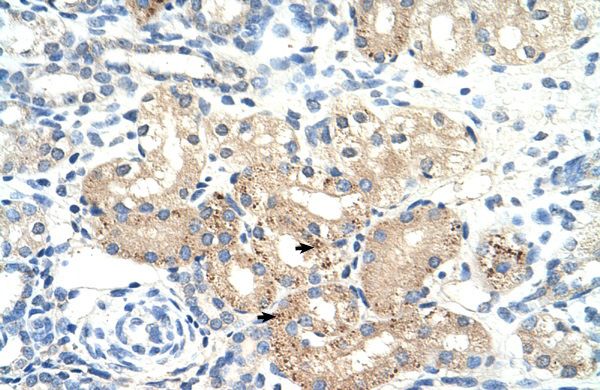
IHC-P analysis of human kidney tissue using DLAT antibody at 4.0-8.0μg/ml.Application
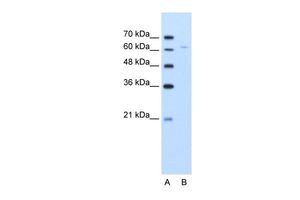
WB analysis of Jurkat cells using DLAT antibody at 5.0μg/ml. Lane A : marker Lane B : Jurkat cells| Product Name | DLAT antibody, N-term |
|---|---|
| Antibody Type | Primary Antibodies |
| Product description | Rabbit Polyclonal antibody to DLATThis gene encodes component E2 of the multi-enzyme pyruvate dehydrogenase complex (PDC). PDC resides in the inner mitochondrial membrane and catalyzes the conversion of pyruvate to acetyl coenzyme A. The protein product of this gene, dihydrolipoamide acetyltransferase, accepts acetyl groups formed by the oxidative decarboxylation of pyruvate and transfers them to coenzyme A. Dihydrolipoamide acetyltransferase is the antigen for antimitochondrial antibodies. These autoantibodies are present in nearly 95% of patients with the autoimmune liver disease primary biliary cirrhosis (PBC). In PBC, activated T lymphocytes attack and destroy epithelial cells in the bile duct where this protein is abnormally distributed and overexpressed. PBC enventually leads to cirrhosis and liver failure. Mutations in this gene are also a cause of pyruvate dehydrogenase E2 deficiency which causes primary lactic acidosis in infancy and early childhood.[provided by RefSeq, Oct 2009] |
| Immunogen | A synthetic peptide corresponding to a N-terminal region of Human DLAT |
| Clonality | Polyclonal |
|---|---|
| Isotype | IgG |
| Host Species | Rabbit |
| Tested Applications | IHC-PWB |
| *Optimal dilutions/concentrations should be determined by the researcher.
: |
|
| Species Reactivity | Human |
| Predicted Reactivity | Cow: 100%; Dog: 100%; Guinea Pig: 100%; Horse: 100%; Human: 100%; Mouse: 100%; Rabbit: 100%; Rat: 100%; Zebrafish: 86% |
| Concentration | 1mg/ml |
| Purification | Protein A |
| Gene Synonyms | PDCE2 PDC E2 DLAT DLTA |
|---|---|
| Target | DLAT |
| Molecular Weight(MW) | 69 KDa (note) |
Application
IHC-P analysis of human kidney tissue using DLAT antibody at 4.0-8.0μg/ml.
Application
WB analysis of Jurkat cells using DLAT antibody at 5.0μg/ml. Lane A : marker Lane B : Jurkat cells| Positive Control | Jurkat |
|---|---|
| Application Notes | *Optimal dilutions/concentrations should be determined by the researcher.
: |
| Form | Liquid |
|---|---|
| Storage Instructions | Keep as concentrated solution. For short-term storage, store at 4ºC. For long-term storage, aliquot and store at -20ºC or below. Avoid multiple freeze-thaw cycles. |
| Storage Buffer | 1x PBS buffer with 0.09% (w/v) sodium azide and 2% sucrose. |


