Application
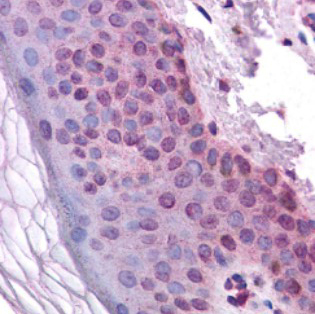
Immunohistochemical staining of skin epidermis using HIF1 beta antibodyApplication
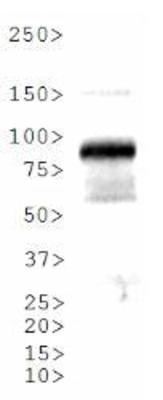
Western blot analysis of HIF1 beta in MCF7 whole cell lysate.| Product Name | HIF1 beta antibody |
|---|---|
| Antibody Type | Primary Antibodies |
| Product description | Rabbit polyclonal antibody to HIF1 beta / ARNTHypoxia contributes significantly to the pathophysiology of major categories of human disease, including myocardial and cerebral ischemia, cancer, pulmonary hypertension, congenital heart disease and chronic obstructive pulmonary disease. HIF1 is a nuclear protein involved in mammalian oxygen homeostasis. This occurs as a posttranslational modification by prolyl hydroxylation. HIF1 is a heterodimer composed of HIF1 alpha and HIF1 beta subunits. Both subunits are constantly translated. However, under normoxic conditions, human HIF1 alpha is hydroxylated at Pro402 or Pro564 by a set of HIF prolyl hydroxylases, is polyubiquinated, and eventually degraded in proteosomes. Under hypoxic conditions, the lack of hydroxylation prevents HIF degradation and increases transcriptional activity. Therefore, the concentration of HIF1 alpha increases in the cell. In contrast, HIF1 beta remains stable under either condition. HIF1 beta is a series of aryl hydrocarbon receptor nuclear translocator (ARNT) gene products. |
| Immunogen | Amino acids 496-789 of human HIF1 beta |
| Clonality | Polyclonal |
|---|---|
| Host Species | Rabbit |
| Tested Applications | GSAICC/IFIHCIHC-PIPWBChIP |
| Recommended Starting Dilutions:
For WB: Use at a dilution of 1:2000.
For ChIP: Use at a dilution of 1:1:10-1:500.
For IHC: Use at a dilution of 1:150.
For IP: Use at a dilution of 1:10-1:500.
Optimal dilutions should be determined experimentally by the researcher.: |
|
| Species Reactivity | HumanMouseRatFerretSheep |
| Concentration | 1mg/ml |
| Purification | Affinity purified |
| Gene Synonyms | ARNT 126110 HIF1 beta HIF-1beta HIF1beta P27540 TANGO HIF1B 405 HIF 1beta |
|---|---|
| Target | HIF1 beta |
| Tissue Specificity | This antibody is specific to HIF1 beta / ARNT. The cross-reactivity of ARNT2 is not determined. |
Application
Immunohistochemical staining of skin epidermis using HIF1 beta antibody
Application
Western blot analysis of HIF1 beta in MCF7 whole cell lysate.| Positive Control | MCF7 human nuclear extracts |
|---|---|
| Application Notes | Recommended Starting Dilutions:
For WB: Use at a dilution of 1:2000.
For ChIP: Use at a dilution of 1:1:10-1:500.
For IHC: Use at a dilution of 1:150.
For IP: Use at a dilution of 1:10-1:500.
Optimal dilutions should be determined experimentally by the researcher.: |
| Form | Liquid |
|---|---|
| Storage Instructions | Keep as concentrated solution. Store at 4ºC short term. For extended storage aliquot and store at -20ºC or below. Avoid freeze-thaw cycles. |
| Storage Buffer | serum with 0.02% sodium azide |


