Application
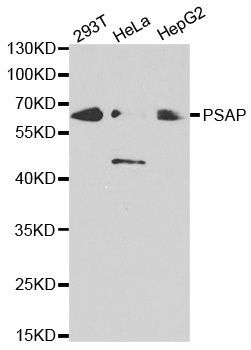
WB analysis of extracts from various cells using PSAP antibody.Application
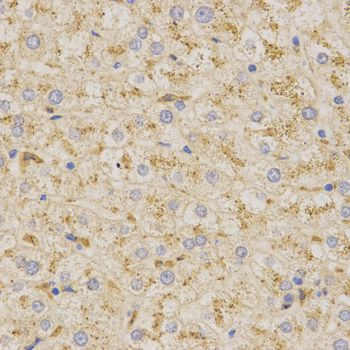
IHC-P analysis of human liver tissue using PSAP antibody at a dilution of 1:200.Application
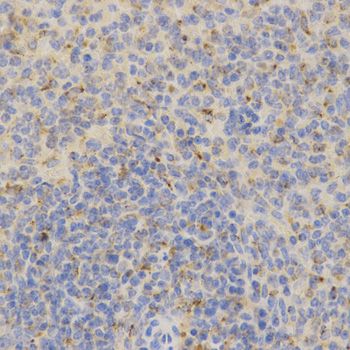
IHC-P analysis of mouse spleen tissue using PSAP antibody at a dilution of 1:200.Application
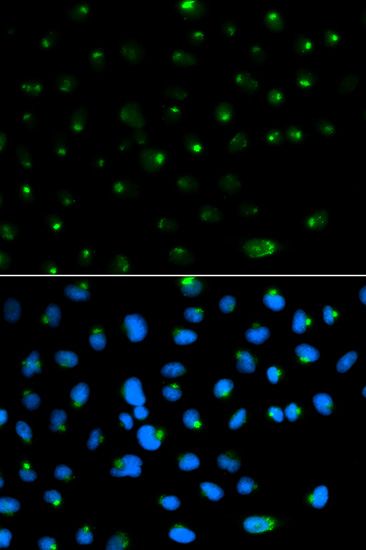
ICC/IF analysis of MCF7 cells using PSAP antibody (green) and DAPI (blue).| Product Name | PSAP antibody |
|---|---|
| Antibody Type | Primary Antibodies |
| Product description | Rabbit Polyclonal antibody to PSAPThis gene encodes a highly conserved glycoprotein which is a precursor for 4 cleavage products: saposins A, B, C, and D. Each domain of the precursor protein is approximately 80 amino acid residues long with nearly identical placement of cysteine residues and glycosylation sites. Saposins A-D localize primarily to the lysosomal compartment where they facilitate the catabolism of glycosphingolipids with short oligosaccharide groups. The precursor protein exists both as a secretory protein and as an integral membrane protein and has neurotrophic activities. Mutations in this gene have been associated with Gaucher disease, Tay-Sachs disease, and metachromatic leukodystrophy. Alternative splicing results in multiple transcript variants encoding different isoforms. [provided by RefSeq, Jul 2008] |
| Immunogen | Recombinant protein of human PSAP |
| Clonality | Polyclonal |
|---|---|
| Isotype | IgG |
| Host Species | Rabbit |
| Tested Applications | ICC/IFIHC-PWB |
| WB: 1:500 - 1:2000. IHC: 1:50 - 1:200. IF: 1:50 - 1:200: |
|
| Species Reactivity | HumanMouseRat |
| Concentration | 1mg/ml |
| Purification | Affinity purified |
| Gene Synonyms | GLBA SAP1 prosaposin |
|---|---|
| Target | PSAP |
| Molecular Weight(MW) | 58 kDa (note) |
Application
WB analysis of extracts from various cells using PSAP antibody.
Application
IHC-P analysis of human liver tissue using PSAP antibody at a dilution of 1:200.
Application
IHC-P analysis of mouse spleen tissue using PSAP antibody at a dilution of 1:200.
Application
ICC/IF analysis of MCF7 cells using PSAP antibody (green) and DAPI (blue).| Application Notes | WB: 1:500 - 1:2000. IHC: 1:50 - 1:200. IF: 1:50 - 1:200: |
|---|
| Form | Liquid |
|---|---|
| Storage Instructions | Store at -20°C (regular) or -80°C (long term). Avoid freeze / thaw cycles. |
| Storage Buffer | PBS with 0.02% sodium azide, 50% glycerol, pH7.3. |


