Application
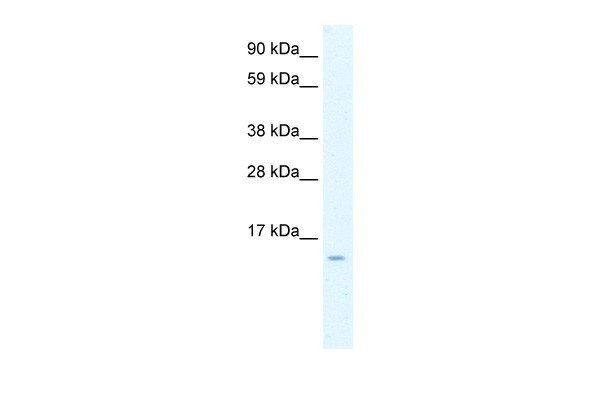
Antibody used in WB on Human Jurkat 0.2-1 ug/ml.Application
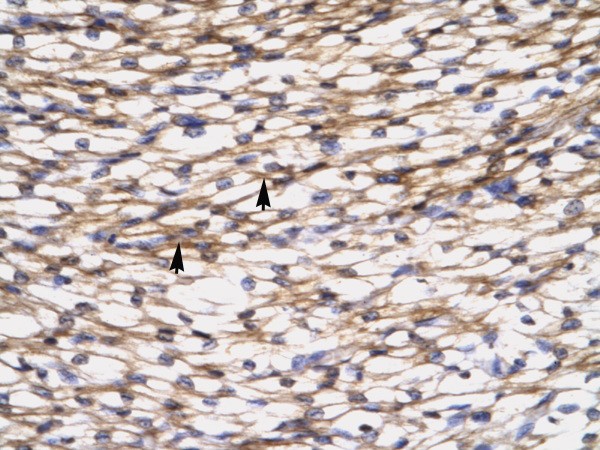
Antibody used in IHC on Human Heart.| Product Name | CCL7 Antibody |
|---|---|
| Antibody Type | Primary Antibodies |
| Antigen Alias | CCL7, FIC, MARC, MCP3, NC28, MCP-3, SCYA6, SCYA7 |
| Product description | CCL7 encodes monocyte chemotactic protein 3, a secreted chemokine which attracts macrophages during inflammation and metastasis. It is a member of the C-C subfamily of chemokines which are characterized by having two adjacent cysteine residues. The protein is an in vivo substrate of matrix metalloproteinase 2, an enzyme which degrades components of the extracellular matrix. This gene is part of a cluster of C-C chemokine family members on chromosome 17q.1) Jang, M.K., et al., (2004) Biochem. Biophys. Res. Commun. 323 (3), 898-905. |
| Immunogen | Antibody produced in rabbits immunized with a synthetic peptide corresponding a region of human CCL7. |
| Clonality | Polyclonal |
|---|---|
| Host Species | Rabbit |
| Tested Applications | ELISAIHCWB |
| CCL7 antibody can be used for detection of CCL7 by ELISA at 1:62500. CCL7 antibody can be used for detection of CCL7 by western blot at 0.5 μg/mL, and HRP conjugated secondary antibody should be diluted 1:50,000 - 100,000.: |
|
| Species Reactivity | Human |
| Concentration | 1mg/ml |
| Purification | Affinity purified |
| Gene Symbol | CCL7 |
|---|---|
| Alternative Names | CCL7 FIC MARC MCP3 NC28 MCP-3 SCYA6 SCYA7 |
| Molecular Weight(MW) | 11 kDa |
Application
Antibody used in WB on Human Jurkat 0.2-1 ug/ml.
Application
Antibody used in IHC on Human Heart.| Positive Control | 1) Cat. No. XBL-10420 - Fetal Small Intestine Tissue Lysate |
|---|---|
| Application Notes | CCL7 antibody can be used for detection of CCL7 by ELISA at 1:62500. CCL7 antibody can be used for detection of CCL7 by western blot at 0.5 μg/mL, and HRP conjugated secondary antibody should be diluted 1:50,000 - 100,000.: |
| Form | Liquid |
|---|---|
| Storage Instructions | For short periods of storage (days) store at 4˚C. For longer periods of storage, store CCL7 antibody at -20˚C. As with any antibody avoid repeat freeze-thaw cycles. |
| Storage Buffer | Antibody is lyophilized in PBS buffer with 2% sucrose. Add 50 μL of distilled water. Final antibody concentration is 1 mg/mL. |


