Application
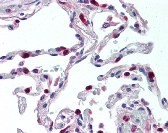
Immunohistochemistry staining of CCR1 in lung tissue using CCR1 Antibody.| Product Name | CCR1 Antibody |
|---|---|
| Antibody Type | Primary Antibodies |
| Antigen Alias | CCR1, C-C chemokine receptor type 1, CD191, CD191 antigen, CKR-1, CKR1, CMKBR1, CC-CKR-1, CMKR1, HM145, MIP-1 alpha, RANTES-R, RANTES receptor, SCYAR1, MIP-1 alpha receptor, C-C CKR-1, CCR-1, LD78 receptor, MIP-1alpha-R, MIP1aR |
| Product description | Chemokines play important roles in inflammation and critical for the recruitment of effector immune cells to sites of infection. Chemokines activate leukocytes by binding to G protein coupled receptors. The ever-growing chemokine receptor subtypes can be divided into 2 major groups, CXCR and CCR, based on the 2 major classes of chemokines. One of the CCR receptors, CCR1, is expressed on neutrophils, monocytes, lymphocytes, and eosinophils and binds the leukocyte chemoattractant and hemopoiesis regulator macrophage-inflammatory protein (MIP-1 ), eotaxin, as well as several other related chemokines (2-4). Mice lacking the chemokine receptor CCR1 have defects in neutrophil trafficking and proliferation (5,6). CCR1, a Chemokine Receptor, affects stem cell proliferation and mediates systemic inflammatory responses. This receptor is stimulated by the beta chemokines RANTES, MCP-1, and MIP-1 alpha. Disruption of CCR1 enhances protection from pulmonary inflammation and reduces the development of respiratory distress syndrome in rat. |
| Immunogen | CCR1 antibody was raised against a synthetic peptide of CCR1 (Human). |
| Clonality | Polyclonal |
|---|---|
| Isotype | IgG |
| Host Species | Rabbit |
| Tested Applications | IHCWB |
| CCR1 antibody can be used in ELISA, Western Blot starting at 1:500 - 1:1000, and immunohistochemistry starting at 5 μg/mL.: |
|
| Species Reactivity | HumanMouse |
| Concentration | 1mg/ml |
| Purification | Protein G |
| Gene Symbol | CCR1 |
|---|---|
| Alternative Names | CCR1 C-C chemokine receptor type 1 CD191 CD191 antigen CKR-1 CKR1 CMKBR1 CC-CKR-1 CMKR1 HM145 MIP-1 alpha RANTES-R RANTES receptor SCYAR1 MIP-1 alpha receptor C-C CKR-1 CCR-1 LD78 receptor MIP-1alpha-R MIP1aR |
| Tissue Specificity | In A375, a 42 kD band should be observed. |
Application
Immunohistochemistry staining of CCR1 in lung tissue using CCR1 Antibody.| Application Notes | CCR1 antibody can be used in ELISA, Western Blot starting at 1:500 - 1:1000, and immunohistochemistry starting at 5 μg/mL.: |
|---|
| Form | Liquid |
|---|---|
| Storage Instructions | CR1 antibody should be stored long term (months) at -20 ˚C and short term (weeks) at 4 ˚C. As with all antibodies avoid freeze/thaw cycles. |
| Storage Buffer | PBS, 0.05% sodium azide, 0.2% gelatin. |


