Application
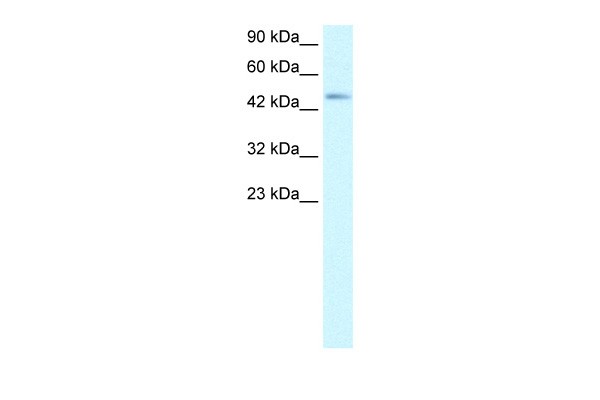
Antibody used in WB on Human K562 at 2.5 ug/ml.| Product Name | CCR8 Antibody |
|---|---|
| Antibody Type | Primary Antibodies |
| Antigen Alias | CCR8, CY6, TER1, CCR-8, CKRL1, CDw198, CMKBR8, GPRCY6, CMKBRL2, CC-CKR-8 |
| Product description | CCR8 is a member of the beta chemokine receptor family, which is predicted to be a seven transmembrane protein similar to G protein-coupled receptors. Chemokines and their receptors are important for the migration of various cell types into the inflammatory sites. This receptor protein preferentially expresses in the thymus. I-309, thymus activation-regulated cytokine (TARC) and macrophage inflammatory protein-1 beta (MIP-1 beta) have been identified as ligands of this receptor. Studies of this receptor and its ligands suggested its role in regulation of monocyte chemotaxis and thymic cell apoptosis. More specifically, this receptor may contribute to the proper positioning of activated T cells within the antigenic challenge sites and specialized areas of lymphoid tissues. Its gene is located at the chemokine receptor gene cluster region.1) Haque, N.S., et al., (2004) Blood 103 (4), 1296-1304. |
| Immunogen | Antibody produced in rabbits immunized with a synthetic peptide corresponding a region of human CCR8. |
| Clonality | Polyclonal |
|---|---|
| Host Species | Rabbit |
| Tested Applications | ELISAWB |
| CCR8 antibody can be used for detection of CCR8 by ELISA at 1:62500. CCR8 antibody can be used for detection of CCR8 by western blot at 2.5 μg/mL, and HRP conjugated secondary antibody should be diluted 1:50,000 - 100,000.: |
|
| Species Reactivity | Human |
| Concentration | 1mg/ml |
| Purification | Protein A |
| Gene Symbol | CCR8 |
|---|---|
| Alternative Names | CCR8 CY6 TER1 CCR-8 CKRL1 CDw198 CMKBR8 GPRCY6 CMKBRL2 CC-CKR-8 |
| Molecular Weight(MW) | 41 kDa |
Application
Antibody used in WB on Human K562 at 2.5 ug/ml.| Positive Control | 1) Cat. No. 1204 - K562 Cell Lysate |
|---|---|
| Application Notes | CCR8 antibody can be used for detection of CCR8 by ELISA at 1:62500. CCR8 antibody can be used for detection of CCR8 by western blot at 2.5 μg/mL, and HRP conjugated secondary antibody should be diluted 1:50,000 - 100,000.: |
| Form | Liquid |
|---|---|
| Storage Instructions | For short periods of storage (days) store at 4˚C. For longer periods of storage, store CCR8 antibody at -20˚C. As with any antibody avoid repeat freeze-thaw cycles. |
| Storage Buffer | IgG in phosphate buffered saline , pH 7.4, 150mM NaCl, 0.02% sodium azide and 50% glycerol.Store at -20 °C.Stable for 12 months from date of receipt |


