Application
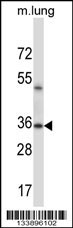
Western blot analysis in mouse lung tissue lysates (35ug/lane).Application
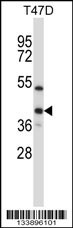
Western blot analysis in T47D cell line lysates (35ug/lane).| Product Name | ERCC1 Antibody |
|---|---|
| Antibody Type | Primary Antibodies |
| Antigen Alias | DNA excision repair protein ERCC-1, ERCC1 |
| Product description | The product of this gene functions in the nucleotide excision repair pathway, and is required for the repair of DNA lesions such as those induced by UV light or formed by electrophilic compounds including cisplatin. The encoded protein forms a heterodimer with the XPF endonuclease (also known as ERCC4), and the heterodimeric endonuclease catalyzes the 5' incision in the process of excising the DNA lesion. The heterodimeric endonuclease is also involved in recombinational DNA repair and in the repair of inter-strand crosslinks. Mutations in this gene result in cerebrooculofacioskeletal syndrome, and polymorphisms that alter expression of this gene may play a role in carcinogenesis. Multiple transcript variants encoding different isoforms have been found for this gene. The last exon of this gene overlaps with the CD3e molecule, epsilon associated protein gene on the opposite strand.1) Palli, D., et al. Mutagenesis 25(6):569-575(2010) |
| Immunogen | This ERCC1 antibody is generated from rabbits immunized with a KLH conjugated synthetic peptide between 268-297 amino acids from the C-terminal region of human ERCC1. |
| Clonality | Polyclonal |
|---|---|
| Isotype | Ig |
| Host Species | Rabbit |
| Tested Applications | WB |
| For WB starting dilution is: 1:1000: |
|
| Species Reactivity | HumanMouse |
| Concentration | 1mg/ml |
| Purification | Affinity purified |
| Gene Symbol | ERCC1 |
|---|---|
| Alternative Names | DNA excision repair protein ERCC-1 ERCC1 |
| Molecular Weight(MW) | 33 kDa |
Application
Western blot analysis in mouse lung tissue lysates (35ug/lane).
Application
Western blot analysis in T47D cell line lysates (35ug/lane).| Application Notes | For WB starting dilution is: 1:1000: |
|---|
| Form | Liquid |
|---|---|
| Storage Instructions | Store at 4˚C for three months and -20˚C, stable for up to one year. As with all antibodies care should be taken to avoid repeated freeze thaw cycles. Antibodies should not be exposed to prolonged high temperatures. |
| Storage Buffer | Supplied in PBS with 0.09% (W/V) sodium azide. |


