Application
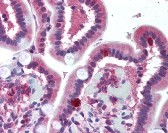
Immunohistochemistry staining of FPR1 in small intestine tissue using FPR1 Antibody.| Product Name | FPR1 Antibody |
|---|---|
| Antibody Type | Primary Antibodies |
| Antigen Alias | FPR1, FPR-1, FMet-Leu-Phe receptor, FMLP, Formyl peptide receptor 1, FPR, N-formyl peptide receptor, FMLP receptor, Fpr receptor, N-formyl peptide receptor 1 |
| Product description | FPR1 is a member of chemoattractant/chemokine GPCRs expressed mainly on leukocytes, neutrophils and monocytes. FPR1 is a seven transmembrane pertussis toxin-sensitive GPCR and binds to formylated peptides generated by bacteria resulting in leukocyte trafficking to the site of inflammation. Ligand binding to FPR results in activation of multiple effectors including phospholipase C leading to calcium mobilization and PKC activation. Other implications of FPR signaling include polarization of actin cytoskeletion, activation of various integrins, increased cell migration, phagocytosis, degranulation and release of reactive oxygen intermediates. Formyl peptide receptor 1, a Chemoattractant Receptor, mediates chemotaxis, degranulation, and superoxide production, as part of the inflammatory response. Bacterial N-formylmethionyl peptides and Annexin A1, specific ligands for FPR1, attract polymorphonuclear neutrophils to sites of infection. FPR receptors promote the phosphorylation and downregulation of CCR5, which has been shown to inhibit HIV infection. Therefore, ligands for an FPR receptor may be able to inhibit HIV infection. |
| Immunogen | A synthetic peptide corresponding to amino acids 176-190 of human FPR1 (CTFNFSPWTNDPKER), GenBank no. NP_002020.1|. Percent identity by BLAST analysis: Human, Chimpanzee, Gorilla, Orangutan (100%); Gibbon (93%); Elephant (80%); Mouse (67%); Rat (47%). |
| Clonality | Polyclonal |
|---|---|
| Host Species | Rabbit |
| Tested Applications | IHCWB |
| FPR1 antibody can be used in ELISA, Western Blot starting at 1:500 - 1:1000, and immunohistochemistry starting at 5 μg/mL.: |
|
| Species Reactivity | ChimpanzeeGorillaHumanOrangutan |
| Concentration | 1mg/ml |
| Purification | Affinity purified |
| Gene Symbol | FPR1 |
|---|---|
| Alternative Names | FPR1 FPR-1 FMet-Leu-Phe receptor FMLP Formyl peptide receptor 1 FPR N-formyl peptide receptor FMLP receptor Fpr receptor N-formyl peptide receptor 1 |
| Tissue Specificity | The amino acid sequence used as immunogen is 100% homologous in human, chimp, gorilla and orangutan, and 67% homologous in mouse. |
Application
Immunohistochemistry staining of FPR1 in small intestine tissue using FPR1 Antibody.| Application Notes | FPR1 antibody can be used in ELISA, Western Blot starting at 1:500 - 1:1000, and immunohistochemistry starting at 5 μg/mL.: |
|---|
| Form | Liquid |
|---|---|
| Storage Instructions | FPR1 antibody can be stored short term 4 ˚C. For long term storage aliquot and store at -20 ˚C. As with all antibodies avoid freeze/thaw cycles. |
| Storage Buffer | PBS, 0.2% gelatin, 0.05% sodium azide. |


