Application
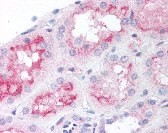
Immunohistochemistry staining of FRAP1 in kidney tissue using FRAP1 Antibody.| Product Name | FRAP1 (phospho Ser2448) Antibody |
|---|---|
| Antibody Type | Primary Antibodies |
| Antigen Alias | MTOR, FRAP1, FRAP2, FRAP, Mammalian target of rapamycin, RAFT1, Rapamycin and FKBP12 target 1, RAPT1, Rapamycin target protein 1 |
| Product description | Mammalian target of rapamycin (mTOR) is a serine and threonine protein kinase that regulates numerous cellular functions, in particular, the initiation of protein translation. Rapamycin is a natural product macrolide that induces G1 growth arrest in yeast, Drosophila, and mammalian cells. mTOR has a long list of synonyms including FK506 binding protein12 - rapamycin associated protein 1, FK506 binding protein12 - rapamycin associated protein 2, FRAP1, FRAP2, RAFT1, RAPT1 and/or FKBP12-rapamycin associated protein (FRAP). mTOR is one of a family of proteins involved in cell cycle progression, DNA recombination, and DNA damage detection. In rat, mTOR is a 245-kD protein referred to as RAFT1 with significant homology to the Saccharomyces cerevisiae protein TOR1 and has been shown to associate with the immunophilin FKBP12 in a rapamycin-dependent fashion. The FKBP12-rapamycin complex is known to inhibit progression through the G1 cell cycle stage by interfering with mitogenic signaling pathways involved in G1 progression in several cell types, as well as in yeast. The binding of mTOR to FKBP12-rapamycin correlates with the ability of these ligands to inhibit cell cycle progression. |
| Immunogen | FRAP1 antibody was raised against phospho amino acids 2440 - 2457 of FRAP1 (Human). |
| Modification | p-Ser2448 |
| Clonality | Polyclonal |
|---|---|
| Host Species | Rabbit |
| Tested Applications | ELISAIHCWB |
| FRAP1 antibody can be used in ELISA starting at 1:000 - 1:1000, and immunohistochemistry starting at 2.5 μg/mL.: |
|
| Species Reactivity | Human |
| Concentration | 1mg/ml |
| Purification | Affinity purified |
| Gene Symbol | MTOR |
|---|---|
| Alternative Names | MTOR FRAP1 FRAP2 FRAP Mammalian target of rapamycin RAFT1 Rapamycin and FKBP12 target 1 RAPT1 Rapamycin target protein 1 |
| Tissue Specificity | pSer2448 |
Application
Immunohistochemistry staining of FRAP1 in kidney tissue using FRAP1 Antibody.| Application Notes | FRAP1 antibody can be used in ELISA starting at 1:000 - 1:1000, and immunohistochemistry starting at 2.5 μg/mL.: |
|---|
| Form | Liquid |
|---|---|
| Storage Instructions | Store FRAP1 antibody at -20 ˚C prior to opening. Dilute only prior to immediate use. For extended storage aliquot contents and freeze at -20 ˚C or below. As with all antibodies avoid freeze/thaw cycles. |
| Storage Buffer | 0.02 M potassium phosphate, 0.15 M sodium chloride, pH 7.2, 0.01% sodium azide. |


