Application
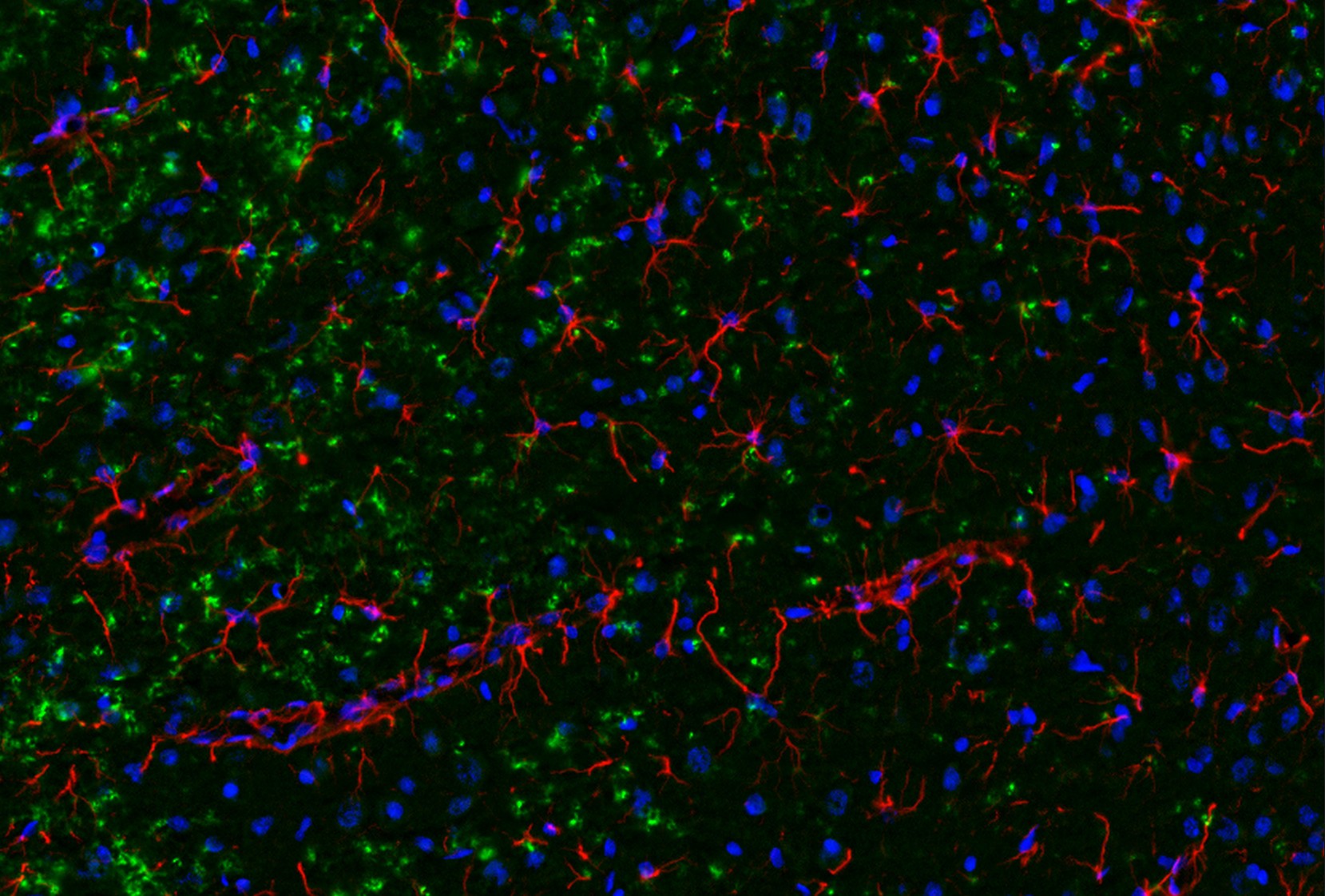
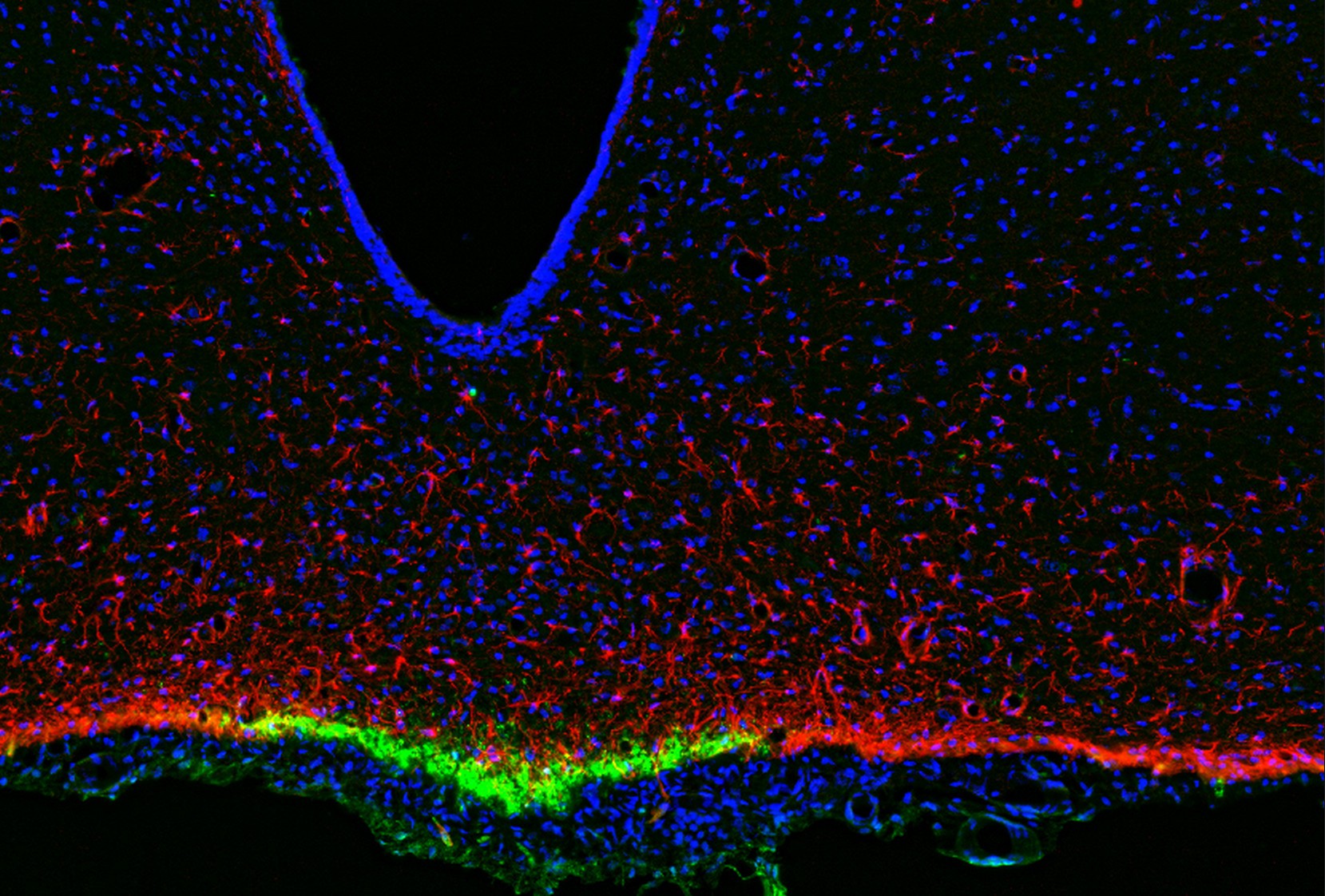
This antibody stained colchicine injected rat brain (including the cortex and median eminence) tissue. The primary antibody was incubated at 0.25 mg/ml overnight at 4˚C. This was followed by a peroxidase conjugated secondary antibody and then a fluorescein Tyramide Signal Amplification (TSA) reagent. Optimal concentrations and conditions may vary.Application
This antibody stained colchicine injected rat brain (including the cortex and median eminence) tissue. The primary antibody was incubated at 0.25 mg/ml overnight at 4˚C. This was followed by a peroxidase conjugated secondary antibody and then a fluorescein Tyramide Signal Amplification (TSA) reagent. Optimal concentrations and conditions may vary.Application
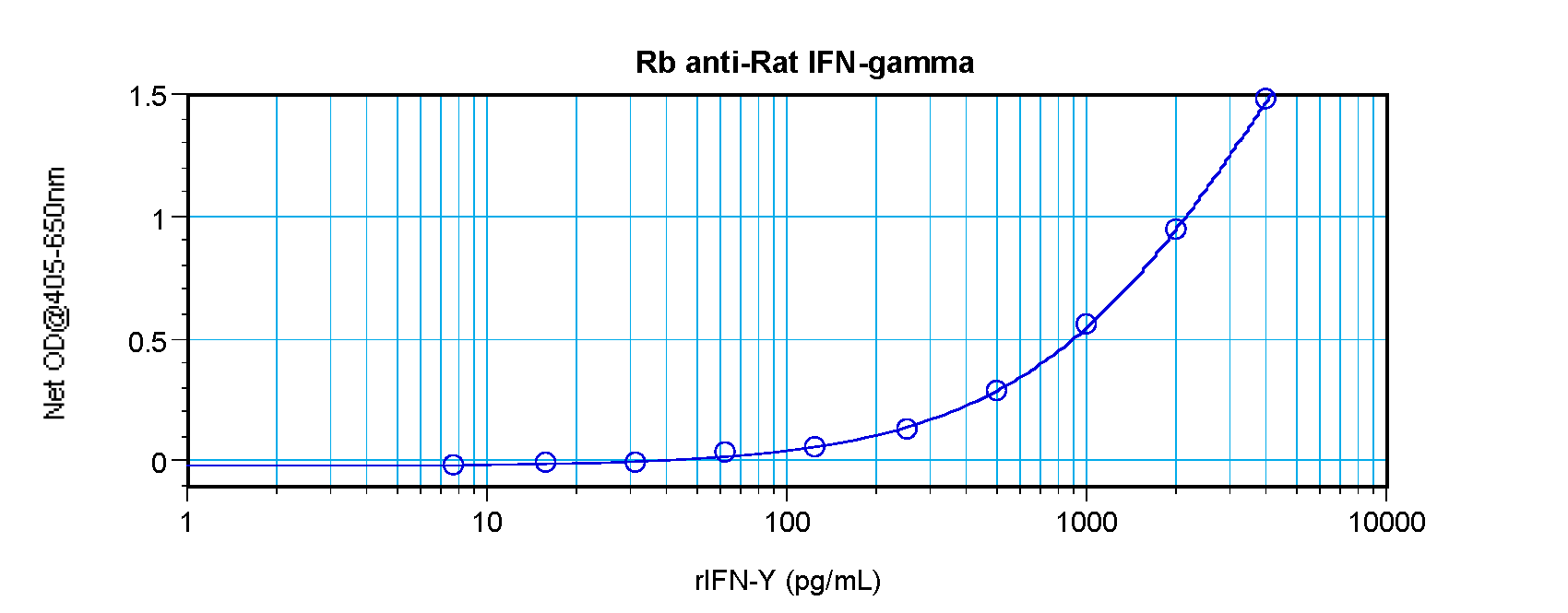
To detect Rat IFN-gamma by sandwich ELISA (using 100 ul/well antibody solution) a concentration of 0.5 - 2.0 ug/ml of this antibody is required. This antigen affinity purified antibody, in conjunction with ProSci’s Biotinylated Anti-Rat IFN-gamma (38-257) as a detection antibody, allows the detection of at least 0.2 - 0.4 ng/well of recombinant Rat IFN-gamma.| Product Name | IFN-g Antibody |
|---|---|
| Antibody Type | Primary Antibodies |
| Antigen Alias | IFNG2Interferon gammaIFN-gamma |
| Immunogen | Produced from sera of rabbits pre-immunized with highly pure (>98%) recombinant Rat IFN-γ. Rat IFN-γ specific antibody was purified by affinity chromatography employing immobilized Rat IFN-γ matrix. |
| Clonality | Polyclonal |
|---|---|
| Host Species | Rabbit |
| Tested Applications | ELISAWB |
| ELISA: Indirect: To detect Rat IFN-γ by indirect ELISA (using 100 μL/well antibody solution) a concentration of 0.5 - 2.0 μg/mL of this antibody is required. This antigen affinity purified antibody, in conjunction with compatible secondary reagents, allows the detection of at least 0.2 - 0.4 ng/well of recombinant Rat IFN-γ. Sandwich To detect Rat IFN-γ by sandwich ELISA (using 100 μL/well antibody solution) a concentration of 0.5 - 2.0 μg/mL of this antibody is required. This antigen affinity purified antibody, in conjunction with our Biotinylated Anti-Rat IFN-γ (38-257) as a detection antibody, allows the detection of at least 0.2 - 0.4 ng/well of recombinant Rat IFN-γ. Western Blot: To detect Rat IFN-γ by Western Blot analysis this antibody can be used at a concentration of 0.1-0.2 μg/mL. Used in conjunction with compatible secondary reagents the detection limit for recombinant Rat IFN-γ is 1.5-3.0 ng/lane, under either reducing or non-reducing conditions.: |
|
| Species Reactivity | Rat |
| Concentration | 1mg/ml |
| Gene Symbol | Ifng |
|---|---|
| Alternative Names | IFNG2Interferon gammaIFN-gamma |
Application
This antibody stained colchicine injected rat brain (including the cortex and median eminence) tissue. The primary antibody was incubated at 0.25 mg/ml overnight at 4˚C. This was followed by a peroxidase conjugated secondary antibody and then a fluorescein Tyramide Signal Amplification (TSA) reagent. Optimal concentrations and conditions may vary.
Application
To detect Rat IFN-gamma by sandwich ELISA (using 100 ul/well antibody solution) a concentration of 0.5 - 2.0 ug/ml of this antibody is required. This antigen affinity purified antibody, in conjunction with ProSci’s Biotinylated Anti-Rat IFN-gamma (38-257) as a detection antibody, allows the detection of at least 0.2 - 0.4 ng/well of recombinant Rat IFN-gamma.| Application Notes | ELISA: Indirect: To detect Rat IFN-γ by indirect ELISA (using 100 μL/well antibody solution) a concentration of 0.5 - 2.0 μg/mL of this antibody is required. This antigen affinity purified antibody, in conjunction with compatible secondary reagents, allows the detection of at least 0.2 - 0.4 ng/well of recombinant Rat IFN-γ. Sandwich To detect Rat IFN-γ by sandwich ELISA (using 100 μL/well antibody solution) a concentration of 0.5 - 2.0 μg/mL of this antibody is required. This antigen affinity purified antibody, in conjunction with our Biotinylated Anti-Rat IFN-γ (38-257) as a detection antibody, allows the detection of at least 0.2 - 0.4 ng/well of recombinant Rat IFN-γ. Western Blot: To detect Rat IFN-γ by Western Blot analysis this antibody can be used at a concentration of 0.1-0.2 μg/mL. Used in conjunction with compatible secondary reagents the detection limit for recombinant Rat IFN-γ is 1.5-3.0 ng/lane, under either reducing or non-reducing conditions.: |
|---|
| Form | Liquid |
|---|---|
| Storage Instructions | The lyophilized antibody is stable for at least 2 years from date of receipt at -20˚C. The reconstituted antibody is stable for at least two weeks at 2-80˚C. Frozen aliquots are stable for at least 6 months when stored at -20˚C. Avoid repeated freeze-thaw cycles. |
| Storage Buffer | phosphate buffered saline , pH 7.4, 150mM NaCl, 0.02% sodium azide and 50% glycerol. |


