Application
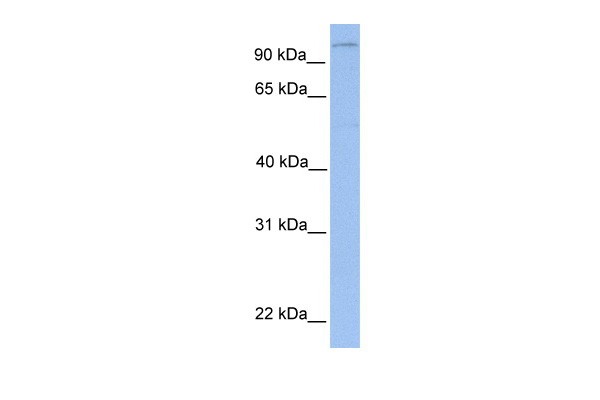
Antibody used in WB on Human 721_B cells at 0.2-1 ug/ml.| Product Name | LPIN1 Antibody |
|---|---|
| Antibody Type | Primary Antibodies |
| Antigen Alias | LPIN1, DKFZp781P1796, KIAA0188, PAP1 |
| Product description | This gene represents a candidate gene for human lipodystrophy, characterized by loss of body fat, fatty liver, hypertriglyceridemia, and insulin resistance. Mouse studies suggest that LPIN1 functions during normal adipose tissue development and may also play a role in human triglyceride metabolism. This gene represents a candidate gene for human lipodystrophy, characterized by loss of body fat, fatty liver, hypertriglyceridemia, and insulin resistance. Mouse studies suggest that this gene functions during normal adipose tissue development and may also play a role in human triglyceride metabolism. Publication Note: This RefSeq record includes a subset of the publications that are available for this gene. Please see the Entrez Gene record to access additional publications.1) Ong, K.L., (2008) Am. J. Hypertens. 21 (5), 539-545. |
| Immunogen | Antibody produced in rabbits immunized with a synthetic peptide corresponding a region of human LPIN1. |
| Clonality | Polyclonal |
|---|---|
| Host Species | Rabbit |
| Tested Applications | WB |
| LPIN1 antibody can be used for detection of LPIN1 by ELISA at 1:12500. LPIN1 antibody can be used for detection of LPIN1 by western blot at 1 μg/mL, and HRP conjugated secondary antibody should be diluted 1:50,000 - 100,000.: |
|
| Species Reactivity | Human |
| Concentration | 1mg/ml |
| Purification | Affinity purified |
| Gene Symbol | LPIN1 |
|---|---|
| Alternative Names | LPIN1 DKFZp781P1796 KIAA0188 PAP1 |
| Molecular Weight(MW) | 98 kDa |
Application
Antibody used in WB on Human 721_B cells at 0.2-1 ug/ml.| Positive Control | 1) 721_B Cell Lysate |
|---|---|
| Application Notes | LPIN1 antibody can be used for detection of LPIN1 by ELISA at 1:12500. LPIN1 antibody can be used for detection of LPIN1 by western blot at 1 μg/mL, and HRP conjugated secondary antibody should be diluted 1:50,000 - 100,000.: |
| Form | Liquid |
|---|---|
| Storage Instructions | For short periods of storage (days) store at 4˚C. For longer periods of storage, store LPIN1 antibody at -20˚C. As with any antibody avoid repeat freeze-thaw cycles. |
| Storage Buffer | Antibody is lyophilized in PBS buffer with 2% sucrose. Add 50 μL of distilled water. Final antibody concentration is 1 mg/mL. |


