Application
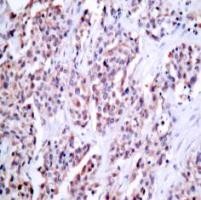
Immunohistochemical analysis of paraffin-embedded human breast carcinoma tissue using NFκB-p100/p52 (Ab-870).Application
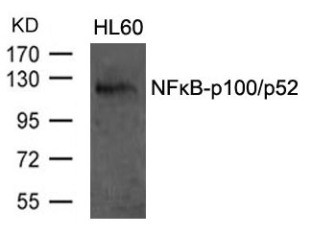
Western blot analysis of lysed extracts from HL60 cells using NFκB-p100/p52 (Ab-870).| Product Name | NFkB p100 / p52 Antibody |
|---|---|
| Antibody Type | Primary Antibodies |
| Antigen Alias | p52, p105, H2TF1, LYT10, CVID10, LYT-10, NF-kB2, FKHR, FOXO1A, DNA-binding factor KBF2, Lymphocyte translocation chromosome 10, Lyt10, NFKB2 |
| Product description | NFKB has been detected in numerous cell types that express cytokines, chemokines, growth factors, cell adhesion molecules, and some acute phase proteins in health and in various disease states. NFKB is activated by a wide variety of stimuli such as cytokines, oxidant-free radicals, inhaled particles, ultraviolet irradiation, and bacterial or viral products. Inappropriate activation of NF-κ-B has been linked to inflammatory events associated with autoimmune arthritis, asthma, septic shock, lung fibrosis, glomerulonephritis, atherosclerosis, and AIDS. In contrast, complete and persistent inhibition of NF-κ-B has been linked directly to apoptosis, inappropriate immune cell development, and delayed cell growth.1) Qu Z, et al. (2004) J Biol Chem; 279 (43): 44563-72. Xiao G, et al. (2001) J Biol Chem 7 (2): 401-9. |
| Immunogen | NFkB-p100/p52 (Ab-870) antibody was raised against a peptide sequence around aa.868~872 (Y-G-S-Q-S) derived from Human NFκB-p100/p52. |
| Clonality | Polyclonal |
|---|---|
| Host Species | Rabbit |
| Tested Applications | IHCWB |
| Western Blot: 1:500~1:1000, Immunohistochemistry: 1:50~1:100: |
|
| Species Reactivity | HumanMouse |
| Concentration | 1mg/ml |
| Purification | Affinity purified |
| Gene Symbol | NFKB2 |
|---|---|
| Alternative Names | p52 p105 H2TF1 LYT10 CVID10 LYT-10 NF-kB2 FKHR FOXO1A DNA-binding factor KBF2 Lymphocyte translocation chromosome 10 Lyt10 NFKB2 |
| Molecular Weight(MW) | 120 kDa |
| Tissue Specificity | This antibody detects endogenous level of total NFκB-p100/p52 protein. |
| Entrez Gene | 4791 |
|---|---|
| Protein Accession | NP_001070961.1 |
Application
Immunohistochemical analysis of paraffin-embedded human breast carcinoma tissue using NFκB-p100/p52 (Ab-870).
Application
Western blot analysis of lysed extracts from HL60 cells using NFκB-p100/p52 (Ab-870).| Application Notes | Western Blot: 1:500~1:1000, Immunohistochemistry: 1:50~1:100: |
|---|
| Form | Liquid |
|---|---|
| Storage Instructions | Store antibody at -20˚C for up to one year. |
| Storage Buffer | Antibody supplied in phosphate buffered saline (without Mg2+ and Ca2+), pH 7.4, 150mM NaCl, 0.02% sodium azide and 50% glycerol. |


