Application
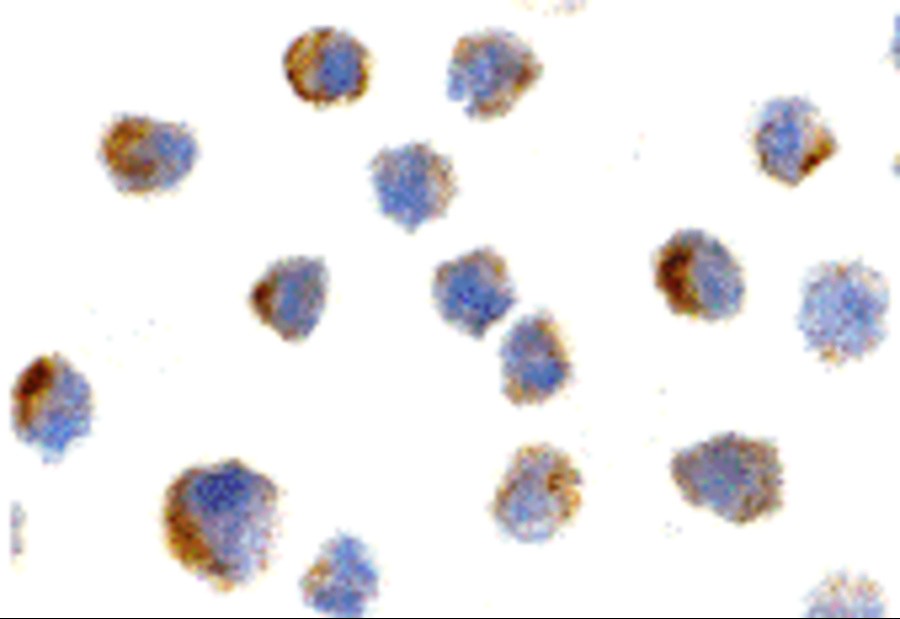
Immunocytochemistry of NGFR in A20 cells with NGFR antibody at 10 μg/mL.Application
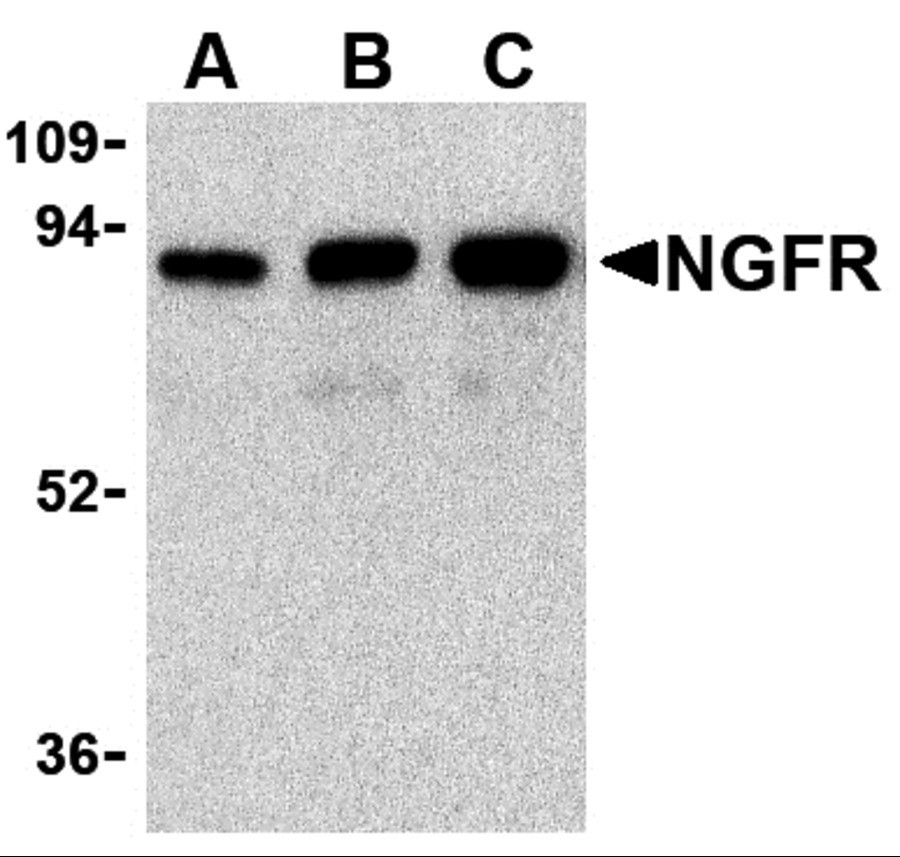
Western blot analysis of (A) 25 ng, (B) 50 ng, and (C) 100 ng of purified recombinant NGFR with NGFR antibody at 1 μg/mL.| Product Name | NGFR Antibody |
|---|---|
| Antibody Type | Primary Antibodies |
| Antigen Alias | NGFR Antibody: CD271, p75NTR, TNFRSF16, p75(NTR), Gp80-LNGFR, Tumor necrosis factor receptor superfamily member 16, NGF receptor |
| Product description | NGFR Antibody: The tumor necrosis factor (TNF) and TNF receptor (TNFR) gene superfamilies regulate numerous biological functions including cell proliferation, differentiation, and survival through regulating the activation of the transcription factor NF-κB and various mitogen-activated protein kinases. Nerve growth factor receptor (NGFR) was one of the earliest characterized members of this family. Also known as the low-affinity receptor p75NTR, this receptor is involved in several diverse functions such as apoptosis, neurite outgrowth during development, and myelination. Its ligands include NGF, brain-derived neurotrophic factor (BDNF), NT3, and NT4. NGFR can also associate with other NGF receptors such as Trk through the cytosolic and transmembrane domains and thus can function as a co-receptor that refines Trk affinity and specificity for neurotrophins. Finally, upon binding of various neurotrophins, NGFR associates with tumor necrosis factor receptor-6 (TRAF6), suggesting that it can potentially function as a signal transducer for NGF signals through NGFR.1) Gaur U, Aggarwal BB. Regulation of proliferation, survival and apoptosis by members of the TNF superfamily. Biochem. Pharmacol. 2003; 66:1403-8. |
| Immunogen | NGFR antibody was raised against purified recombinant human NGFR. |
| Clonality | Polyclonal |
|---|---|
| Isotype | IgG |
| Host Species | Rabbit |
| Tested Applications | ELISAICCWB |
| NGFR antibody can be used for the detection of NGFR by Western blot at 1 μg/mL. Antibody can also be used for immunocytochemistry starting at 10 μg/mL.: |
|
| Species Reactivity | HumanMouse |
| Concentration | 1mg/ml |
| Purification | Affinity purified |
| Gene Symbol | NGFR |
|---|---|
| Alternative Names | NGFR Antibody: CD271 p75NTR TNFRSF16 p75(NTR) Gp80-LNGFR Tumor necrosis factor receptor superfamily member 16 NGF receptor |
| Sequence Similarities | 2) Cat. No. 17-208 - A-20 Cell Slide |
Application
Immunocytochemistry of NGFR in A20 cells with NGFR antibody at 10 μg/mL.
Application
Western blot analysis of (A) 25 ng, (B) 50 ng, and (C) 100 ng of purified recombinant NGFR with NGFR antibody at 1 μg/mL.| Positive Control | 1) Cat. No. 1288 - A20 Cell Lysate |
|---|---|
| Application Notes | NGFR antibody can be used for the detection of NGFR by Western blot at 1 μg/mL. Antibody can also be used for immunocytochemistry starting at 10 μg/mL.: |
| Form | Liquid |
|---|---|
| Storage Instructions | NGFR antibody can be stored at 4˚C for three months and -20˚C, stable for up to one year. As with all antibodies care should be taken to avoid repeated freeze thaw cycles. Antibodies should not be exposed to prolonged high temperatures. |
| Storage Buffer | NGFR Antibody is supplied in PBS containing 0.02% sodium azide. |


