Application
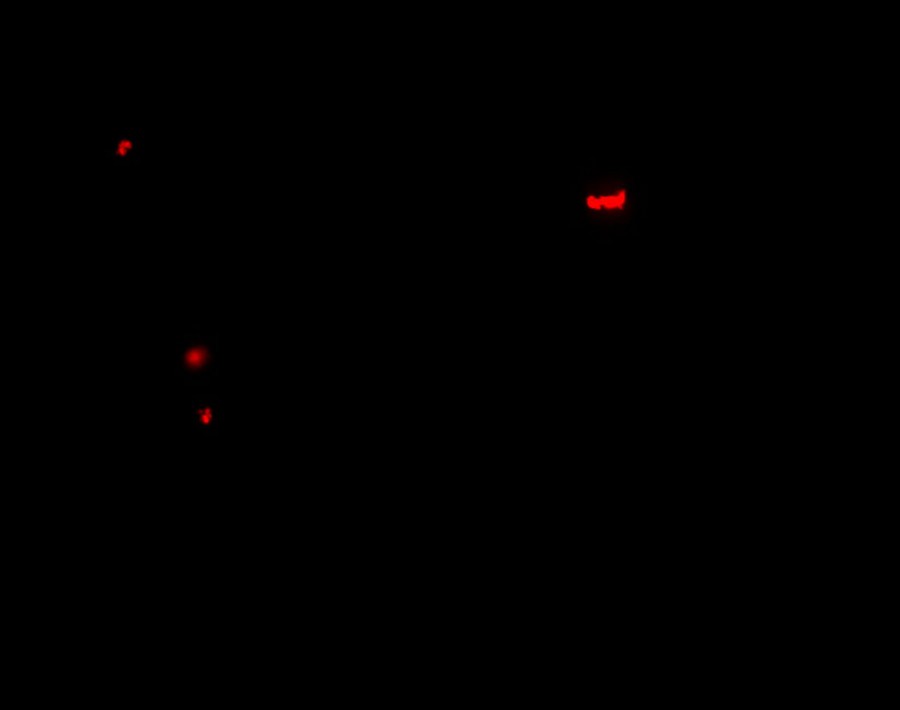
Immunofluorescence of PANX1 in human ovary tissue with PANX1 antibody at 20 μg/mL.Application
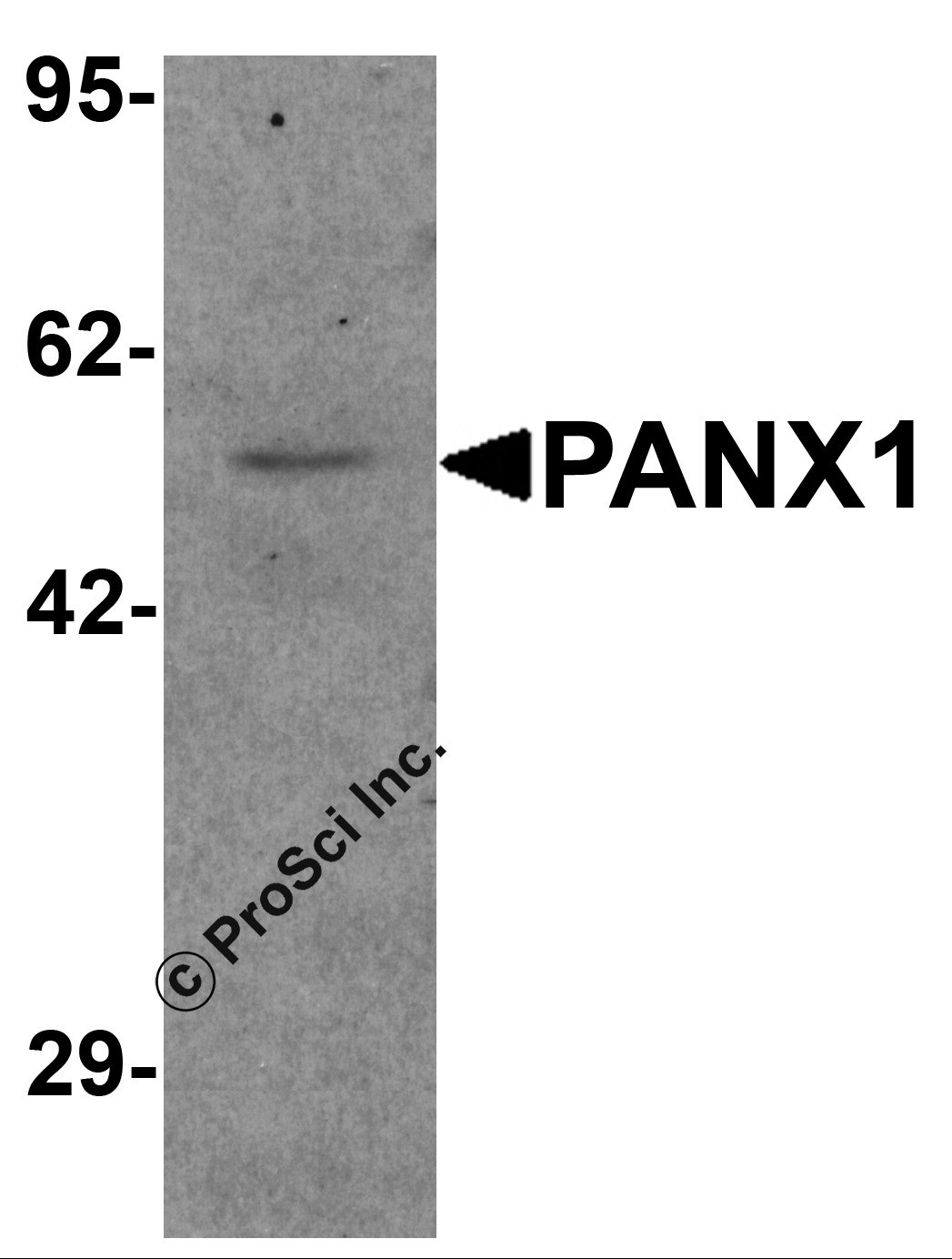
Western blot analysis of PANX1 in human ovary tissue lysate with PANX1 antibody at 1 μg/mL.| Product Name | PANX1 Antibody |
|---|---|
| Antibody Type | Primary Antibodies |
| Product description | PANX1 Antibody: The pannexin gene family encodes a second class of putative gap junction proteins and are highly conserved in invertebrates and mammals. Pannexins (Panx) are four-pass transmembrane proteins that oligomerize to form large pore ion and metabolite-permeable channels. Pannexin-1 (PANX1) and Pannexin-3 are closely related, while Pannexin-2 is a more distant relation. PANX1 is a transmembrane protein that forms a mechanosensitive ATP-permeable channel between adjacent cells and in the endoplasmic reticulum. PANX1 may play a role as a Ca2+ -leak channel to regulate ER Ca2+ homeostasis and regulates neural stem and progenitor cell proliferation.1) Barbe MT, Monyer H and Bruzzone R. Cell-cell communication beyond connexins: the pannexin channels. Physiology 2006; 21:103-14. |
| Immunogen | Rabbit polyclonal PANX1 antibody was raised against a 17 amino acid peptide near the amino terminus of human PANX1. The immunogen is located within amino acids 70 - 120 of PANX1. |
| Clonality | Polyclonal |
|---|---|
| Isotype | IgG |
| Host Species | Rabbit |
| Tested Applications | ELISAIFWB |
| PANX1 antibody can be used for detection of PANX1 by Western blot at 1 - 2 μg/mL. For immunofluorescence start at 20 μg/mL. | |
| Species Reactivity | HumanMouseRat |
| Concentration | 1mg/ml |
| Purification | Affinity purified |
| Gene Symbol | PANX1 |
|---|---|
| Alternative Names | PANX1 Antibody: PX1 MRS1 UNQ2529 UNQ2529/PRO6028 Pannexin-1 |
| Molecular Weight(MW) | 47 kDa |
| Sequence Similarities | 2) Cat. No. 11-201 - Human Ovary Tissue Slide |
| Tissue Specificity | Two transcript variants encoding different isoforms have been found for this gene. |
Application
Immunofluorescence of PANX1 in human ovary tissue with PANX1 antibody at 20 μg/mL.
Application
Western blot analysis of PANX1 in human ovary tissue lysate with PANX1 antibody at 1 μg/mL.| Positive Control | 1) Cat. No. 1316 - Human Ovary Tissue Lysate |
|---|---|
| Application Notes | PANX1 antibody can be used for detection of PANX1 by Western blot at 1 - 2 μg/mL. For immunofluorescence start at 20 μg/mL. |
| Form | Liquid |
|---|---|
| Storage Instructions | PANX1 antibody can be stored at 4˚C for three months and -20˚C, stable for up to one year. As with all antibodies care should be taken to avoid repeated freeze thaw cycles. Antibodies should not be exposed to prolonged high temperatures. |
| Storage Buffer | PANX1 Antibody is supplied in PBS containing 0.02% sodium azide. |


