Application
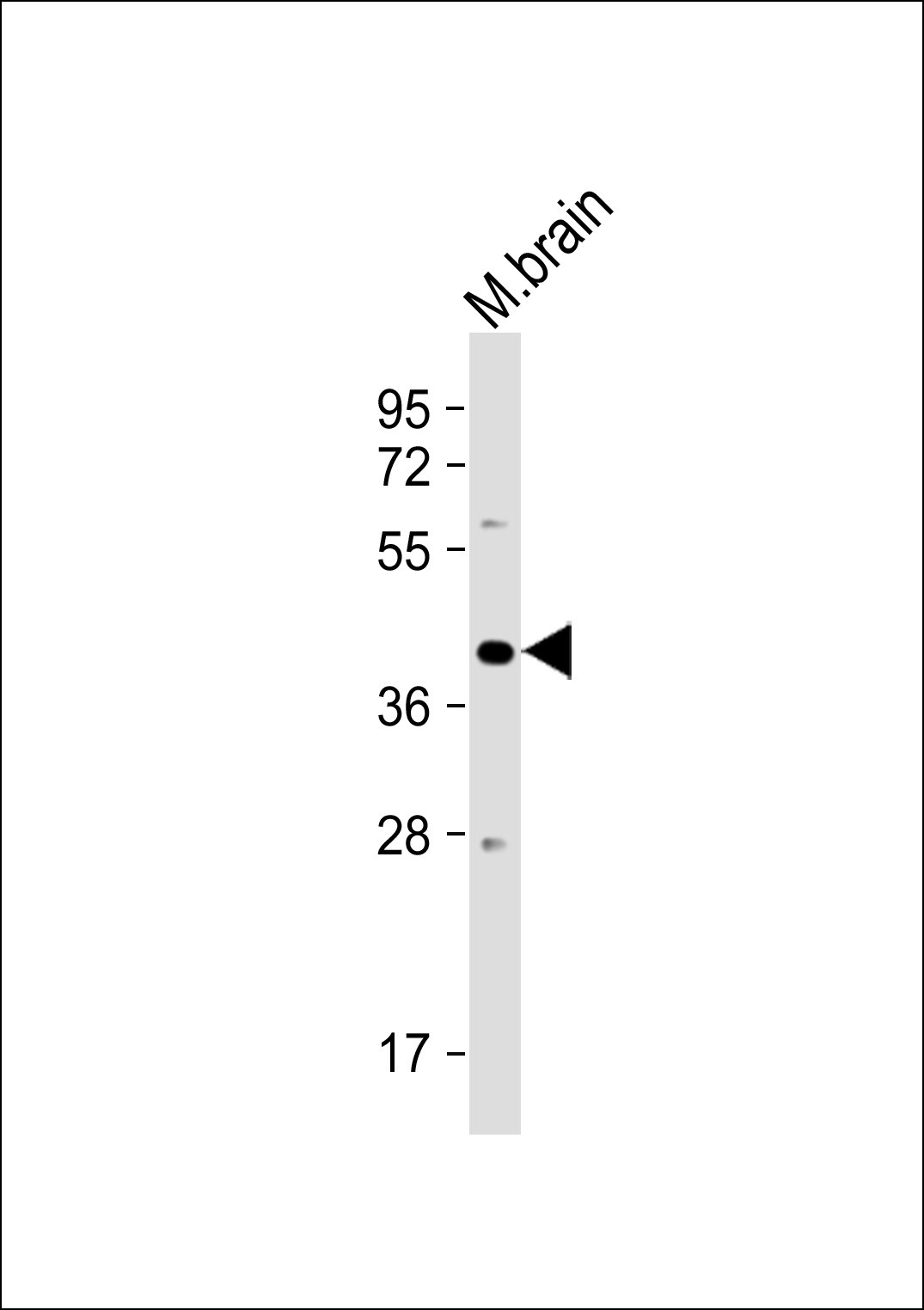
Western blot analysis in MCF-7 cell line and mouse liver,brain tissue lysates (35ug/lane).Application
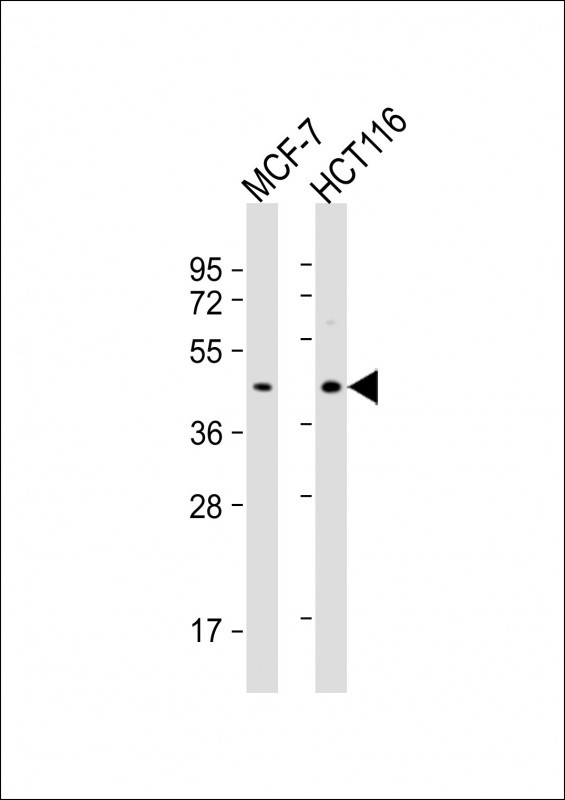
Western Blot at 1:1000 dilution Lane 1: MCF-7 whole cell lysate Lane 2: HCT116 whole cell lysate Lysates/proteins at 20 ug per lane.| Product Name | PSG3 Antibody |
|---|---|
| Antibody Type | Primary Antibodies |
| Antigen Alias | Pregnancy-specific beta-1-glycoprotein 3, PS-beta-G-3, PSBG-3, Pregnancy-specific glycoprotein 3, Carcinoembryonic antigen SG5, PSG3 |
| Product description | The human pregnancy-specific glycoproteins (PSGs) are a family of proteins that are synthesized in large amounts by placental trophoblasts and released into the maternal circulation during pregnancy. Molecular cloning and analysis of several PSG genes has indicated that the PSGs form a subgroup of the carcinoembryonic antigen (CEA) gene family, which belongs to the immunoglobulin superfamily of genes. Members of the CEA family consist of a single N domain, with structural similarity to the immunoglobulin variable domains, followed by a variable number of immunoglobulin constant-like A and/or B domains. Most PSGs have an arg-gly-asp (RGD) motif, which has been shown to function as an adhesion recognition signal for several integrins, in the N-terminal domain (summary by Teglund et al., 1994 [PubMed 7851896]). For additional general information about the PSG gene family, see PSG1 (MIM 176390).1) Colland, F., et al. Genome Res. 14(7):1324-1332(2004) |
| Immunogen | This PSG3 antibody is generated from rabbits immunized with a KLH conjugated synthetic peptide between 22-50 amino acids from the N-terminal region of human PSG3. |
| Clonality | Polyclonal |
|---|---|
| Isotype | Ig |
| Host Species | Rabbit |
| Tested Applications | WB |
| For WB starting dilution is: 1:1000: |
|
| Species Reactivity | HumanMouse |
| Concentration | 1mg/ml |
| Purification | Affinity purified |
| Gene Symbol | PSG3 |
|---|---|
| Alternative Names | Pregnancy-specific beta-1-glycoprotein 3 PS-beta-G-3 PSBG-3 Pregnancy-specific glycoprotein 3 Carcinoembryonic antigen SG5 PSG3 |
| Molecular Weight(MW) | 48 kDa |
Application
Western blot analysis in MCF-7 cell line and mouse liver,brain tissue lysates (35ug/lane).
Application
Western Blot at 1:1000 dilution Lane 1: MCF-7 whole cell lysate Lane 2: HCT116 whole cell lysate Lysates/proteins at 20 ug per lane.| Application Notes | For WB starting dilution is: 1:1000: |
|---|
| Form | Liquid |
|---|---|
| Storage Instructions | Store at 4˚C for three months and -20˚C, stable for up to one year. As with all antibodies care should be taken to avoid repeated freeze thaw cycles. Antibodies should not be exposed to prolonged high temperatures. |
| Storage Buffer | Supplied in PBS with 0.09% (W/V) sodium azide. |


