Application
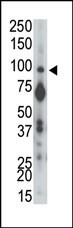
Antibody is used in Western blot to detect PTPalpha in mouse brain tissue lysate.| Product Name | PTP alpha Antibody |
|---|---|
| Antibody Type | Primary Antibodies |
| Antigen Alias | Receptor-type tyrosine-protein phosphatase alpha, Protein-tyrosine phosphatase alpha, R-PTP-alpha, PTPRA, PTPA, PTPRL2 |
| Product description | Phosphorylation of receptors by protein kinases is a process that can be reversed by a group of enzymes called protein phosphatases. Coordinated control of kinases and phosphatases provides the cell with the capacity to rapidly switch between phosphorylated and dephosphorylated protein states in dynamic response to environmental stimuli. Activation of critical enzymes by kinase phosphorylation alone is not enough to provide adequate regulation ?it is the combination with phosphatase dephosphorylation that effectively creates on/off switches to control cellular events. Errors in control, either through kinases or their counterpart phosphatases, can lead to unchecked cell growth attributable to human cancers and developmental disorders. Potential mechanisms to control dephosphorylation include changes in the expression of protein phosphatases, their subcellular localization, phosphorylation of phosphatase catalytic and regulatory subunits and regulation by endogenous phosphatase inhibitors. Most protein phosphatases are not stringently specific for their substrates. Consequently, changes in phosphatase activity may have a broad impact on dephosphorylation and turnover of phosphoproteins that are substrates for different kinases. This may be an important point of control to connect cellular circuitry of interrelated signaling pathways, and to synchronize physiological responses.1) Deloukas, P., et al., Nature 414(6866):865-871 (2001). |
| Immunogen | This PTP alpha antibody is generated from rabbits immunized with a KLH conjugated synthetic peptide between 89-120 amino acids from the N-terminal region of human PTP alpha. |
| Clonality | Polyclonal |
|---|---|
| Isotype | Ig |
| Host Species | Rabbit |
| Tested Applications | WB |
| For WB starting dilution is: 1:1000: |
|
| Species Reactivity | HumanMouse |
| Concentration | 1mg/ml |
| Gene Symbol | PTPRA |
|---|---|
| Alternative Names | Receptor-type tyrosine-protein phosphatase alpha Protein-tyrosine phosphatase alpha R-PTP-alpha PTPRA PTPA PTPRL2 |
| Molecular Weight(MW) | 91 kDa |
Application
Antibody is used in Western blot to detect PTPalpha in mouse brain tissue lysate.| Application Notes | For WB starting dilution is: 1:1000: |
|---|
| Form | Liquid |
|---|---|
| Storage Instructions | Store at 4˚C for three months and -20˚C, stable for up to one year. As with all antibodies care should be taken to avoid repeated freeze thaw cycles. Antibodies should not be exposed to prolonged high temperatures. |
| Storage Buffer | Supplied in PBS with 0.09% (W/V) sodium azide. |


