Application
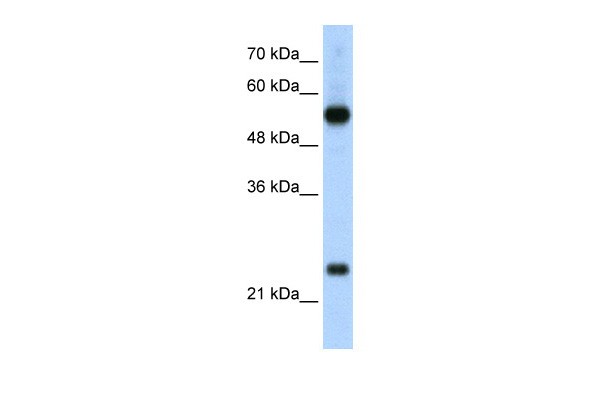
Antibody used in WB on Human HepG2 at 2.5 ug/ml.| Product Name | RPL13 Antibody |
|---|---|
| Antibody Type | Primary Antibodies |
| Antigen Alias | RPL13, BBC1, D16S444E, MGC71373, L13, D16S44E |
| Product description | Ribosomes, the organelles that catalyze protein synthesis, consist of a small 40S subunit and a large 60S subunit. Together these subunits are composed of 4 RNA species and approximately 80 structurally distinct proteins. RPL13 is a ribosomal protein that is a component of the 60S subunit. The protein belongs to the L13E family of ribosomal proteins. It is located in the cytoplasm. This gene is expressed at significantly higher levels in benign breast lesions than in breast carcinomas.Ribosomes, the organelles that catalyze protein synthesis, consist of a small 40S subunit and a large 60S subunit. Together these subunits are composed of 4 RNA species and approximately 80 structurally distinct proteins. This gene encodes a ribosomal protein that is a component of the 60S subunit. The protein belongs to the L13E family of ribosomal proteins. It is located in the cytoplasm. This gene is expressed at significantly higher levels in benign breast lesions than in breast carcinomas. Transcript variants derived from alternative splicing and/or alternative polyadenylation exist; these variants encode the same protein. As is typical for genes encoding ribosomal proteins, there are multiple processed pseudogenes of this gene dispersed through the genome.Ribosomes, the organelles that catalyze protein synthesis, consist of a small 40S subunit and a large 60S subunit. Together these subunits are composed of 4 RNA species and approximately 80 structurally distinct proteins. This gene encodes a ribosomal protein that is a component of the 60S subunit. The protein belongs to the L13E family of ribosomal proteins. It is located in the cytoplasm. This gene is expressed at significantly higher levels in benign breast lesions than in breast carcinomas. Transcript variants derived from alternative splicing and/or alternative polyadenylation exist; these variants encode the same protein. As is typical for genes encoding ribosomal proteins, there are multiple processed pseudogenes of this gene dispersed through the genome.1) Bi, W., (2002) Genome Res. 12 (5), 713-728. |
| Immunogen | Antibody produced in rabbits immunized with a synthetic peptide corresponding a region of human RPL13. |
| Clonality | Polyclonal |
|---|---|
| Host Species | Rabbit |
| Tested Applications | ELISAWB |
| RPL13 antibody can be used for detection of RPL13 by ELISA at 1:1562500. RPL13 antibody can be used for detection of RPL13 by western blot at 2.5 μg/mL, and HRP conjugated secondary antibody should be diluted 1:50,000 - 100,000.: |
|
| Species Reactivity | DogHumanMouse |
| Concentration | 1mg/ml |
| Purification | Protein A |
| Gene Symbol | RPL13 |
|---|---|
| Alternative Names | RPL13 BBC1 D16S444E MGC71373 L13 D16S44E |
| Molecular Weight(MW) | 23 kDa, 24 kDa, 24 kDa, 24 kDa |
Application
Antibody used in WB on Human HepG2 at 2.5 ug/ml.| Positive Control | 1) Cat. No. 1211 - HepG2 Cell Lysate |
|---|---|
| Application Notes | RPL13 antibody can be used for detection of RPL13 by ELISA at 1:1562500. RPL13 antibody can be used for detection of RPL13 by western blot at 2.5 μg/mL, and HRP conjugated secondary antibody should be diluted 1:50,000 - 100,000.: |
| Form | Liquid |
|---|---|
| Storage Instructions | For short periods of storage (days) store at 4˚C. For longer periods of storage, store RPL13 antibody at -20˚C. As with any antibody avoid repeat freeze-thaw cycles. |
| Storage Buffer | Antibody is lyophilized in PBS buffer with 2% sucrose. Add 50 μL of distilled water. Final antibody concentration is 1 mg/mL. |


