Application
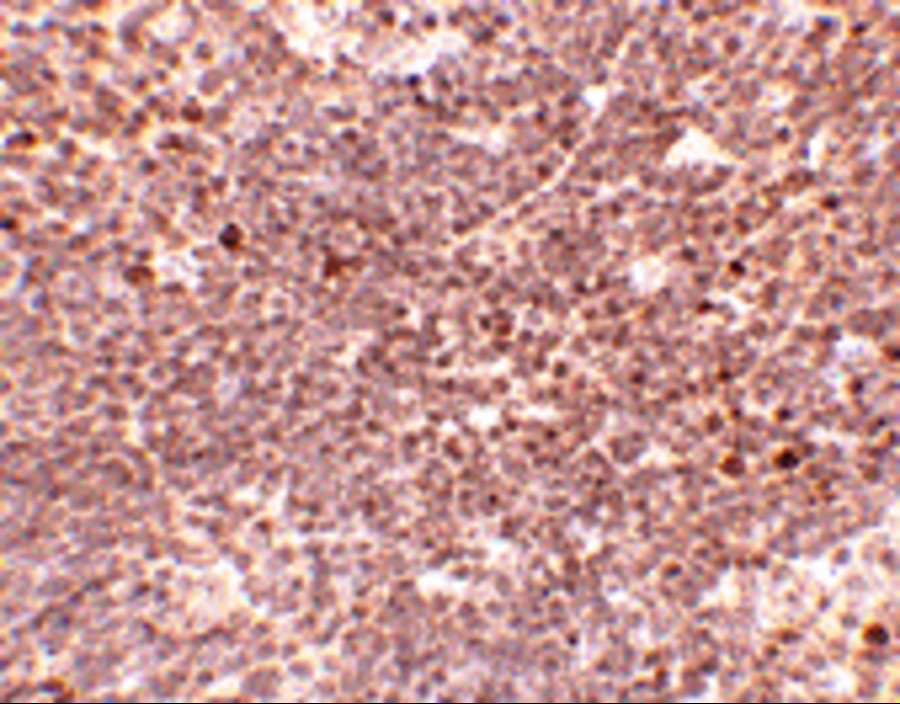
Immunohistochemistry of S1P1 in mouse thymus tissue with S1P1 antibody at 5 μg/mL.Application
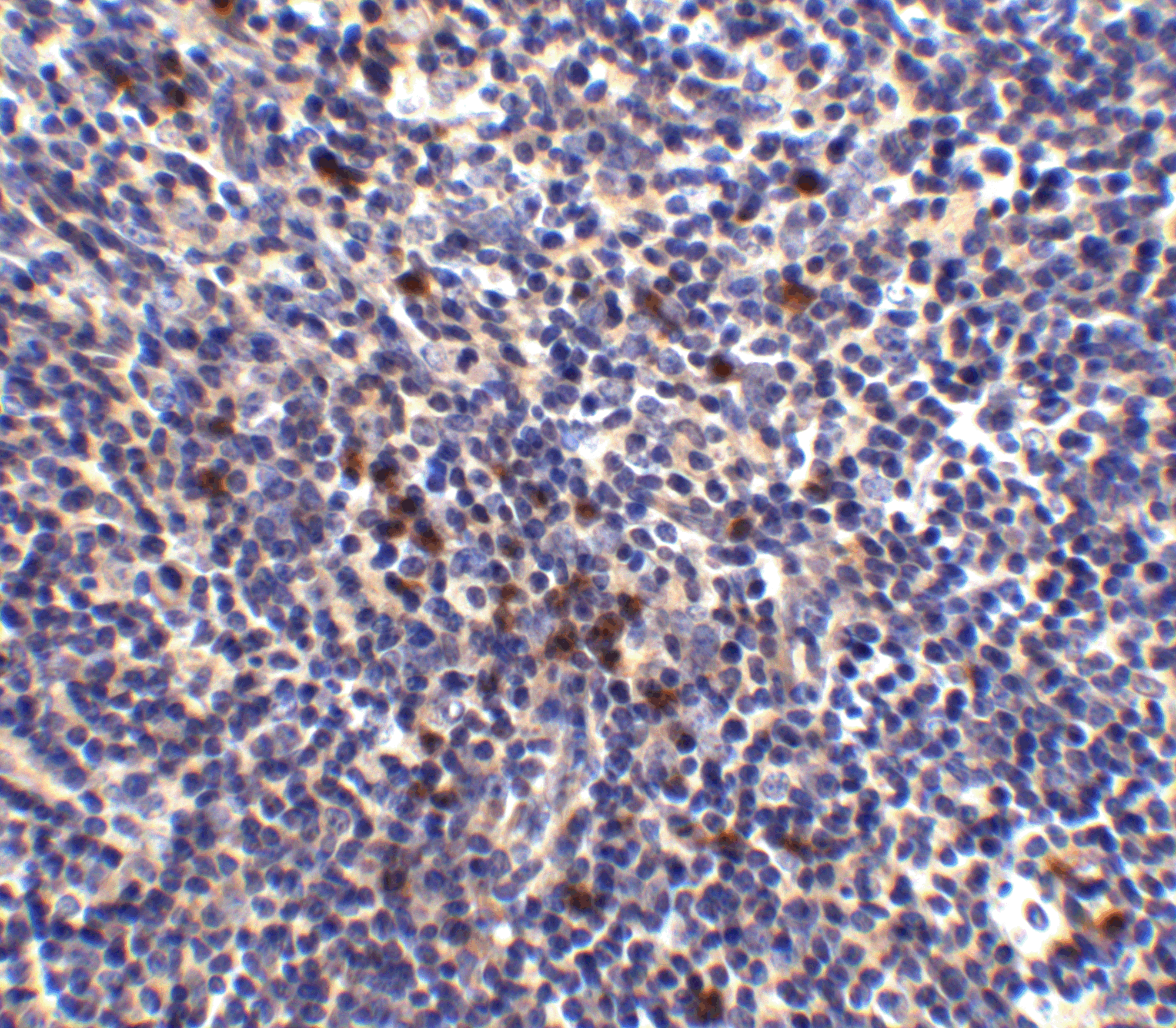
Immunohistochemistry of S1P1 in mouse thymus tissue with S1P1 antibody at 2.5 μg/ml.Application
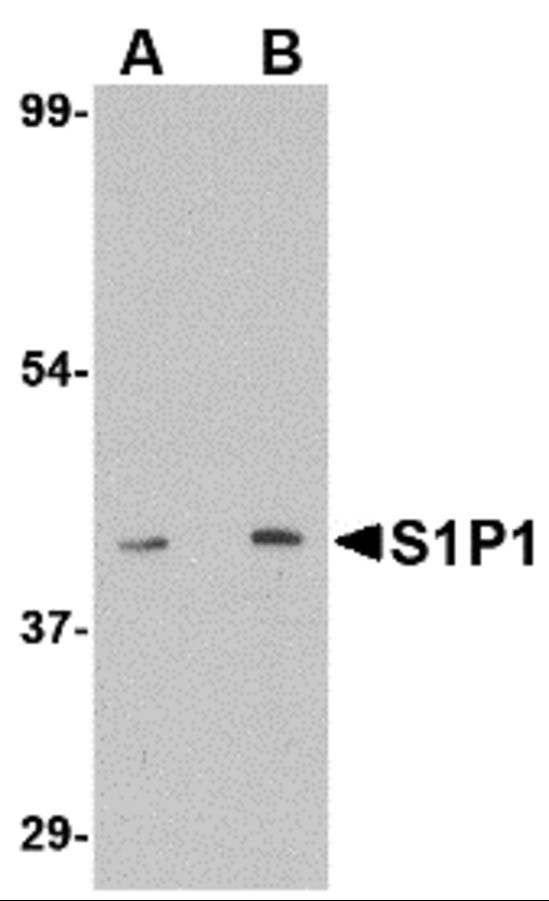
Western blot analysis of S1P1 in mouse thymus lysate with S1P1 antibody at (A) 1 and (B) 2 μg/mL.| Product Name | S1P1 Antibody |
|---|---|
| Antibody Type | Primary Antibodies |
| Antigen Alias | S1P1 Antibody: EDG1, S1P1, CD363, ECGF1, EDG-1, CHEDG1, D1S3362, EDG1, Sphingosine 1-phosphate receptor 1, Endothelial differentiation G-protein coupled receptor 1, S1P receptor 1 |
| Product description | S1P1 Antibody: Movement of lymphocytes through lymphoid organs is required for generating immunity. Their migration into lymph nodes follows a series of events including integrin activation through chemokine signaling, adhesion and diapedis. The release of lymphocytes from lymph nodes is regulated by the phospholipid sphingosine-1-phosphate (S1P). One of its receptors S1P1 binds S1P with high specificity and affinity; agonism of this receptor by the immunosuppressive agent FTY720 inhibits the entry of tissue T cells into afferent lymphatics in homeostatic and inflammatory conditions. Recent experiments have indicated that CCR7-deficient T cells left lymph nodes more rapidly than wild-type cells did and these cells where also less effectively retained after treatment with FTY720, and that egress competence could be restored by inactivating G alpha i-protein-coupled receptor signaling. These results suggest that S1P1 acts in the lymphocyte to promote lymph node egress by overcoming retention signals mediated by CCR7 and G alpha i-protein-coupled receptor signaling.1) Miyasaka M and Tanaka T. Lymphocyte tracking across high endothelial venules: dogmas and enigmas. Nat. Rev. Immunol.2004; 3:360-70. |
| Immunogen | S1P1 antibody was raised against a 14 amino acid synthetic peptide near the carboxy terminus of the human S1P1. The immunogen is located within the last 50 amino acids of S1P1. |
| Clonality | Polyclonal |
|---|---|
| Isotype | IgG |
| Host Species | Rabbit |
| Tested Applications | ELISAIHC-PWB |
| S1P1 antibody can be used for detection of S1P1 by Western blot at 1 - 2 μg/mL. Antibody can also be used for immunohistochemistry starting at 2.5 μg/mL.: |
|
| Species Reactivity | HumanMouseRat |
| Concentration | 1mg/ml |
| Purification | Affinity purified |
| Gene Symbol | S1PR1 |
|---|---|
| Alternative Names | S1P1 Antibody: EDG1 S1P1 CD363 ECGF1 EDG-1 CHEDG1 D1S3362 EDG1 Sphingosine 1-phosphate receptor 1 Endothelial differentiation G-protein coupled receptor 1 S1P receptor 1 |
| Molecular Weight(MW) | Predicted: 42 kDa Observed: 42 kDa |
| Sequence Similarities | Predicted species reactivity based on immunogen sequence: Bovine: (86%) |
| Tissue Specificity | At least two isoforms of S1P1 are known to exist; this S1P1 antibody will only recognize the shorter isoform. |
Application
Immunohistochemistry of S1P1 in mouse thymus tissue with S1P1 antibody at 5 μg/mL.
Application
Immunohistochemistry of S1P1 in mouse thymus tissue with S1P1 antibody at 2.5 μg/ml.
Application
Western blot analysis of S1P1 in mouse thymus lysate with S1P1 antibody at (A) 1 and (B) 2 μg/mL.| Positive Control | 1) Cat. No. 1409 - Mouse Thymus Tissue Lysate |
|---|---|
| Application Notes | S1P1 antibody can be used for detection of S1P1 by Western blot at 1 - 2 μg/mL. Antibody can also be used for immunohistochemistry starting at 2.5 μg/mL.: |
| Form | Liquid |
|---|---|
| Storage Instructions | S1P1 antibody can be stored at 4˚C for three months and -20˚C, stable for up to one year. As with all antibodies care should be taken to avoid repeated freeze thaw cycles. Antibodies should not be exposed to prolonged high temperatures. |
| Storage Buffer | S1P1 Antibody is supplied in PBS containing 0.02% sodium azide. |


