Application
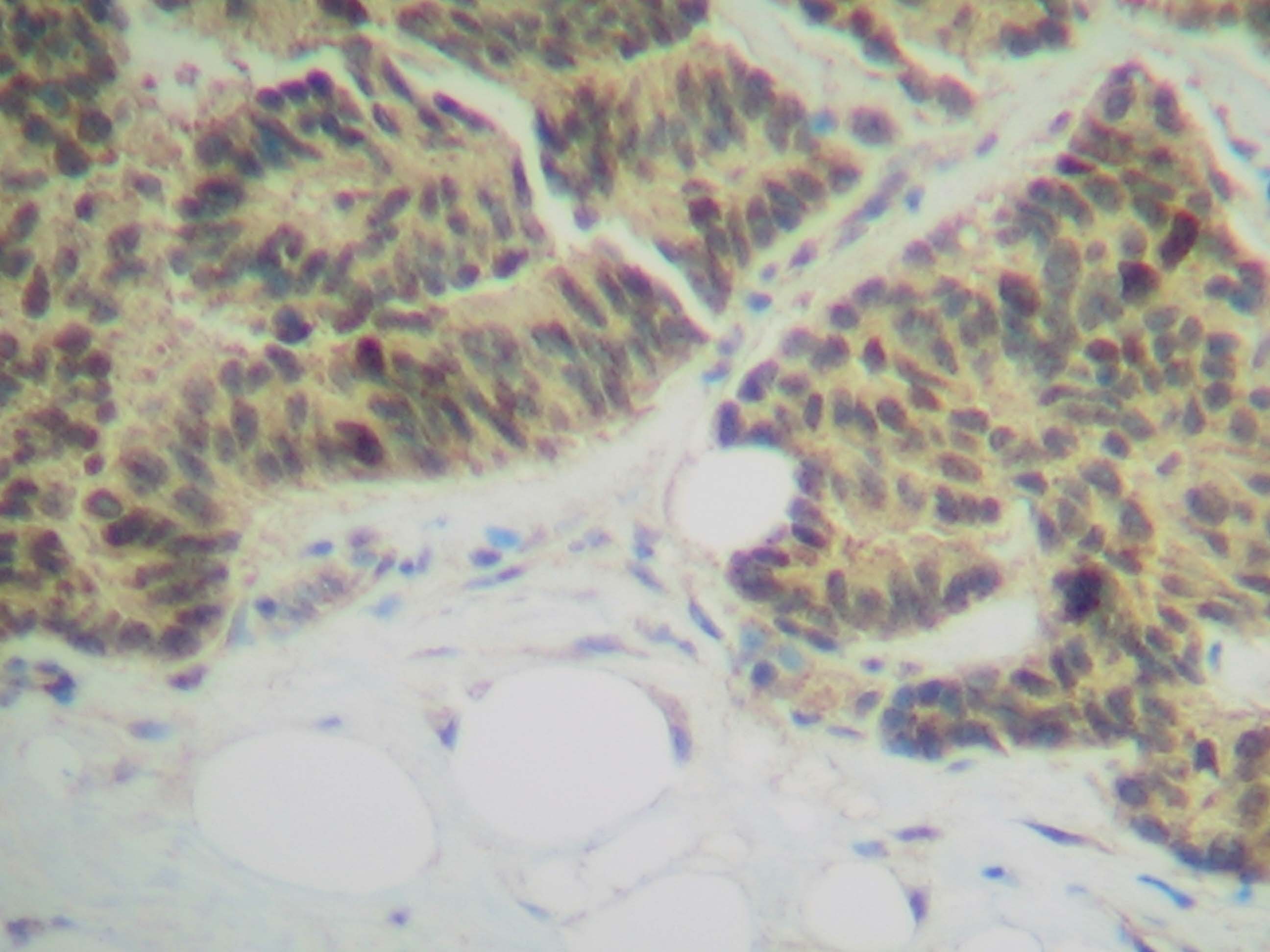
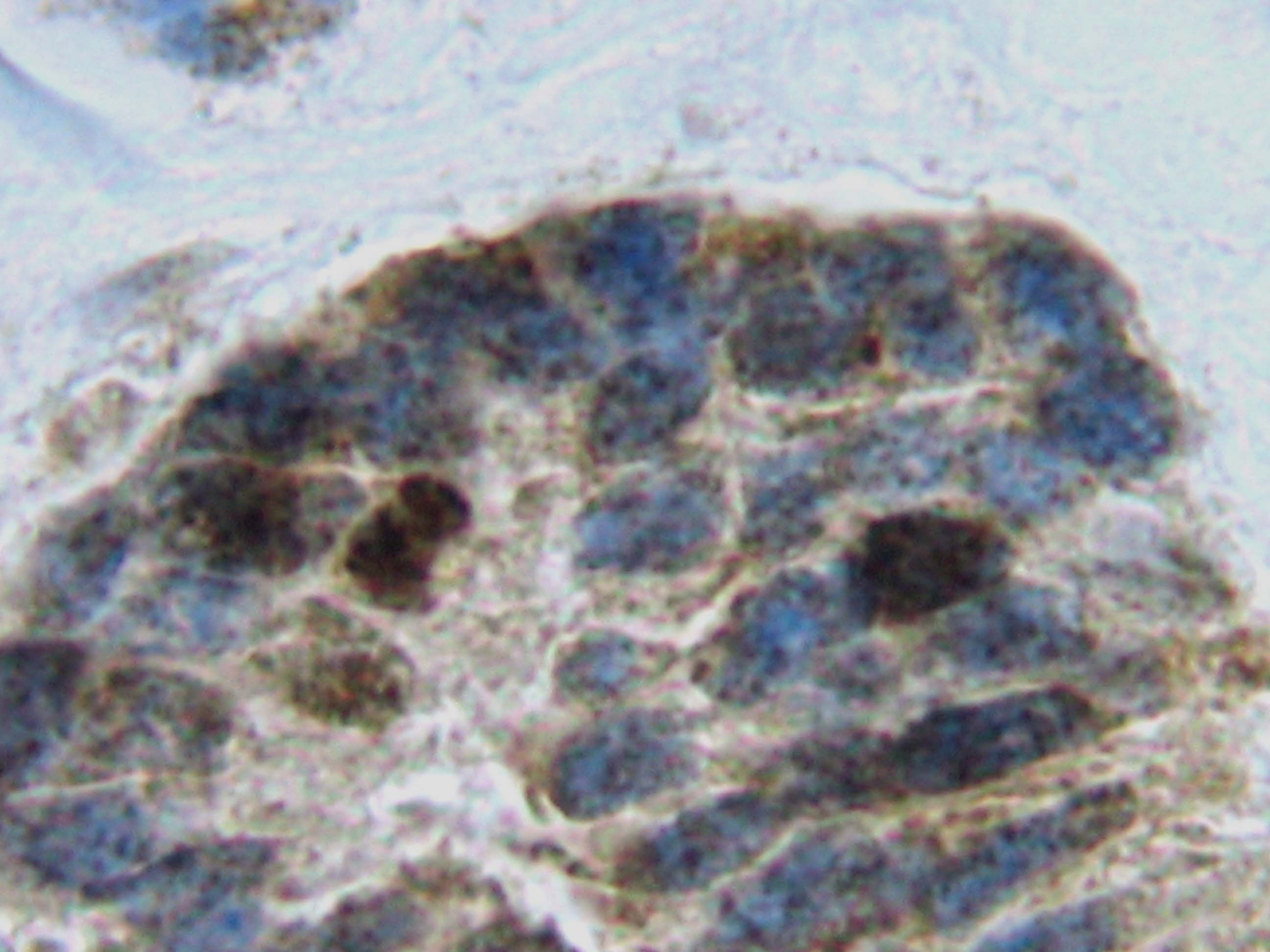
This antibody stained formalin-fixed, paraffin-embedded sections of human breast invasive ductal carcinoma. The recommended concentration is 1.0 ug/ml with an overnight incubation at 4˚C. An HRP-labeled polymer detection system was used with a DAB chromogen. Heat induced antigen retrieval with a pH 6.0 Sodium Citrate buffer is recommended. Optimal concentrations and conditions may vary.Application
This antibody stained formalin-fixed, paraffin-embedded sections of human breast invasive ductal carcinoma. The recommended concentration is 1.0 ug/ml with an overnight incubation at 4˚C. An HRP-labeled polymer detection system was used with a DAB chromogen. Heat induced antigen retrieval with a pH 6.0 Sodium Citrate buffer is recommended. Optimal concentrations and conditions may vary.| Product Name | sRank Receptor Antibody |
|---|---|
| Antibody Type | Primary Antibodies |
| Antigen Alias | FEO, OFE, ODFR, OSTS, PDB2, RANK, CD265, OPTB7, TRANCER, LOH18CR1, Tumor necrosis factor receptor superfamily member 11A, Osteoclast differentiation factor receptor |
| Immunogen | Produced from sera of rabbits pre-immunized with highly pure (>98%) recombinant hsRANK Receptor (human soluble RANK Receptor). |
| Clonality | Polyclonal |
|---|---|
| Host Species | Rabbit |
| Tested Applications | ELISAWB |
| ELISA: To detect hsRANK Receptor by direct ELISA (using 100 μL/well antibody solution) a concentration of at least 0.5 μg/mL of this antibody is required. This antigen affinity purified antibody, in conjunction with compatible secondary reagents, allows the detection of 0.2 - 0.4 ng/well of recombinant hsRANK Receptor. Sandwich: To detect hsRANK Receptor by sandwich ELISA (using 100 μL/well antibody solution) a concentration of 0.5 - 2.0 μg/mL of this antibody is required. This antigen affinity purified antibody, in conjunction with our Biotinylated Anti-Human sRANK Receptor (XP-5275Bt) as a detection antibody, allows the detection of at least 0.2 - 0.4 ng/well of recombinant hsRANK Receptor. Western Blot: To detect hsRANK Receptor by Western Blot analysis this antibody can be used at a concentration of 0.1 - 0.2 μg/mL. Used in conjunction with compatible secondary reagents the detection limit for recombinant hsRANK Receptor is 1.5 - 3.0 ng/lane, under either reducing or non-reducing conditions.: |
|
| Species Reactivity | Human |
| Concentration | 1mg/ml |
| Purification | Affinity purified |
| Gene Symbol | TNFRSF11A |
|---|---|
| Alternative Names | FEO OFE ODFR OSTS PDB2 RANK CD265 OPTB7 TRANCER LOH18CR1 Tumor necrosis factor receptor superfamily member 11A Osteoclast differentiation factor receptor |
Application
This antibody stained formalin-fixed, paraffin-embedded sections of human breast invasive ductal carcinoma. The recommended concentration is 1.0 ug/ml with an overnight incubation at 4˚C. An HRP-labeled polymer detection system was used with a DAB chromogen. Heat induced antigen retrieval with a pH 6.0 Sodium Citrate buffer is recommended. Optimal concentrations and conditions may vary.
Application
This antibody stained formalin-fixed, paraffin-embedded sections of human breast invasive ductal carcinoma. The recommended concentration is 1.0 ug/ml with an overnight incubation at 4˚C. An HRP-labeled polymer detection system was used with a DAB chromogen. Heat induced antigen retrieval with a pH 6.0 Sodium Citrate buffer is recommended. Optimal concentrations and conditions may vary.| Application Notes | ELISA: To detect hsRANK Receptor by direct ELISA (using 100 μL/well antibody solution) a concentration of at least 0.5 μg/mL of this antibody is required. This antigen affinity purified antibody, in conjunction with compatible secondary reagents, allows the detection of 0.2 - 0.4 ng/well of recombinant hsRANK Receptor. Sandwich: To detect hsRANK Receptor by sandwich ELISA (using 100 μL/well antibody solution) a concentration of 0.5 - 2.0 μg/mL of this antibody is required. This antigen affinity purified antibody, in conjunction with our Biotinylated Anti-Human sRANK Receptor (XP-5275Bt) as a detection antibody, allows the detection of at least 0.2 - 0.4 ng/well of recombinant hsRANK Receptor. Western Blot: To detect hsRANK Receptor by Western Blot analysis this antibody can be used at a concentration of 0.1 - 0.2 μg/mL. Used in conjunction with compatible secondary reagents the detection limit for recombinant hsRANK Receptor is 1.5 - 3.0 ng/lane, under either reducing or non-reducing conditions.: |
|---|
| Form | Liquid |
|---|---|
| Storage Instructions | sRank Receptor antibody is stable for at least 2 years from date of receipt at -20˚C. The reconstituted antibody is stable for at least two weeks at 2-8˚C. Frozen aliquots are stable for at least 6 months when stored at -20˚C. Avoid repeated freeze-thaw cycles. |
| Storage Buffer | phosphate buffered saline , pH 7.4, 150mM NaCl, 0.02% sodium azide and 50% glycerol. |


