Application
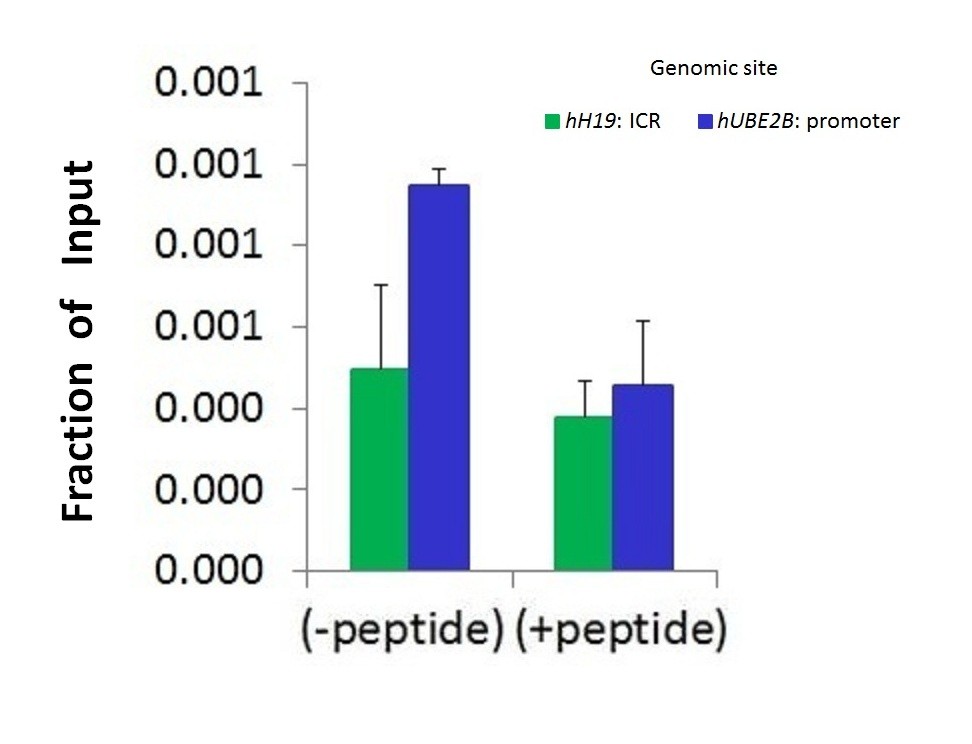
Antibody used in CHIP on HCT116 Cells.Application
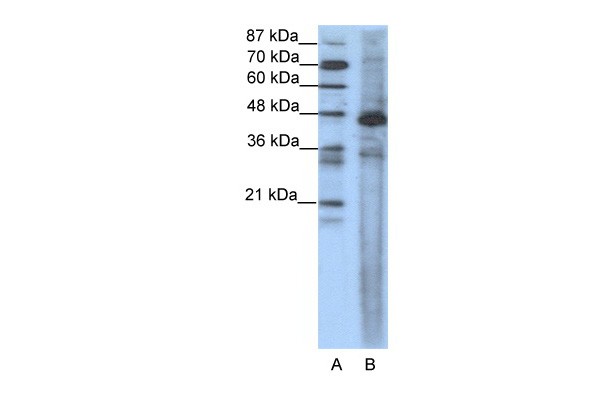
Antibody used in WB on Human Jurkat 1.25 ug/ml.| Product Name | SRF Antibody |
|---|---|
| Antibody Type | Primary Antibodies |
| Antigen Alias | SRF, MCM1 |
| Product description | SRF is a ubiquitous nuclear protein that stimulates both cell proliferation and differentiation. It is a member of the MADS (MCM1, Agamous, Deficiens, and SRF) box superfamily of transcription factors. This protein binds to the serum response element (SRE) in the promoter region of target genes. This protein regulates the activity of many immediate-early genes, for example c-fos, and thereby participates in cell cycle regulation, apoptosis, cell growth, and cell differentiation. This gene is the downstream target of many pathways; for example, the mitogen-activated protein kinase pathway (MAPK) that acts through the ternary complex factors (TCFs).1) Doi, H., et al., (2005) Arterioscler. Thromb. Vasc. Biol. 25 (11), 2328-2334. |
| Immunogen | Antibody produced in rabbits immunized with a synthetic peptide corresponding a region of human SRF. |
| Clonality | Polyclonal |
|---|---|
| Host Species | Rabbit |
| Tested Applications | ELISAWB |
| SRF antibody can be used for detection of SRF by ELISA at 1:1562500. SRF antibody can be used for detection of SRF by western blot at 1.25 μg/mL, and HRP conjugated secondary antibody should be diluted 1:50,000 - 100,000.: |
|
| Species Reactivity | DogHumanMouseRat |
| Concentration | 1mg/ml |
| Purification | Protein A |
| Gene Symbol | SRF |
|---|---|
| Alternative Names | SRF MCM1 |
| Molecular Weight(MW) | 52 kDa |
Application
Antibody used in CHIP on HCT116 Cells.
Application
Antibody used in WB on Human Jurkat 1.25 ug/ml.| Positive Control | 1) Cat. No. 1205 - Jurkat Cell Lysate |
|---|---|
| Application Notes | SRF antibody can be used for detection of SRF by ELISA at 1:1562500. SRF antibody can be used for detection of SRF by western blot at 1.25 μg/mL, and HRP conjugated secondary antibody should be diluted 1:50,000 - 100,000.: |
| Form | Liquid |
|---|---|
| Storage Instructions | For short periods of storage (days) store at 4˚C. For longer periods of storage, store SRF antibody at -20˚C. As with any antibody avoid repeat freeze-thaw cycles. |
| Storage Buffer | IgG in phosphate buffered saline , pH 7.4, 150mM NaCl, 0.02% sodium azide and 50% glycerol.Store at -20 °C.Stable for 12 months from date of receipt |


