Application
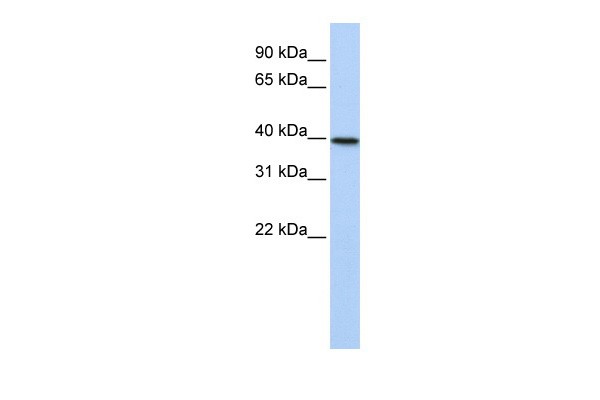
Antibody used in WB on Human 721_B cells at 0.2-1 ug/ml.| Product Name | TIA1 Antibody |
|---|---|
| Antibody Type | Primary Antibodies |
| Antigen Alias | TIA1, WDM, TIA-1 |
| Product description | TIA1 is a member of a RNA-binding protein family and possesses nucleolytic activity against cytotoxic lymphocyte (CTL) target cells. It has been suggested that this protein may be involved in the induction of apoptosis as it preferentially recognizes poly (A) homopolymers and induces DNA fragmentation in CTL targets. The major granule-associated species is a 15-kDa protein that is thought to be derived from the carboxyl terminus of the 40-kDa product by proteolytic processing. The product encoded by this gene is a member of a RNA-binding protein family and possesses nucleolytic activity against cytotoxic lymphocyte (CTL) target cells. It has been suggested that this protein may be involved in the induction of apoptosis as it preferentially recognizes poly (A) homopolymers and induces DNA fragmentation in CTL targets. The major granule-associated species is a 15-kDa protein that is thought to be derived from the carboxyl terminus of the 40-kDa product by proteolytic processing. Alternative splicing resulting in different isoforms of this gene product has been described in the literature.1) Aznarez, I., (er) Genome Res. (2008) In press. |
| Immunogen | Antibody produced in rabbits immunized with a synthetic peptide corresponding a region of human TIA1. |
| Clonality | Polyclonal |
|---|---|
| Host Species | Rabbit |
| Tested Applications | ELISAWB |
| TIA1 antibody can be used for detection of TIA1 by ELISA at 1:12500. TIA1 antibody can be used for detection of TIA1 by western blot at 1 μg/mL, and HRP conjugated secondary antibody should be diluted 1:50,000 - 100,000.: |
|
| Species Reactivity | HumanMouse |
| Concentration | 1mg/ml |
| Purification | Affinity purified |
| Gene Symbol | TIA1 |
|---|---|
| Alternative Names | TIA1 WDM TIA-1 |
| Molecular Weight(MW) | 43 kDa |
Application
Antibody used in WB on Human 721_B cells at 0.2-1 ug/ml.| Positive Control | 1) 721_B Cell Lysate |
|---|---|
| Application Notes | TIA1 antibody can be used for detection of TIA1 by ELISA at 1:12500. TIA1 antibody can be used for detection of TIA1 by western blot at 1 μg/mL, and HRP conjugated secondary antibody should be diluted 1:50,000 - 100,000.: |
| Form | Liquid |
|---|---|
| Storage Instructions | For short periods of storage (days) store at 4˚C. For longer periods of storage, store TIA1 antibody at -20˚C. As with any antibody avoid repeat freeze-thaw cycles. |
| Storage Buffer | Antibody is lyophilized in PBS buffer with 2% sucrose. Add 50 μL of distilled water. Final antibody concentration is 1 mg/mL. |


