Application
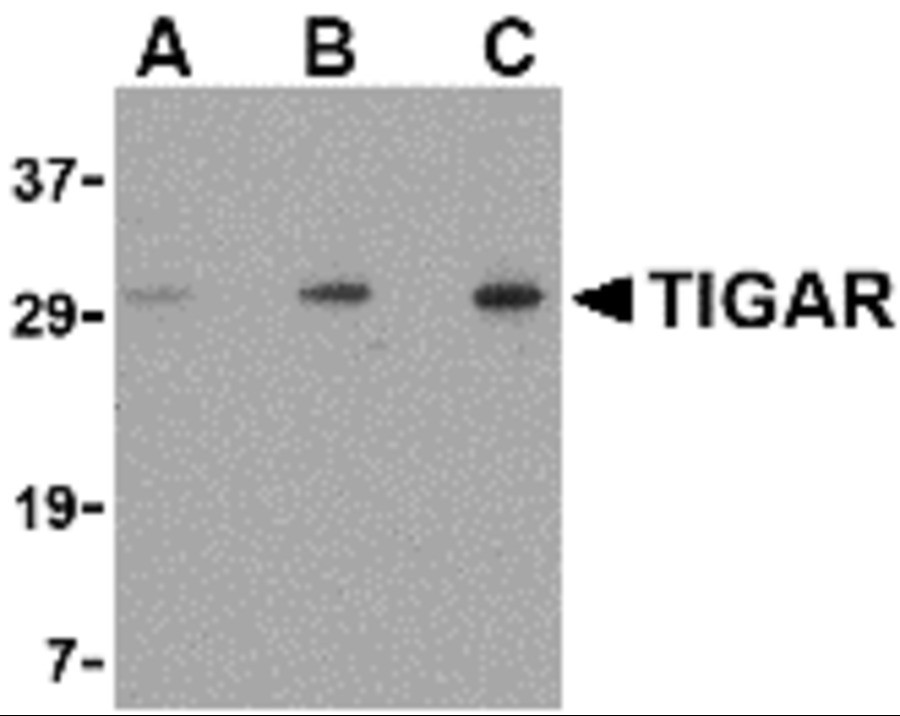
Western blot analysis of TIGAR in EL4 cell lysate with TIGAR antibody at (A) 0.5, (B) 1 and (C) 2 μg/mL.Application
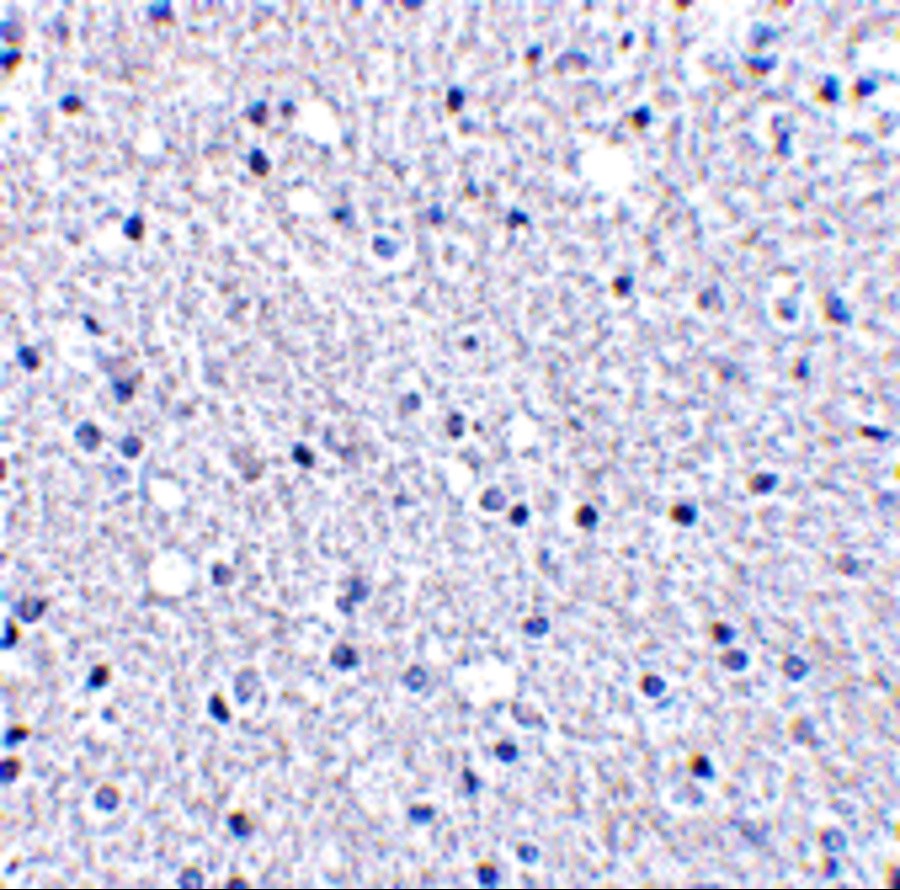
Immunohistochemistry of TIGAR in human brain tissue with TIGAR antibody at 5 μg/mL.| Product Name | TIGAR Antibody |
|---|---|
| Antibody Type | Primary Antibodies |
| Antigen Alias | TIGAR Antibody: FR2BP, TIGAR, C12orf5, Fructose-2, 6-bisphosphatase TIGAR, TP53-induced glycolysis and apoptosis regulator |
| Product description | TIGAR Antibody: The p53 tumor-suppressor gene integrates numerous signals that control cell life and death; loss of its functions contributes to the development of most cancers. Recent studies have demonstrated the ability of p53 to regulate the expression of several proteins involved in glycolysis and oxidative phosphorylation, such as TIGAR, SCO2, and phosphoglycerate mutase. TIGAR is a recently discovered protein that functions to regulate glycolysis and protect cells against oxidative stress. TIGAR is similar in structure to proteins in the phosphoglycerate mutase family, most notably 6-phosphofructo-2-kinase, suggesting TIGAR may function as a fructose bisphosphatase. Expression of TIGAR in transfected cells correlated with an inhibition of glycolysis and decreased levels of reactive oxygen species and p53-induced apoptosis, indicating that TIGAR may act to modulate the apoptotic response to p53, thereby allowing cells to survive mild or transient stresses.1) Guimaraes DP and Hainaut P. TP53: a key gene in human cancer. Biochimie2002; 84:83-93. |
| Immunogen | TIGAR antibody was raised against a 18 amino acid synthetic peptide from near the center of human TIGAR. The immunogen is located within amino acids 60 - 110 of TIGAR. |
| Modification | Acetylated |
| Clonality | Polyclonal |
|---|---|
| Isotype | IgG |
| Host Species | Rabbit |
| Tested Applications | ELISAIHC-PWB |
| WB:1:500~1:2000 IHC-P:1:50~1:200 |
|
| Species Reactivity | HumanMouseRat |
| Concentration | 1mg/ml |
| Purification | Affinity purified |
| Gene Symbol | C12orf5 |
|---|---|
| Alternative Names | TIGAR Antibody: FR2BP TIGAR C12orf5 Fructose-2 6-bisphosphatase TIGAR TP53-induced glycolysis and apoptosis regulator |
| Sequence Similarities | 3) Cat. No. 10-301 - Human Brain Tissue Slide |
Application
Western blot analysis of TIGAR in EL4 cell lysate with TIGAR antibody at (A) 0.5, (B) 1 and (C) 2 μg/mL.
Application
Immunohistochemistry of TIGAR in human brain tissue with TIGAR antibody at 5 μg/mL.| Positive Control | EL4 Cell Lysate |
|---|---|
| Application Notes | WB:1:500~1:2000 IHC-P:1:50~1:200 |
| Form | Liquid |
|---|---|
| Storage Instructions | TIGAR antibody can be stored at 4˚C for three months and -20˚C, stable for up to one year. As with all antibodies care should be taken to avoid repeated freeze thaw cycles. Antibodies should not be exposed to prolonged high temperatures. |
| Storage Buffer | TIGAR Antibody is supplied in PBS containing 0.02% sodium azide. |


