WB
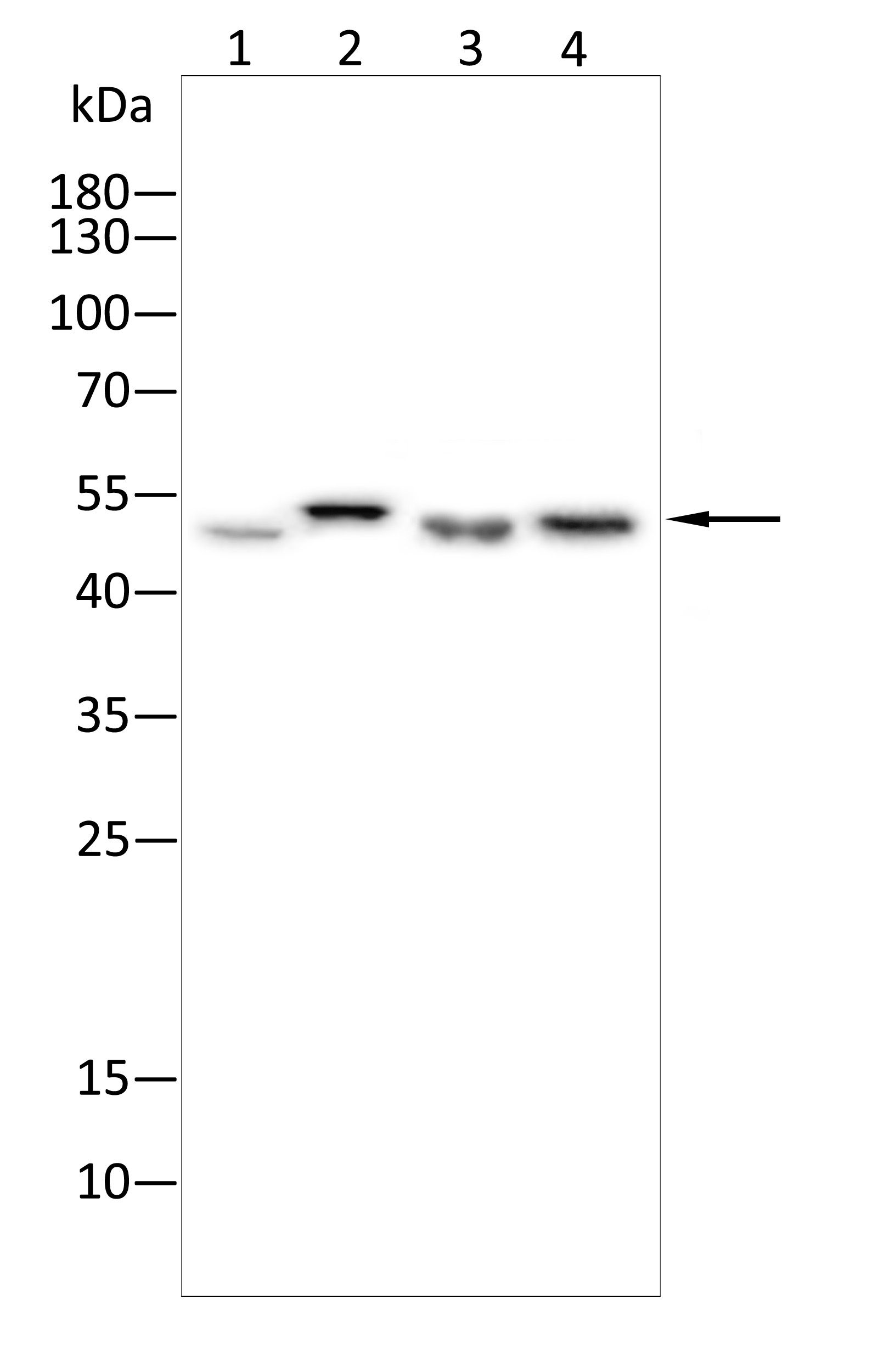
Western blot analysis using MECP2 antibody against Hela(1),Cos-7(2),K562(3),A549(4) cell .| Product Name | Anti-MECP2 antibody-HRP |
|---|---|
| Antibody Type | Primary Antibodies |
| Immunogen | Polypeptide |
| Conjugation | HRP |
| Clonality | Polyclonal |
|---|---|
| Isotype | IgG |
| Host Species | Rabbit |
| Species Reactivity | HumanMouseRat |
| Concentration | 1mg/ml |
| Purification | Antigen peptide affinity chromatography |
| Gene Symbol | MECP2 |
|---|---|
| Gene Synonyms | 1500041B07Rik AUTSX3 D630021H01Rik Mbd5 MECP2_e1 MRX16 MRX79 MRXS13 MRXSL PPMX RS RTS RTT WBP10 |
| Gene Full Name | methyl-CpG binding protein 2 |
| Gene Summary | DNA methylation is the major modification of eukaryotic genomes and plays an essential role in mammalian development. Human proteins MECP2, MBD1, MBD2, MBD3, and MBD4 comprise a family of nuclear proteins related by the presence in each of a methyl-CpG binding domain (MBD). Each of these proteins, with the exception of MBD3, is capable of binding specifically to methylated DNA. MECP2, MBD1 and MBD2 can also repress transcription from methylated gene promoters. In contrast to other MBD family members, MECP2 is X-linked and subject to X inactivation. MECP2 is dispensible in stem cells, but is essential for embryonic development. MECP2 gene mutations are the cause of most cases of Rett syndrome, a progressive neurologic developmental disorder and one of the most common causes of cognitive disability in females. Alternative splicing results in multiple transcript variants encoding different isoforms. [provided by RefSeq, Oct 2015] |
| Alternative Names | DKFZp686A24160 MeCP-2 meCP-2 protein MECP2A methyl CpG binding protein 2 (Rett syndrome) isoform MECP2_1 methyl CpG binding protein 2 (Rett syndrome) isoform MECP2_2 methyl CpG binding protein 2 (Rett syndrome) isoform MECP2_3 methyl CpG binding protein 2 (Rett syndrome) isoform MECP2_5 methyl CpG binding protein 2 (Rett syndrome) isoform MECP2_6 methyl CpG binding protein 2 (Rett syndrome) isoform MECP2_7 methyl CpG binding protein 2 (Rett syndrome) isoform MECP2_8 Rett Syndrome transcript 1 Rett syndrome MECP2B transcript variant transcriptional repressor involved in Rett syndrome disease |
| Molecular Weight(MW) | 52kDa |
| Cellular Localization | Nucleus |
| SwissProt ID | P51608 |
|---|
WB
Western blot analysis using MECP2 antibody against Hela(1),Cos-7(2),K562(3),A549(4) cell .| Form | Liquid |
|---|---|
| Storage Instructions | Shipped at 4°C. Store at +4°C short term (1-2 weeks). Store at -20°C long term. Avoid freeze / thaw cycle. |
| Storage Buffer | Purified antibody in PBS with 0.05% PC300,40% Glycerol. |


