WB
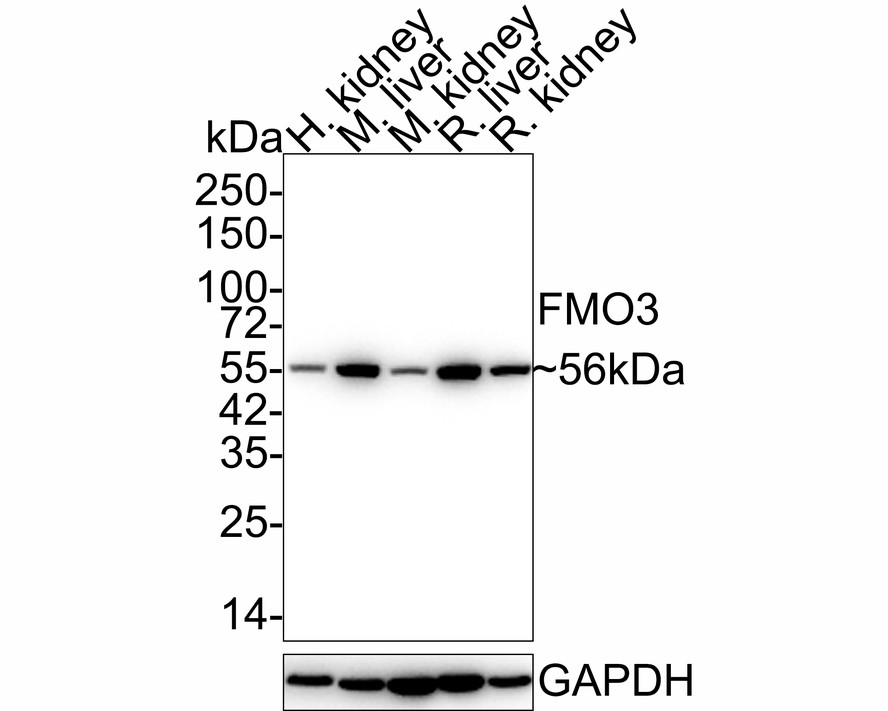
Western blot analysis of FMO3 on different lysates with Rabbit anti-FMO3 antibody at 1/1000 dilution. Lane 1: Human kidney tissue lysate, Lane 2: Mouse liver tissue lysate, Lane 3: Mouse kidney tissue lysate, Lane 4: Rat liver tissue lysate, Lane 5: Rat kidney tissue lysate, Lysates/proteins at 30 µg/Lane. Exposure time: 30 seconds; 4-20% SDS-PAGE gel. Proteins were transferred to a PVDF membrane and blocked with 5% NFDM/TBST for 1 hour at room temperature. The primary antibody at 1/1000 dilution was used in 5% NFDM/TBST at 4℃ overnight. Goat Anti-Rabbit IgG - HRP Secondary Antibody at 1/50000 dilution was used for 1 hour at room temperature.IHC
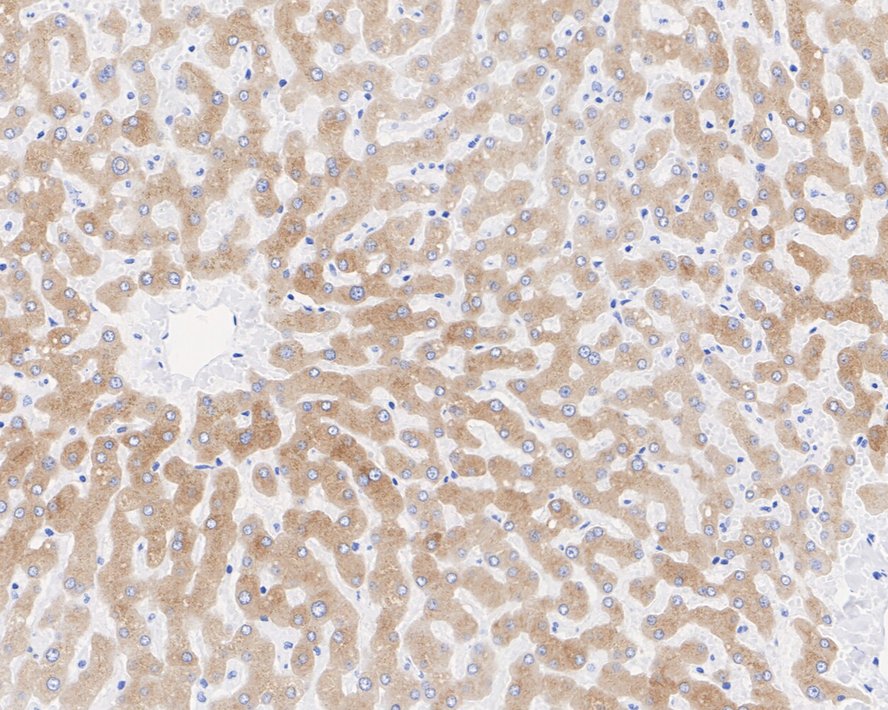
Immunohistochemical analysis of paraffin-embedded human liver tissue with Rabbit anti-FMO3 antibody at 1/2000 dilution. The section was pre-treated using heat mediated antigen retrieval with Tris-EDTA buffer (pH 9.0) for 20 minutes. The tissues were blocked in 1% BSA for 20 minutes at room temperature, washed with ddH2O and PBS, and then probed with the primary antibody at 1/2000 dilution for 1 hour at room temperature. The detection was performed using an HRP conjugated compact polymer system. DAB was used as the chromogen. Tissues were counterstained with hematoxylin and mounted with DPX.IHC
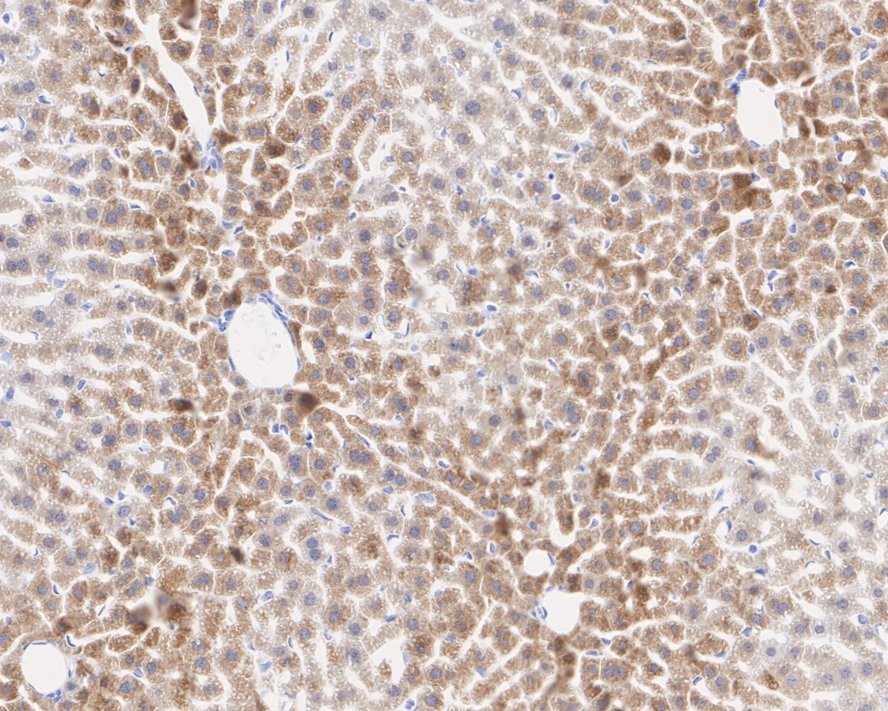
Immunohistochemical analysis of paraffin-embedded mouse liver tissue with Rabbit anti-FMO3 antibody at 1/2000 dilution. The section was pre-treated using heat mediated antigen retrieval with Tris-EDTA buffer (pH 9.0) for 20 minutes. The tissues were blocked in 1% BSA for 20 minutes at room temperature, washed with ddH2O and PBS, and then probed with the primary antibody at 1/2000 dilution for 1 hour at room temperature. The detection was performed using an HRP conjugated compact polymer system. DAB was used as the chromogen. Tissues were counterstained with hematoxylin and mounted with DPX.IHC
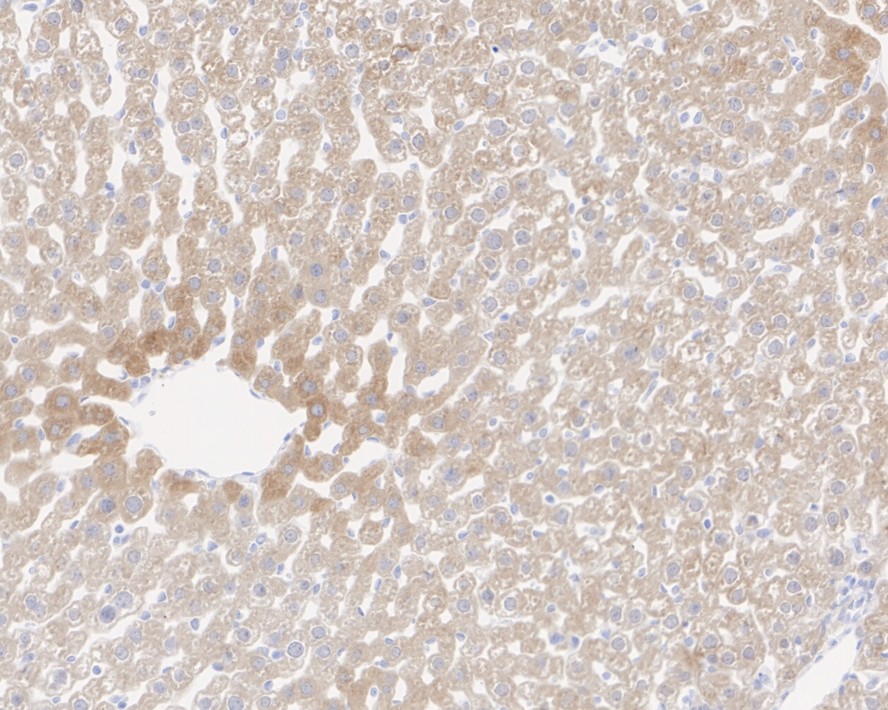
Immunohistochemical analysis of paraffin-embedded rat liver tissue with Rabbit anti-FMO3 antibody at 1/500 dilution. The section was pre-treated using heat mediated antigen retrieval with Tris-EDTA buffer (pH 9.0) for 20 minutes. The tissues were blocked in 1% BSA for 20 minutes at room temperature, washed with ddH2O and PBS, and then probed with the primary antibody at 1/500 dilution for 1 hour at room temperature. The detection was performed using an HRP conjugated compact polymer system. DAB was used as the chromogen. Tissues were counterstained with hematoxylin and mounted with DPX.| Product Name | FMO3 Recombinant Rabbit Monoclonal Antibody |
|---|---|
| Antibody Type | Primary Antibodies |
| Product description |
|
| Immunogen | Recombinant protein within Human FMO3 aa 281-380 / 532. |
| Clonality | monoclonal |
|---|---|
| Isotype | IgG |
| Host Species | Rabbit |
| Tested Applications | IHCWB |
| WB:1:1000 IHC:1:500-1:2000 |
|
| Species Reactivity | HumanMouseRat |
| Concentration | 1mg/ml |
| Purification | Protein A |
| Gene Symbol | FMO3 |
|---|---|
| Gene Synonyms | TMAU FMOII dJ127D3.1 |
| Gene Full Name | flavin containing dimethylaniline monoxygenase 3 |
| Gene Summary | Flavin-containing monooxygenases (FMO) are an important class of drug-metabolizing enzymes that catalyze the NADPH-dependent oxygenation of various nitrogen-,sulfur-, and phosphorous-containing xenobiotics such as therapeutic drugs, dietary compounds, pesticides, and other foreign compounds. The human FMO gene family is composed of 5 genes and multiple pseudogenes. FMO members have distinct developmental- and tissue-specific expression patterns. The expression of this FMO3 gene, the major FMO expressed in adult liver, can vary up to 20-fold between individuals. This inter-individual variation in FMO3 expression levels is likely to have significant effects on the rate at which xenobiotics are metabolised and, therefore, is of considerable interest to the pharmaceutical industry. This transmembrane protein localizes to the endoplasmic reticulum of many tissues. Alternative splicing of this gene results in multiple transcript variants encoding different isoforms. Mutations in this gene cause the disorder trimethylaminuria (TMAu) which is characterized by the accumulation and excretion of unmetabolized trimethylamine and a distinctive body odor. In healthy individuals, trimethylamine is primarily converted to the non odorous trimethylamine N-oxide.[provided by RefSeq, Jan 2016] |
| Alternative Names | Dimethylaniline monooxygenase [N oxide forming] 3 antibody Dimethylaniline monooxygenase [N-oxide-forming] 3 antibody Dimethylaniline monooxygenase 3 antibody Dimethylaniline oxidase 3 antibody dJ127D3.1 antibody Flavin containing monooxygenase 3 antibody FMO 3 antibody FMO form 2 antibody FMO II antibody FMO3 antibody Dimethylaniline monooxygenase [N oxide forming] 3 antibody Dimethylaniline monooxygenase [N-oxide-forming] 3 antibody Dimethylaniline monooxygenase 3 antibody Dimethylaniline oxidase 3 antibody dJ127D3.1 antibody Flavin containing monooxygenase 3 antibody FMO 3 antibody FMO form 2 antibody FMO II antibody FMO3 antibody FMO3_HUMAN antibody FMOII antibody Hepatic flavin containing monooxygenase 3 antibody Hepatic flavin-containing monooxygenase 3 antibody MGC34400 antibody TMAU antibody Trimethylamine monooxygenase antibody |
| Molecular Weight(MW) | 60kDa(Observed band size:56kDa) |
| Cellular Localization | Microsome membrane, Endoplasmic reticulum membrane. |
WB
Western blot analysis of FMO3 on different lysates with Rabbit anti-FMO3 antibody at 1/1000 dilution. Lane 1: Human kidney tissue lysate, Lane 2: Mouse liver tissue lysate, Lane 3: Mouse kidney tissue lysate, Lane 4: Rat liver tissue lysate, Lane 5: Rat kidney tissue lysate, Lysates/proteins at 30 µg/Lane. Exposure time: 30 seconds; 4-20% SDS-PAGE gel. Proteins were transferred to a PVDF membrane and blocked with 5% NFDM/TBST for 1 hour at room temperature. The primary antibody at 1/1000 dilution was used in 5% NFDM/TBST at 4℃ overnight. Goat Anti-Rabbit IgG - HRP Secondary Antibody at 1/50000 dilution was used for 1 hour at room temperature.
IHC
Immunohistochemical analysis of paraffin-embedded human liver tissue with Rabbit anti-FMO3 antibody at 1/2000 dilution. The section was pre-treated using heat mediated antigen retrieval with Tris-EDTA buffer (pH 9.0) for 20 minutes. The tissues were blocked in 1% BSA for 20 minutes at room temperature, washed with ddH2O and PBS, and then probed with the primary antibody at 1/2000 dilution for 1 hour at room temperature. The detection was performed using an HRP conjugated compact polymer system. DAB was used as the chromogen. Tissues were counterstained with hematoxylin and mounted with DPX.
IHC
Immunohistochemical analysis of paraffin-embedded mouse liver tissue with Rabbit anti-FMO3 antibody at 1/2000 dilution. The section was pre-treated using heat mediated antigen retrieval with Tris-EDTA buffer (pH 9.0) for 20 minutes. The tissues were blocked in 1% BSA for 20 minutes at room temperature, washed with ddH2O and PBS, and then probed with the primary antibody at 1/2000 dilution for 1 hour at room temperature. The detection was performed using an HRP conjugated compact polymer system. DAB was used as the chromogen. Tissues were counterstained with hematoxylin and mounted with DPX.
IHC
Immunohistochemical analysis of paraffin-embedded rat liver tissue with Rabbit anti-FMO3 antibody at 1/500 dilution. The section was pre-treated using heat mediated antigen retrieval with Tris-EDTA buffer (pH 9.0) for 20 minutes. The tissues were blocked in 1% BSA for 20 minutes at room temperature, washed with ddH2O and PBS, and then probed with the primary antibody at 1/500 dilution for 1 hour at room temperature. The detection was performed using an HRP conjugated compact polymer system. DAB was used as the chromogen. Tissues were counterstained with hematoxylin and mounted with DPX.| Application Notes | WB:1:1000 IHC:1:500-1:2000 |
|---|
| Form | Liquid |
|---|---|
| Storage Instructions | Shipped at 4℃. Store at +4℃ short term (1-2 weeks). It is recommended to aliquot into single-use upon delivery. Store at -20℃ long term. |
| Storage Buffer | 1*TBS (pH7.4), 0.05% BSA, 40% Glycerol. Preservative: 0.05% Sodium Azide. |


