WB
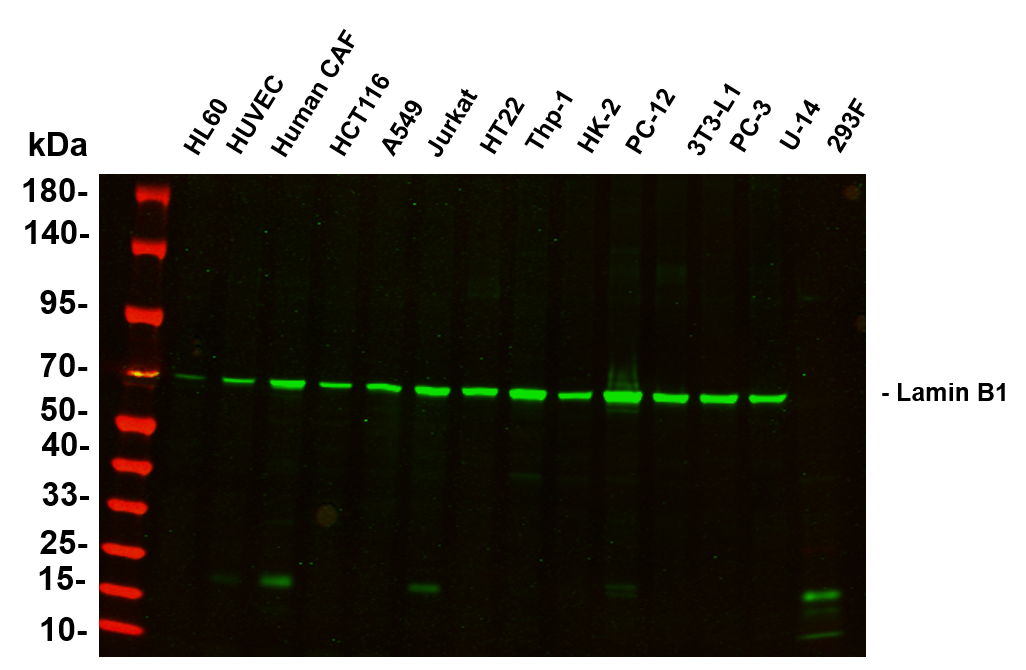
Various whole cell lysates were separated by 4-20% SDS-PAGE, and the primary antibody was used at 4℃, over night with a 1:5000 dilution . The Dylight 800-conjugated Goat anti-Rabbit antibody was used to detect the antibody. Lane1: HL60 - Human promyelocytic leukemia cell Lane2: HUVEC - Human umbilical vein endothelial cell Lane3: Human CAF - Human cancer-associated fibroblast Lane4: HCT116 - Human colorectal carcinoma Lane5: A549 - Human lung carcinoma Lane6: Jurkat - Human T lymphocyte leukemia Lane7: HT22 - Mouse hippocampal neuronal Lane8: Thp-1 - Human monocytic leukemia Lane9: HK-2 - Human proximal tubular epithelial Lane10: PC-12 - Rat adrenal pheochromocytoma Lane11: 3T3-L1 - Mouse embryonic fibroblast Lane12: PC-3 - Human prostate adenocarcinoma Lane13: U-14 - Mouse cervical carcinoma Lane14: 293F - HEK293 derivative, adapted for suspension culture.WB
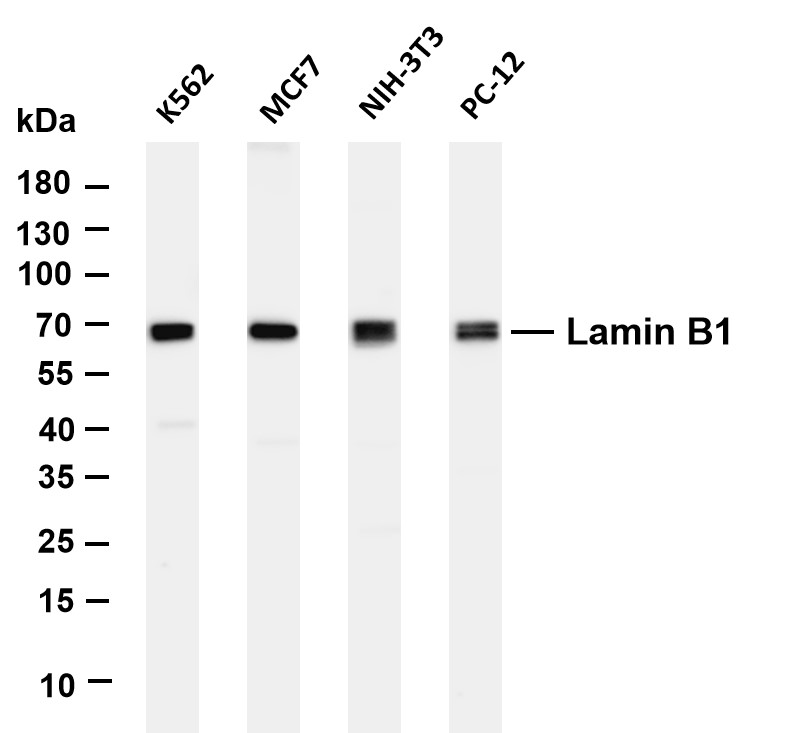
Various whole cell lysates were separated by 4-20% SDS-PAGE, and the membrane was blotted with anti-Lamin B1 antibody. The HRP-conjugated Goat anti-Rabbit IgG(H + L) antibody was used to detect the antibody. Lane 1: K562 Lane 2: MCF7 Lane 3: NIH-3T3 Lane 4: PC-12.WB
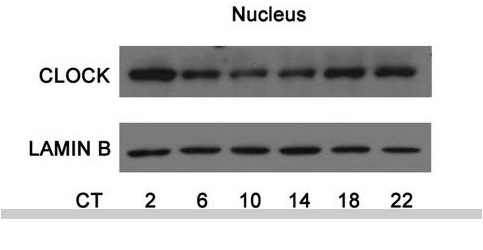
Gao, Qian, et al. "A novel role of microRNA 17-5p in the modulation of circadian rhythm." Scientific reports 6 (2016): 30070.IHC
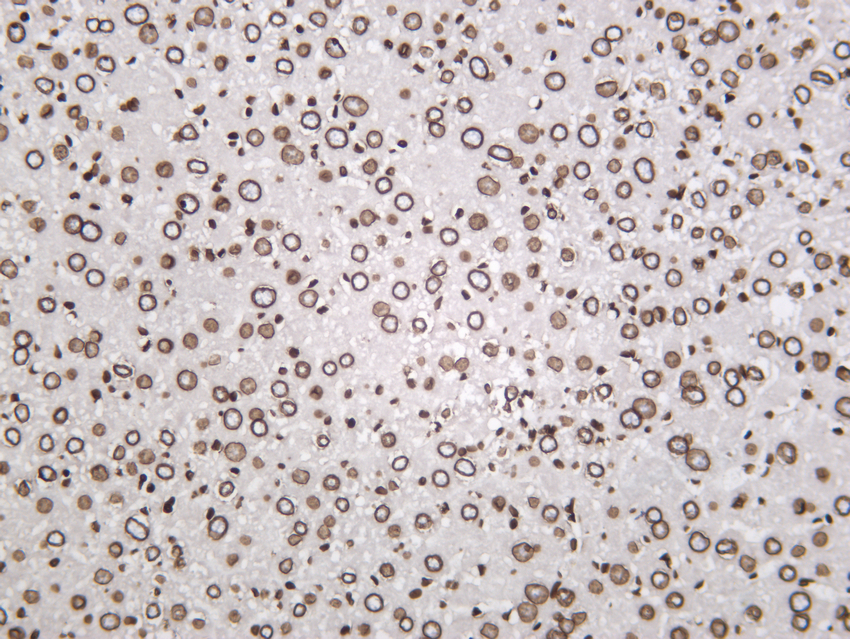
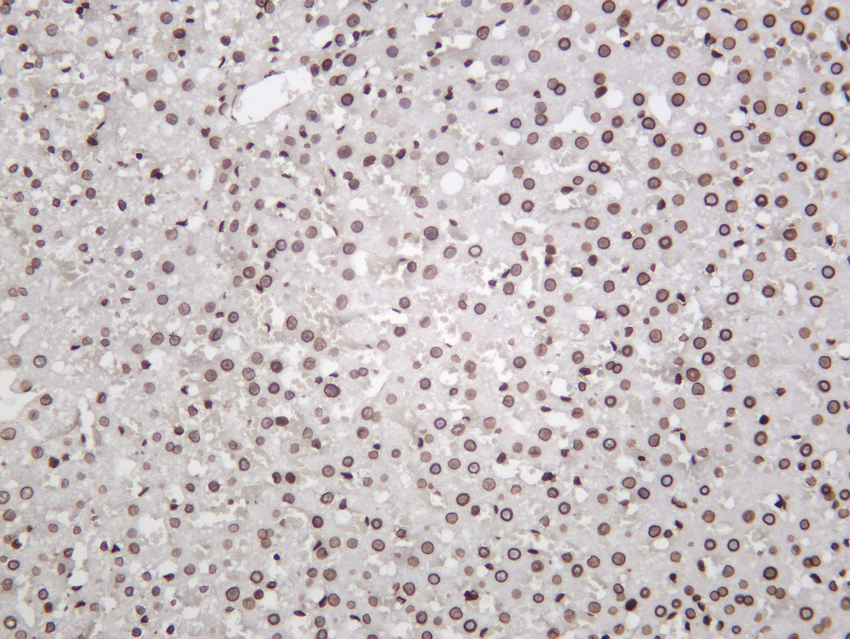
Mouse liver was stained with Anti-Lamin B1 rabbit antibody.IHC
Rat liver was stained with Anti-Lamin B1 rabbit antibody.IHC
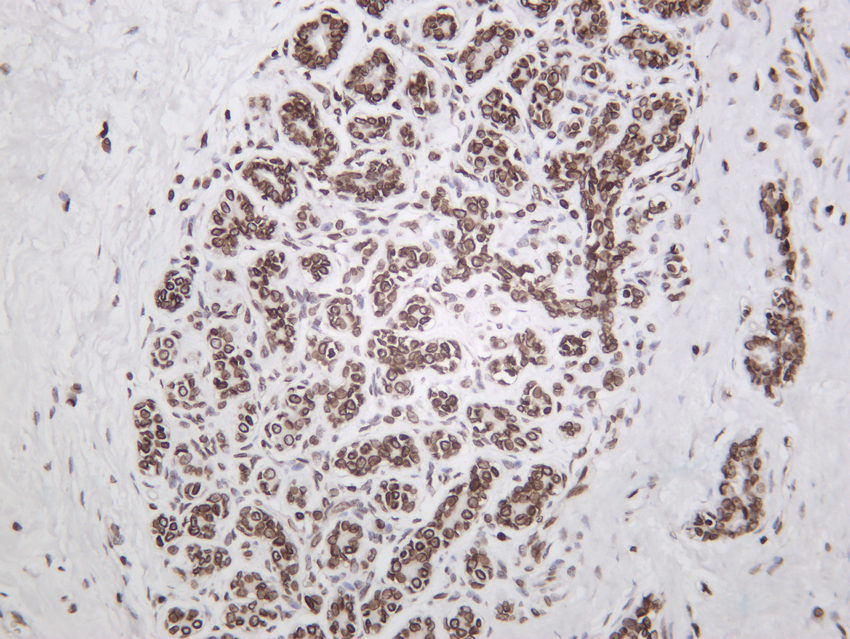
Human breast carcinoma was stained with Anti-Lamin B1 rabbit antibody.ICC/IF
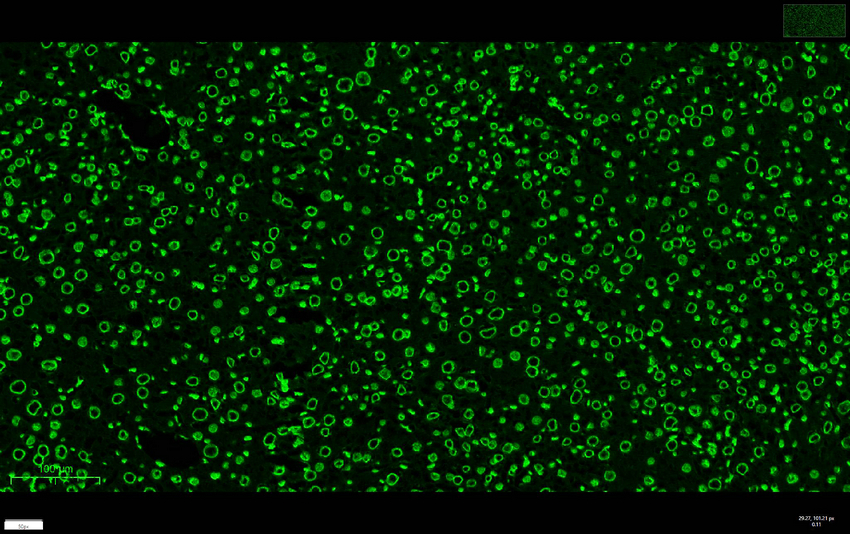
mouse liver was stained with Anti-Lamin B1 rabbit antibody.ICC/IF
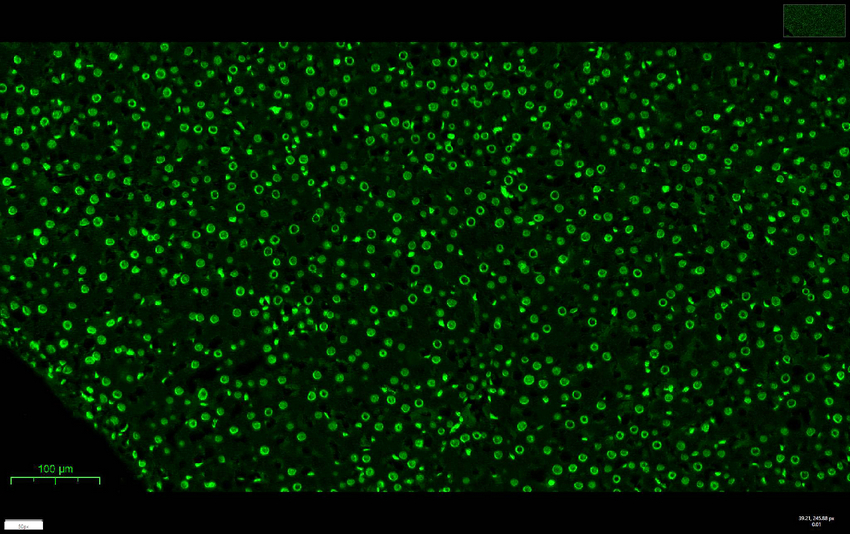
rat liver was stained with Anti-Lamin B1 rabbit antibody.| Product Name | Lamin B1 Rabbit mAb |
|---|---|
| Antibody Type | Primary Antibodies |
| Clonality | monoclonal |
|---|---|
| Isotype | IgG,K |
| Host Species | Rabbit |
| Tested Applications | ICC/IFIHCWB |
| WB:1:1000-1:5000 ICC/IF:1:200-1:1000 IHC:1:200-1:1000 |
|
| Species Reactivity | HumanMouseRat |
| Concentration | 1mg/ml |
| Purification | Protein A |
| Gene Symbol | LMNB1 |
|---|---|
| Gene Synonyms | LMN ADLD LMN2 LMNB MCPH26 |
| Gene Full Name | lamin B1 |
| Gene Summary | This gene encodes one of the two B-type lamin proteins and is a component of the nuclear lamina. A duplication of this gene is associated with autosomal dominant adult-onset leukodystrophy (ADLD). Alternative splicing results in multiple transcript variants. [provided by RefSeq, Dec 2015] |
| Alternative Names | LMNB1 LMN2 LMNB Lamin-B1 |
| Molecular Weight(MW) | 68kDa(Observed MW 68kDa) |
| Cellular Localization | Nucleus |
WB
Various whole cell lysates were separated by 4-20% SDS-PAGE, and the primary antibody was used at 4℃, over night with a 1:5000 dilution . The Dylight 800-conjugated Goat anti-Rabbit antibody was used to detect the antibody. Lane1: HL60 - Human promyelocytic leukemia cell Lane2: HUVEC - Human umbilical vein endothelial cell Lane3: Human CAF - Human cancer-associated fibroblast Lane4: HCT116 - Human colorectal carcinoma Lane5: A549 - Human lung carcinoma Lane6: Jurkat - Human T lymphocyte leukemia Lane7: HT22 - Mouse hippocampal neuronal Lane8: Thp-1 - Human monocytic leukemia Lane9: HK-2 - Human proximal tubular epithelial Lane10: PC-12 - Rat adrenal pheochromocytoma Lane11: 3T3-L1 - Mouse embryonic fibroblast Lane12: PC-3 - Human prostate adenocarcinoma Lane13: U-14 - Mouse cervical carcinoma Lane14: 293F - HEK293 derivative, adapted for suspension culture.
WB
Various whole cell lysates were separated by 4-20% SDS-PAGE, and the membrane was blotted with anti-Lamin B1 antibody. The HRP-conjugated Goat anti-Rabbit IgG(H + L) antibody was used to detect the antibody. Lane 1: K562 Lane 2: MCF7 Lane 3: NIH-3T3 Lane 4: PC-12.
WB
Gao, Qian, et al. "A novel role of microRNA 17-5p in the modulation of circadian rhythm." Scientific reports 6 (2016): 30070.
IHC
Mouse liver was stained with Anti-Lamin B1 rabbit antibody.
IHC
Rat liver was stained with Anti-Lamin B1 rabbit antibody.
IHC
Human breast carcinoma was stained with Anti-Lamin B1 rabbit antibody.
ICC/IF
mouse liver was stained with Anti-Lamin B1 rabbit antibody.
ICC/IF
rat liver was stained with Anti-Lamin B1 rabbit antibody.| Application Notes | WB:1:1000-1:5000 ICC/IF:1:200-1:1000 IHC:1:200-1:1000 |
|---|
| Form | Liquid |
|---|---|
| Storage Instructions | -15°C to -25°C/1 year(Do not lower than -25°C) |
| Storage Buffer | PBS, 50% glycerol, 0.05% Proclin 300, 0.05%BSA |


