WB
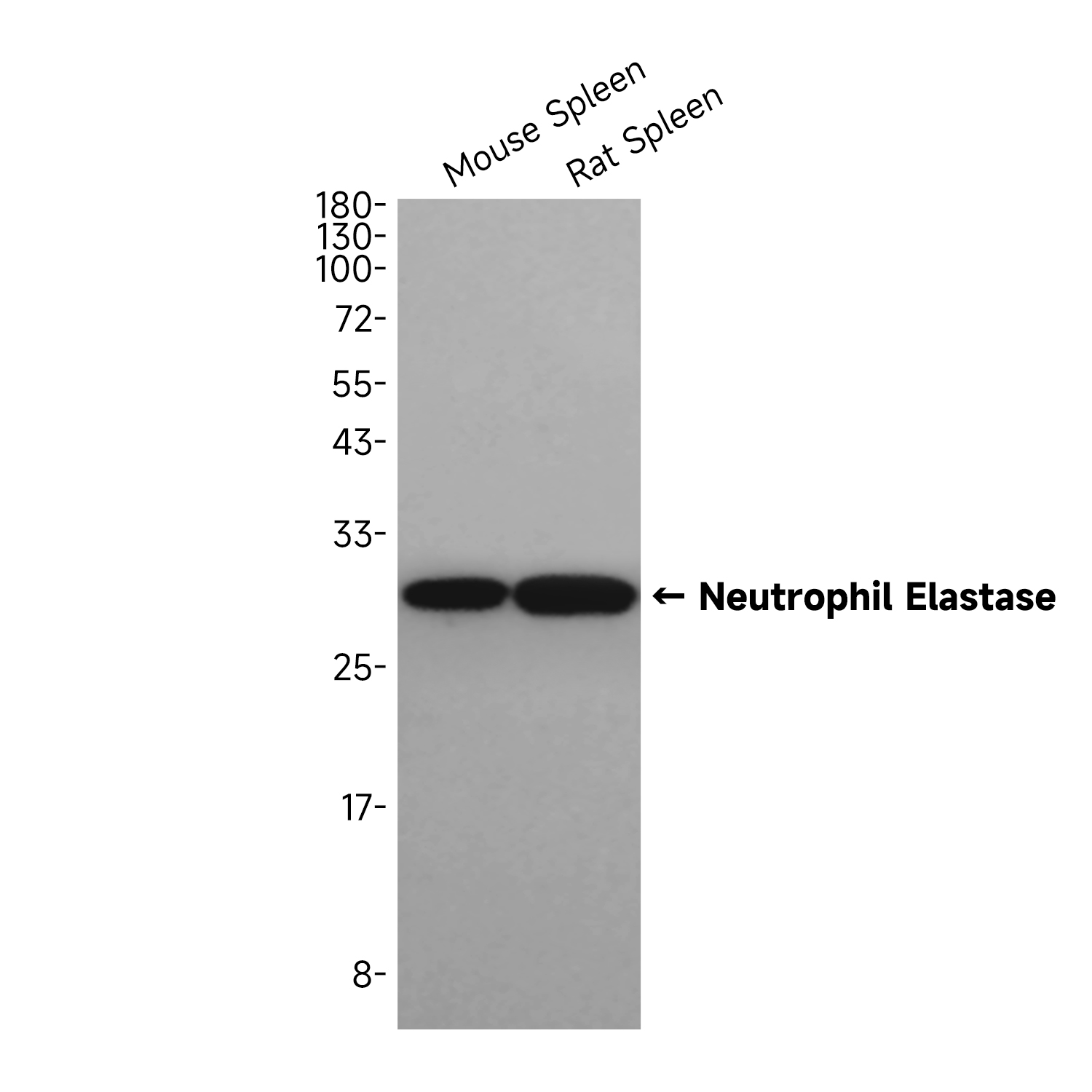
Western blot analysis of Mouse spleen and Rat spleen lysates using Neutrophil Elastase Goat pAbIF
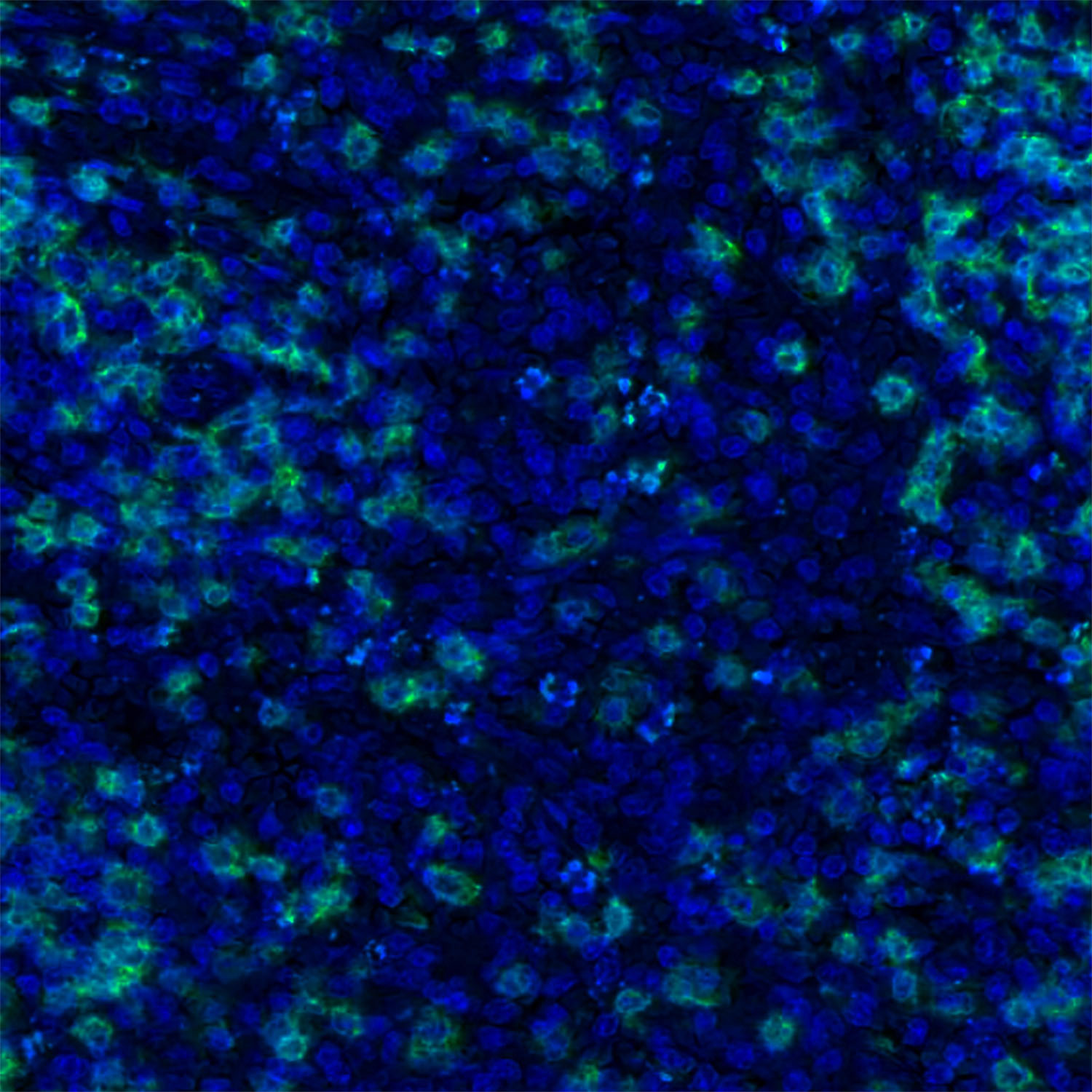
Immunofluorescence analysis of Human Lymphoma cancer using Neutrophil Elastase Goat pAb| Product Name | Neutrophil Elastase Goat pAb |
|---|---|
| Antibody Type | Primary Antibodies |
| Immunogen | Recombinant Human Neutrophil Elastase |
| Modification | Unmodified |
| Clonality | Polyclonal |
|---|---|
| Isotype | IgG |
| Host Species | Goat |
| Tested Applications | WBIF |
| WB:1:500-1:1000 IHC:1:100-1:500 IF-P:1:100-1:500 ICC/IF:1:100-1:300 |
|
| Species Reactivity | HumanMouseRat |
| Concentration | 1mg/ml |
| Purification | Affinity Purified |
| Gene Symbol | ELANE |
|---|---|
| Gene Synonyms | GE NE HLE HNE ELA2 SCN1 PMN-E |
| Gene Full Name | elastase, neutrophil expressed |
| Gene Summary | Elastases form a subfamily of serine proteases that hydrolyze many proteins in addition to elastin. Humans have six elastase genes which encode structurally similar proteins. The encoded preproprotein is proteolytically processed to generate the active protease. Following activation, this protease hydrolyzes proteins within specialized neutrophil lysosomes, called azurophil granules, as well as proteins of the extracellular matrix. The enzyme may play a role in degenerative and inflammatory diseases through proteolysis of collagen-IV and elastin. This protein also degrades the outer membrane protein A (OmpA) of E. coli as well as the virulence factors of such bacteria as Shigella, Salmonella and Yersinia. Mutations in this gene are associated with cyclic neutropenia and severe congenital neutropenia (SCN). This gene is present in a gene cluster on chromosome 19. [provided by RefSeq, Jan 2016] |
| Molecular Weight(MW) | 28 kDa |
| Function | The neutrophil form of elastase is 218 amino acids long, with two asparagine-linked carbohydrate chains (see glycosylation). It is present in azurophil granules in the neutrophil cytoplasm. There appear to be two forms of neutrophil elastase, termed IIa and IIb. |
| Cellular Localization | Cytoplasmic vesicle,Lysosome,Nucleus |
WB
Western blot analysis of Mouse spleen and Rat spleen lysates using Neutrophil Elastase Goat pAb
IF
Immunofluorescence analysis of Human Lymphoma cancer using Neutrophil Elastase Goat pAb| Application Notes | WB:1:500-1:1000 IHC:1:100-1:500 IF-P:1:100-1:500 ICC/IF:1:100-1:300 |
|---|
| Form | Liquid |
|---|---|
| Storage Instructions | Store at 4°C short term. Aliquot and store at -20°C long term. Avoid freeze/thaw cycles. |
| Storage Buffer | Liquid in PBS, 50% glycerol, 0.05% Proclin 300, 0.08%BSA |


