WB
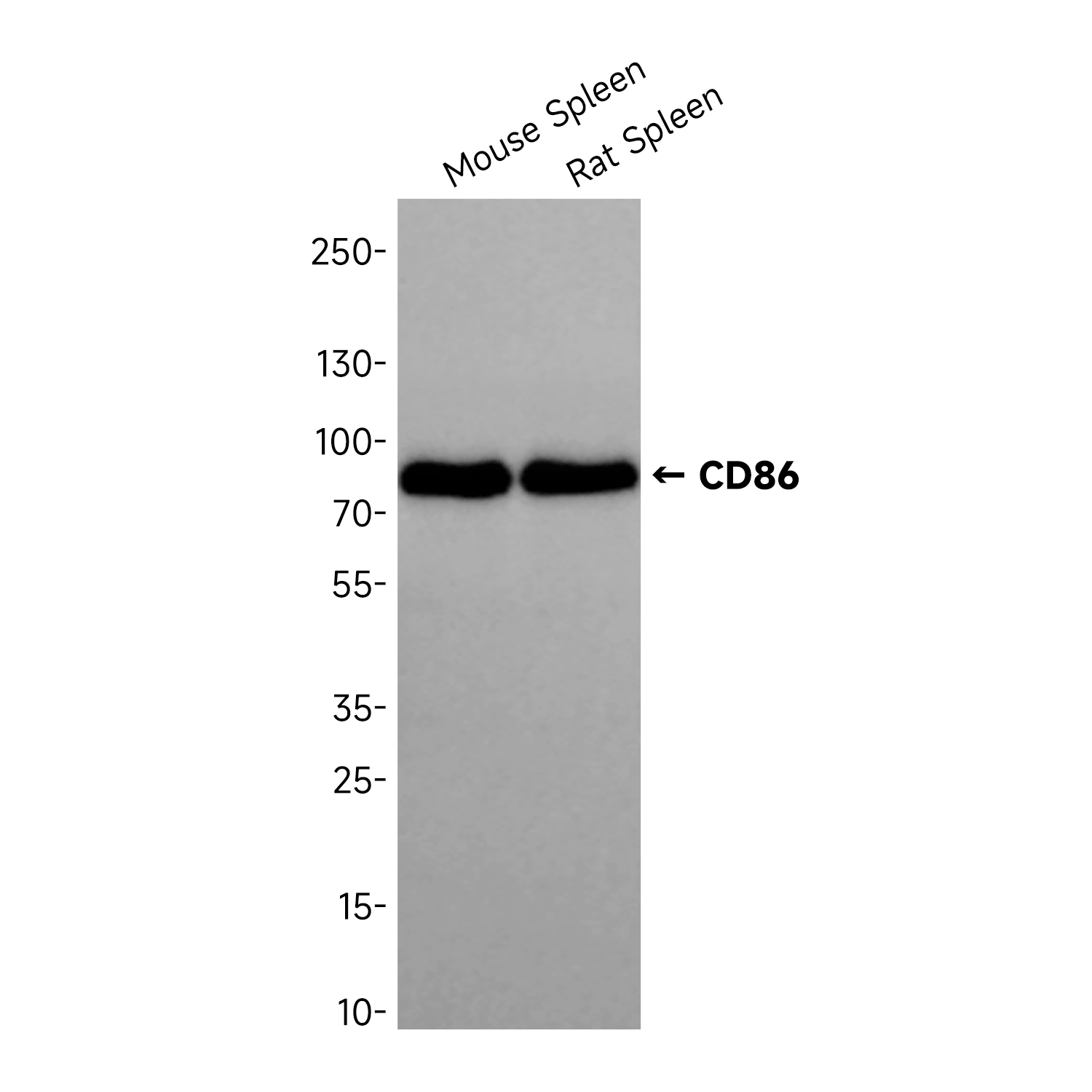
Western blot analysis of Mouse spleen and Rat spleen lysates using CD86 Goat pAbIF
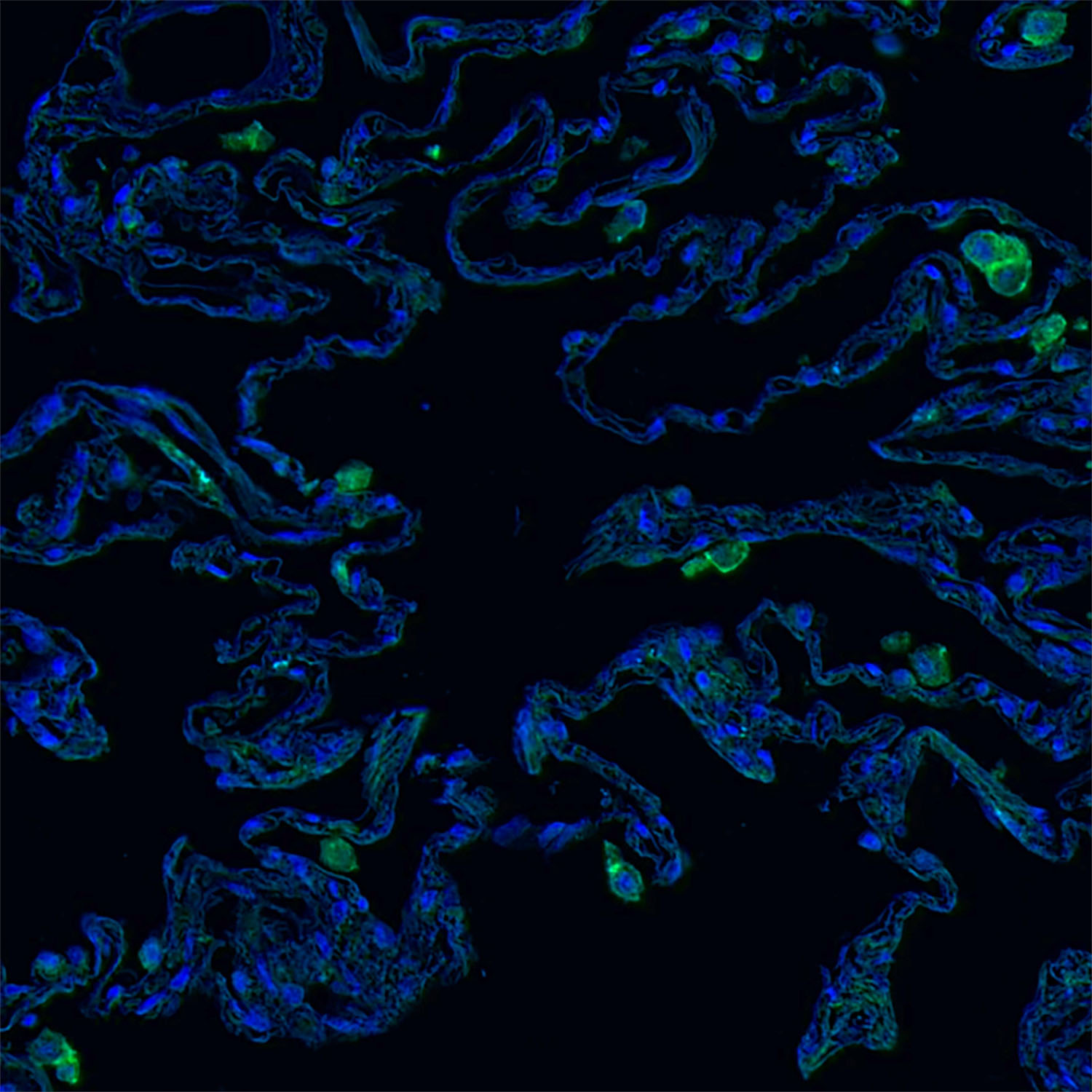
Immunofluorescence analysis of Human lung cancer tissue using CD86 Goat pAb| Product Name | CD86 Goat pAb |
|---|---|
| Antibody Type | Primary Antibodies |
| Immunogen | Recombinant Human CD86 |
| Modification | Unmodified |
| Clonality | Polyclonal |
|---|---|
| Isotype | IgG |
| Host Species | Goat |
| Tested Applications | WBIF |
| WB:1:500-1:1000 IHC:1:100-1:500 IF-P:1:100-1:500 ICC/IF:1:100-1:300 |
|
| Species Reactivity | HumanMouseRat |
| Concentration | 1mg/ml |
| Purification | Affinity Purified |
| Gene Symbol | Cd86 |
|---|---|
| Gene Synonyms | B7 B70 MB7 B7-2 B7.2 CLS1 Ly58 ETC-1 Ly-58 MB7-2 Cd28l2 TS/A-2 |
| Gene Full Name | CD86 antigen |
| Gene Summary | Predicted to enable receptor ligand activity. Involved in several processes, including positive regulation of immunoglobulin production; positive regulation of non-canonical NF-kappaB signal transduction; and toll-like receptor 3 signaling pathway. Acts upstream of or within several processes, including cellular response to lipopolysaccharide; positive regulation of T cell proliferation; and toll-like receptor signaling pathway. Located in external side of plasma membrane and intracellular membrane-bounded organelle. Is expressed in central nervous system; mandible; and retina. Used to study Guillain-Barre syndrome. Human ortholog(s) of this gene implicated in several diseases, including IgA vasculitis; autoimmune disease (multiple); chronic lymphocytic leukemia; chronic obstructive pulmonary disease; and systemic scleroderma. Orthologous to human CD86 (CD86 molecule). [provided by Alliance of Genome Resources, Apr 2025] |
| Molecular Weight(MW) | 38 kDa(Observed band size: 80 kDa) |
| Function | CD86, along with CD80, is a member of the B7 family of costimulatory molecules and plays a crucial role in T cell activation and immune response regulation. CD86 is expressed at low levels on B cells, macrophages, and dendritic cells, and its expression is upregulated on B cells through various stimuli, including the BCR complex, CD40, and certain cytokine receptors. As a type I membrane protein and member of the immunoglobulin superfamily, CD86 serves as a ligand for the T cell surface proteins CD28 and CTLA-4 (CD152). The interaction between CD86 and CD28 provides a costimulatory signal essential for T cell activation during antigen presentation, while binding with CTLA-4 negatively regulates T cell activation, diminishing the immune response. This interaction is critical for T-B cell crosstalk, T cell costimulation, autoantibody production, and Th2-mediated Ig production. The kinetics of CD86 upregulation upon stimulation suggest its significant contribution during the primary phase of an immune response. CD86 and CD80 have distinct roles in T helper cell differentiation, and insufficient co-stimulation involving these molecules can induce tolerance. Alternative splicing of CD86 results in two transcript variants encoding different isoforms, with additional variants described but not fully sequenced. Dysfunction in CD86 is associated with diseases such as gallbladder squamous cell carcinoma and myocarditis. |
| Cellular Localization | Cell membrane,Membrane |
WB
Western blot analysis of Mouse spleen and Rat spleen lysates using CD86 Goat pAb
IF
Immunofluorescence analysis of Human lung cancer tissue using CD86 Goat pAb| Application Notes | WB:1:500-1:1000 IHC:1:100-1:500 IF-P:1:100-1:500 ICC/IF:1:100-1:300 |
|---|
| Form | Liquid |
|---|---|
| Storage Instructions | Store at 4°C short term. Aliquot and store at -20°C long term. Avoid freeze/thaw cycles. |
| Storage Buffer | Liquid in PBS, 50% glycerol, 0.05% Proclin 300, 0.08%BSA |


