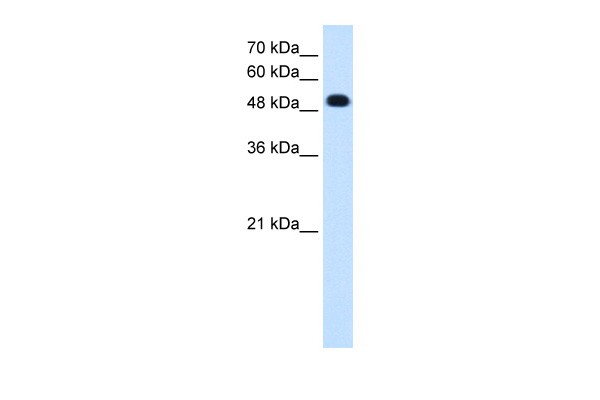
Western blot
0.2-1 ug/mlPositive Control: Jurkat cell lysate| Product Name | Rabbit anti-PTPRR polyclonal antibody - C-terminal region |
|---|---|
| Antibody Type | Primary Antibodies |
| Antigen Alias | DKFZp781C1038, EC-PTP, FLJ34328, MGC131968, MGC148170, PCPTP1, PTP-SL, PTPBR7, PTPRQ |
| Immunogen | The immunogen for anti-PTPRR antibody: synthetic peptide directed towards the C terminal of human PTPRR |
| Clonality | Polyclonal |
|---|---|
| Isotype | IgG |
| Host Species | Rabbit |
| Tested Applications | WB |
| WB:1:500~1:2000 Notes:Optimal dilutions/concentrations should be determined by the researcher. |
|
| Species Reactivity | BovineDogGuinea PigHumanMouseRabbitRat |
| Concentration | 1mg/ml |
| Purification | Affinity purified |
| Gene Symbol | PTPRR |
|---|---|
| Gene Synonyms | DKFZp781C1038 EC-PTP FLJ34328 MGC131968 MGC148170 PCPTP1 PTP-SL PTPBR7 PTPRQ |
| Gene Full Name | Protein tyrosine phosphatase, receptor type, R |
| Gene Summary | PTPRR is a member of the protein tyrosine phosphatase (PTP) family. PTPs are known to be signaling molecules that regulate a variety of cellular processes including cell growth, differentiation, mitotic cycle, and oncogenic transformation. This PTP possesses an extracellular region, a single transmembrane region, and a single intracellular catalytic domains, and thus represents a receptor-type PTP.The protein encoded by this gene is a member of the protein tyrosine phosphatase (PTP) family. PTPs are known to be signaling molecules that regulate a variety of cellular processes including cell growth, differentiation, mitotic cycle, and oncogenic transformation. This PTP possesses an extracellular region, a single transmembrane region, and a single intracellular catalytic domains, and thus represents a receptor-type PTP. The similar gene predominately expressed in mouse brain was found to associate with, and thus regulate the activity and cellular localization of MAP kinases. The rat counterpart of this gene was reported to be regulated by the nerve growth factor, which suggested the function of this gene in neuronal growth and differentiation. Telomerase is a ribonucleoprotein polymerase that maintains telomere ends by addition of the telomere repeat TTAGGG. The enzyme consists of a protein component with reverse transcriptase activity, and an RNA component, encoded by this gene, that serves as a template for the telomere repeat. Telomerase expression plays a role in cellular senescence, as it is normally repressed in postnatal somatic cells resulting in progressive shortening of telomeres. Deregulation of telomerase expression in somatic cells may be involved in oncogenesis. Studies in mouse suggest that telomerase also participates in chromosomal repair, since de novo synthesis of telomere repeats may occur at double-stranded breaks. Mutations in this gene cause autosomal dominant dyskeratosis congenita, and may also be associated with some cases of aplastic anemia. |
| Alternative Names | DKFZp781C1038 EC-PTP FLJ34328 MGC131968 MGC148170 PCPTP1 PTP-SL PTPBR7 PTPRQ |
| Molecular Weight(MW) | 46kDa |
| Sequence | 412 amino acids |
Western blot
0.2-1 ug/mlPositive Control: Jurkat cell lysate| Application Notes | WB:1:500~1:2000 Notes:Optimal dilutions/concentrations should be determined by the researcher. |
|---|
| Form | Liquid |
|---|---|
| Storage Instructions | Aliquot and store at -20°C. Avoid repeated freeze / thaw cycles |
| Storage Buffer | phosphate buffered saline , pH 7.4, 150mM NaCl, 0.02% sodium azide and 50% glycerol. |


