Application
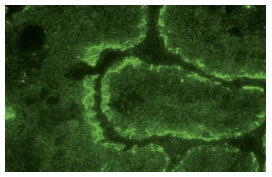
Immunofluorescence staining of normal mouse intestine frozen section showing cytoplasmic localization.| Product Name | MuRF1 Antibody (H-145) |
|---|---|
| Antibody Type | Primary Antibodies |
| Antigen Alias | epitope corresponding to amino acids 184-328 mapping near the N-terminus of MuRF1 of human origin |
| Modification Notes | Muscle specific RING finger protein (MuRF1) is a sarcomere-associated protein that is upregulated by conditions that provoke atrophy. Pharmacological or genetic inhibition of the IKKbeta/NF-kappaB/MuRF1 pathway reverses muscle atrophy, which presents MuRF as a target for clinical intervention. MuRF1 is a key regulator of the PKC-dependent hypertrophic response and can blunt cardiomyocyte hypertrophy, which may have important implications in the pathophysiology of clinical cardiac hypertrophy. MuRF1 directly associates with Titin kinase and influences microtubule-dependent signaling pathways in striated muscle and iris. MuRF1 upregulation is an indicator for skeletal muscle atrophy mechanisms that utilize ubiquitin-dependent proteolysis. MuRF1 transcript levels are high in situations where there is an overabundance of reactive oxygen species, such as cancer, AIDS and sepsis. |
| Clonality | Polyclonal |
|---|---|
| Isotype | IgG |
| Host Species | Rabbit |
| Tested Applications | WBIPIFELISA |
| recommended for detection of MuRF1 isoforms 1 and 2 of mouse, rat and human origin by WB, IP, IF and ELISA also reactive with additional species, including canine, bovine and porcine: |
|
| Species Reactivity | HumanMouseRat |
| Concentration | 1mg/ml |
| Purification | Affinity purified |
| Alternative Names | epitope corresponding to amino acids 184-328 mapping near the N-terminus of MuRF1 of human origin |
|---|---|
| Tissue Specificity | epitope corresponding to amino acids 184-328 mapping near the N-terminus of MuRF1 of human origin |
| Entrez Gene | 84676 |
|---|
Application
Immunofluorescence staining of normal mouse intestine frozen section showing cytoplasmic localization.| Application Notes | recommended for detection of MuRF1 isoforms 1 and 2 of mouse, rat and human origin by WB, IP, IF and ELISA also reactive with additional species, including canine, bovine and porcine: |
|---|
| Form | Liquid |
|---|---|
| Storage Instructions | For short-term storage, store at 4° C. For long-term storage, aliquot and store at -20ºC or below. Avoid multiple freeze-thaw cycles. |
| Storage Buffer | phosphate buffered saline , pH 7.4, 150mM NaCl, 0.02% sodium azide and 50% glycerol. |


