Application
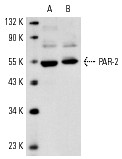
Western blot analysis of UROS expression in mouse thyroid (A) and mouse liver (B) tissue extracts.| Product Name | UROS Antibody (FL-265) |
|---|---|
| Antibody Type | Primary Antibodies |
| Antigen Alias | epitope corresponding to amino acids 1-265 representing full length UROS of human origin |
| Modification Notes | Uroporphyrinogen-III synthase (UROS), also designated hydroxymethylbilane hydrolyase, is a 265-amino acid ubiquitously expressed protein that is predominantly found in skeletal muscle, heart muscle, the caudate nucleus, and the amygdala. UROS is the fourth enzyme in the human heme biosynthetic pathway and is responsible for the conversion of hydroxymethylbilane to the cyclic tetrapyrrole, uroporphyrinogen III. UROS is a monomer involved in pophyrin biosynthesis by the Shemin pathway. Defects in the UROS gene can cause molecular lesions that lead to the autosomal recessive Gunther disease, also known as congenital erythropoietic porphyria (CEP). CEP is characterized by accumulation of uroporphyrin I in the bone marrow, peripheral blood, and other organs, often causing death early in adult life. |
| Clonality | Polyclonal |
|---|---|
| Isotype | IgG |
| Host Species | Rabbit |
| Tested Applications | WBIPIFELISA |
| recommended for detection of Uroporphyrinogen-III synthase (UROS) of human and, to a lesser extent, mouse and rat origin by WB, IP, IF and ELISA also reactive with additional species, including equine, canine, bovine and porcine: |
|
| Species Reactivity | HumanMouseRat |
| Concentration | 1mg/ml |
| Purification | Affinity purified |
| Alternative Names | epitope corresponding to amino acids 1-265 representing full length UROS of human origin |
|---|---|
| Tissue Specificity | epitope corresponding to amino acids 1-265 representing full length UROS of human origin |
| Entrez Gene | 22276 |
|---|
Application
Western blot analysis of UROS expression in mouse thyroid (A) and mouse liver (B) tissue extracts.| Application Notes | recommended for detection of Uroporphyrinogen-III synthase (UROS) of human and, to a lesser extent, mouse and rat origin by WB, IP, IF and ELISA also reactive with additional species, including equine, canine, bovine and porcine: |
|---|
| Form | Liquid |
|---|---|
| Storage Instructions | For short-term storage, store at 4° C. For long-term storage, aliquot and store at -20ºC or below. Avoid multiple freeze-thaw cycles. |
| Storage Buffer | phosphate buffered saline , pH 7.4, 150mM NaCl, 0.02% sodium azide and 50% glycerol. |


