Application
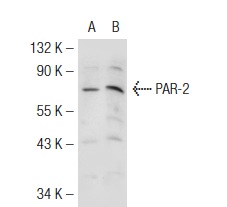
Western blot analysis of PAR-2 expression in non-transfected: (A) and mouse PAR-2 transfected: (B) 293T whole cell lysates.| Product Name | PAR-2 Antibody (H-99) |
|---|---|
| Antibody Type | Primary Antibodies |
| Antigen Alias | epitope corresponding to amino acids 230-328 of PAR-2 of human origin |
| Modification Notes | Thrombin receptor (also designated protease-activated receptor-1 or PAR-1), PAR-2 and PAR-3 compose a distinct class of G protein-coupled receptors activated by proteolysis (1). Cleavage of these receptors by proteases occurs within the amino-terminal extracellular domain (2). Thrombin, a serine protease involved in platelet aggregation and blood coagulation, activates the thrombin receptor, resulting in elevated intracellular calcium levels in platelets (3,4). Thrombin also cleaves PAR-3 in vitro, suggesting that PAR-3 may be involved in thrombosis or mitogenesis (5). Thrombin receptor and PAR-4 appear to account for most thrombin signaling in platelets (8). Activation of PAR-2 in vitro is induced by trypsin, suggesting that PAR-2 is not an alternative thrombin receptor (2,6). Cytokines including TNF-å and IL-1ß increase PAR-2 expression, indicating PAR-2 involvement in the acute inflammatory response (7). |
| Clonality | Polyclonal |
|---|---|
| Isotype | IgG |
| Host Species | Rabbit |
| Tested Applications | WBIPIFELISA |
| recommended for detection of PAR-2 of mouse, rat and human origin by WB, IP, IF and ELISA also reactive with additional species, including equine, canine, bovine and porcine: |
|
| Species Reactivity | HumanMouseRat |
| Concentration | 1mg/ml |
| Purification | Affinity purified |
| Alternative Names | epitope corresponding to amino acids 230-328 of PAR-2 of human origin |
|---|---|
| Tissue Specificity | epitope corresponding to amino acids 230-328 of PAR-2 of human origin |
| Entrez Gene | 2150 |
|---|
Application
Western blot analysis of PAR-2 expression in non-transfected: (A) and mouse PAR-2 transfected: (B) 293T whole cell lysates.| Application Notes | recommended for detection of PAR-2 of mouse, rat and human origin by WB, IP, IF and ELISA also reactive with additional species, including equine, canine, bovine and porcine: |
|---|
| Form | Liquid |
|---|---|
| Storage Instructions | For short-term storage, store at 4° C. For long-term storage, aliquot and store at -20ºC or below. Avoid multiple freeze-thaw cycles. |
| Storage Buffer | phosphate buffered saline , pH 7.4, 150mM NaCl, 0.02% sodium azide and 50% glycerol. |


