Application
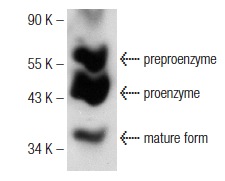
Western blot analysis of LOX expression in WI 38 whole cell lysate.Application
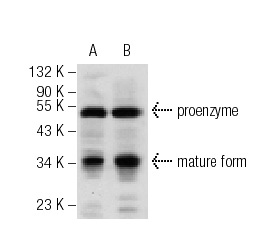
Western blot analysis of LOX expression in CHO (A) and JAR (B) whole cell lysates.| Product Name | LOX Antibody (H-140) |
|---|---|
| Antibody Type | Primary Antibodies |
| Antigen Alias | epitope corresponding to amino acids 71-210 mapping within an internal region of LOX of human origin |
| Modification Notes | The lysyl oxidase family of extracellular proteins includes LOX and four LOX-like enzymes, which are responsible for the deamination of peptidyl lysine residues of collagens and elastin. They also catalyze inter- and intra-crosslinking reactions. Overexpression of LOX may cause severe fibrotic degeneration due to its high resistance to degradative enzymes. Procollagen C-proteinase activity processes LOX from a precursor protein to a mature form. Activation of LOX occurs in normal developing and adult skin, and alterations in LOX expression and activity are associated with skin aging and senescence. LOX is crucial for development of the cardiovascular and respiratory systems. In addition, LOX plays a role in cancer, wound healing, as well as cell motility, chemotaxis and differentiation. |
| Clonality | Polyclonal |
|---|---|
| Isotype | IgG |
| Host Species | Rabbit |
| Tested Applications | WBIPIFELISA |
| recommended for detection of Lysyl oxidase of human > hamster origin by WB, IP, IF and ELISA: |
|
| Species Reactivity | HumanMouseRat |
| Concentration | 1mg/ml |
| Purification | Affinity purified |
| Alternative Names | epitope corresponding to amino acids 71-210 mapping within an internal region of LOX of human origin |
|---|---|
| Tissue Specificity | epitope corresponding to amino acids 71-210 mapping within an internal region of LOX of human origin |
| Entrez Gene | 4015 |
|---|
Application
Western blot analysis of LOX expression in WI 38 whole cell lysate.
Application
Western blot analysis of LOX expression in CHO (A) and JAR (B) whole cell lysates.| Application Notes | recommended for detection of Lysyl oxidase of human > hamster origin by WB, IP, IF and ELISA: |
|---|
| Form | Liquid |
|---|---|
| Storage Instructions | For short-term storage, store at 4° C. For long-term storage, aliquot and store at -20ºC or below. Avoid multiple freeze-thaw cycles. |
| Storage Buffer | phosphate buffered saline , pH 7.4, 150mM NaCl, 0.02% sodium azide and 50% glycerol. |


