Application
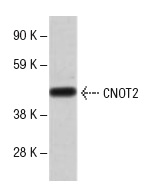
Western blot analysis of ITM1 expression in HEK293 (A) and K-562 (B) whole cell lysates.| Product Name | ITM1 Antibody (H-79) |
|---|---|
| Antibody Type | Primary Antibodies |
| Antigen Alias | epitope corresponding to amino acids 407-485 mapping within an internal region of ITM1 of human origin |
| Modification Notes | ITM1 (integral membrane protein 1), also known as TMC (transmembrane protein TMC) or STT3A (STT3, subunit of the oligosaccharyltransferase complex, homolog A), is a member of the STT3 family of proteins. Predominantly expressed in liver, pancreas, muscle, placenta and skin fibroblasts, ITM1 is a multi-pass membrane protein that localizes to the membrane of the endoplasmic reticulum (ER). ITM1 is one of two multicellular eukaryotic homologs of the S. cerevisiae protein Stt3, an essential component of the yeast OST (oligosaccharyltransferase) complex. Both homologs (ITM1 and SIMP) are glycosylated and function as the catalytic component of the mammalian OST complex which is responsible for catalyzing the transfer of a high mannose oligosaccharide to an asparagine residue in nascent proteins that enter the lumen of the ER. Using lipid-linked oligosaccharides as donors, the OST complex specifically transfers the oligosaccharide to the asparagine residue in an Asn-X-Ser/Thr consensus motif (X is any amino acid excluding proline). Compared with SIMP, ITM1 is less active but also more selective in terms of substrates. |
| Clonality | Polyclonal |
|---|---|
| Isotype | IgG |
| Host Species | Rabbit |
| Tested Applications | WBIPIFELISA |
| recommended for detection of ITM1 of mouse, rat and human origin by WB, IP, IF and ELISA also reactive with additional species, including equine, canine, bovine and porcine: |
|
| Species Reactivity | HumanMouseRat |
| Concentration | 1mg/ml |
| Purification | Affinity purified |
| Alternative Names | epitope corresponding to amino acids 407-485 mapping within an internal region of ITM1 of human origin |
|---|---|
| Tissue Specificity | epitope corresponding to amino acids 407-485 mapping within an internal region of ITM1 of human origin |
Application
Western blot analysis of ITM1 expression in HEK293 (A) and K-562 (B) whole cell lysates.| Application Notes | recommended for detection of ITM1 of mouse, rat and human origin by WB, IP, IF and ELISA also reactive with additional species, including equine, canine, bovine and porcine: |
|---|
| Form | Liquid |
|---|---|
| Storage Instructions | For short-term storage, store at 4° C. For long-term storage, aliquot and store at -20ºC or below. Avoid multiple freeze-thaw cycles. |
| Storage Buffer | phosphate buffered saline , pH 7.4, 150mM NaCl, 0.02% sodium azide and 50% glycerol. |


