Application
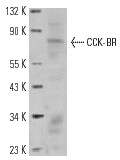
Western blot analysis of CCK-BR expression in mouse brain tissue extract.| Product Name | CCK-BR Antibody (H-85) |
|---|---|
| Antibody Type | Primary Antibodies |
| Antigen Alias | epitope corresponding to amino acids 1-85 mapping at the N-terminus of CCK-BR of human origin |
| Modification Notes | Gastrin is responsible for the stimulation of various digestive functions (1). In response to gastrin, the stomach mucosa produces and secretes hydrochloric acid, and the pancreas secretes digestive enzymes (1). Gastrin also stimulates smooth muscle contraction and increases blood circulation and water secretion in the stomach and intestine (1). In the brain, cholecystokinin (CCK) is a neurotransmitter that is involved in satiety, stress and anxiety (2,3). CCK is expressed in the gastrointestinal (GI) system as well as the central nervous system (CNS), which provides further evidence that CCK modulates food consumption (2,4). Both CCK and gastrin mediate their effects through two G protein coupled receptors, CCK-AR and CCK-BR (2-4). CCK preferentially binds CCK-AR with high affinity, whereas CCK-BR binds to gastrin and CCK with nearly equal affinities (3,5,6). The cholecystokinin receptors and their ligands are potential therapeutic targets for GI or CNS diseases (2,4). |
| Clonality | Polyclonal |
|---|---|
| Isotype | IgG |
| Host Species | Rabbit |
| Tested Applications | WBIPIFELISA |
| recommended for detection of CCK-BR of mouse, rat and human origin by WB, IP, IF and ELISA also reactive with additional species, including equine, canine and bovine: |
|
| Species Reactivity | HumanMouseRat |
| Concentration | 1mg/ml |
| Purification | Affinity purified |
| Alternative Names | epitope corresponding to amino acids 1-85 mapping at the N-terminus of CCK-BR of human origin |
|---|---|
| Tissue Specificity | epitope corresponding to amino acids 1-85 mapping at the N-terminus of CCK-BR of human origin |
| Entrez Gene | 887 |
|---|
Application
Western blot analysis of CCK-BR expression in mouse brain tissue extract.| Application Notes | recommended for detection of CCK-BR of mouse, rat and human origin by WB, IP, IF and ELISA also reactive with additional species, including equine, canine and bovine: |
|---|
| Form | Liquid |
|---|---|
| Storage Instructions | For short-term storage, store at 4° C. For long-term storage, aliquot and store at -20ºC or below. Avoid multiple freeze-thaw cycles. |
| Storage Buffer | phosphate buffered saline , pH 7.4, 150mM NaCl, 0.02% sodium azide and 50% glycerol. |


