Application
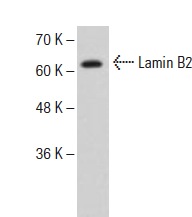
Western blot analysis of Lamin B2 expression in Jurkat whole cell lysate.| Product Name | Lamin B2 Antibody (O-22) |
|---|---|
| Antibody Type | Primary Antibodies |
| Antigen Alias | recommended for detection of Lamin B2 of human origin by WB, IP and ELISA |
| Modification Notes | A unique family of Cysteine proteases has been described that differs in sequence, structure and substrate specificity from any previously described protease family. This family, termed CED-3/ICE, functions as key components of the apoptotic machinery and act to destroy specific target proteins which are critical to cellular longevity. Nuclear lamins are critical to maintaining the integrity of the nuclear envelope and cellular morphology as components of the nuclear lamina, a fibrous layer on the nucleoplasmic side of the inner nuclear membrane, which is thought to provide a framework for the nuclear envelope and may also interact with chromatin. B-type lamins undergo a series of modifications, such as farnesylation and phosphorylation. Increased phosphorylation of the lamins occurs before envelope disintegration and probably plays a role in regulating lamin associations. Nuclear Lamin B is fragmented as a consequence of apoptosis by an unidentified member of the ICE family. |
| Clonality | Polyclonal |
|---|---|
| Isotype | IgG |
| Host Species | Rabbit |
| Tested Applications | WBIPELISA |
| WB:1:500~1:2000 IP:1:100~1:500 Notes:Optimal dilutions/concentrations should be determined by the researcher. |
|
| Species Reactivity | HumanMouseRat |
| Concentration | 1mg/ml |
| Purification | Affinity purified |
| Alternative Names | recommended for detection of Lamin B2 of human origin by WB IP and ELISA |
|---|---|
| Tissue Specificity | recommended for detection of Lamin B2 of human origin by WB, IP and ELISA |
| Entrez Gene | 84823 |
|---|
Application
Western blot analysis of Lamin B2 expression in Jurkat whole cell lysate.| Application Notes | WB:1:500~1:2000 IP:1:100~1:500 Notes:Optimal dilutions/concentrations should be determined by the researcher. |
|---|
| Form | Liquid |
|---|---|
| Storage Instructions | For short-term storage, store at 4° C. For long-term storage, aliquot and store at -20ºC or below. Avoid multiple freeze-thaw cycles. |
| Storage Buffer | phosphate buffered saline , pH 7.4, 150mM NaCl, 0.02% sodium azide and 50% glycerol. |


