Application
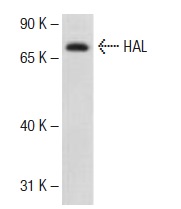
Western blot analysis of HAL expression in human fetal liver tissue extract.Application
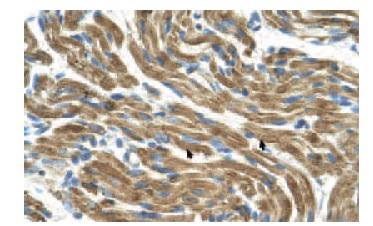
Immunoperoxidase staining of formalin-fixed, paraffin-embedded human muscle tissue showing cytoplasmic localization.| Product Name | HAL Antibody (V-21) |
|---|---|
| Antibody Type | Primary Antibodies |
| Antigen Alias | recommended for detection of HAL of mouse, rat and human origin by WB, IP, IF, IHC(P) and ELISA |
| Modification Notes | HAL (histidine ammonia-lyase), also known as histidase, HIS or HSTD, is a 657 amino acid protein that belongs to the PAL/histidase family. Considered a cytosolic enzyme, HAL catalyzes the first reaction in histidine catabolism, the non-oxidative deamination of L-histidine to trans-urocanic acid. Urocanic acid is the main ultraviolet (UV) light absorption factor of the stratum corneum of the skin. Defects in the gene encoding HAL causes histidinemia, also referred to as histidinuria. Histidinemia is an autosomal recessive disease characterized by increased levels of histidine, histamine and imidazole in blood, urine and cerebrospinal fluid. Histidinemia also results in decreased levels of the metabolite urocanic acid in blood, urine, and skin cells. Tryptophan and 1-methyltryptophan are strong inhibitors of HAL. |
| Clonality | Polyclonal |
|---|---|
| Isotype | IgG |
| Host Species | Rabbit |
| Tested Applications | WBIPIFIHCELISA |
| WB:1:500~1:2000 IP:1:100~1:500 IF:1:200~1:500 IHC:1:50~1:200 Notes:Optimal dilutions/concentrations should be determined by the researcher. |
|
| Species Reactivity | HumanMouseRat |
| Concentration | 1mg/ml |
| Purification | Affinity purified |
| Alternative Names | recommended for detection of HAL of mouse rat and human origin by WB IP IF IHC(P) and ELISA |
|---|---|
| Tissue Specificity | recommended for detection of HAL of mouse, rat and human origin by WB, IP, IF, IHC(P) and ELISA |
| Entrez Gene | 3034 |
|---|
Application
Western blot analysis of HAL expression in human fetal liver tissue extract.
Application
Immunoperoxidase staining of formalin-fixed, paraffin-embedded human muscle tissue showing cytoplasmic localization.| Application Notes | WB:1:500~1:2000 IP:1:100~1:500 IF:1:200~1:500 IHC:1:50~1:200 Notes:Optimal dilutions/concentrations should be determined by the researcher. |
|---|
| Form | Liquid |
|---|---|
| Storage Instructions | For short-term storage, store at 4° C. For long-term storage, aliquot and store at -20ºC or below. Avoid multiple freeze-thaw cycles. |
| Storage Buffer | phosphate buffered saline , pH 7.4, 150mM NaCl, 0.02% sodium azide and 50% glycerol. |


