Application
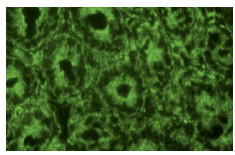
Immunofluorescence staining of normal mouse intestine frozen section showing membrane staining.| Product Name | P2Y7 Antibody (H-165) |
|---|---|
| Antibody Type | Primary Antibodies |
| Antigen Alias | epitope corresponding to amino acids 111-275 of P2Y7 of human origin |
| Modification Notes | Nucleotides are important extracellular signaling molecules that mediate several events, such as cell proliferation, differentiation, chemotaxis and cytokine release. The P2 receptor family is activated by the binding of nucleotides and is divided into two subfamilies, designated P2X and P2Y. The P2Y receptor family are G protein-coupled receptors that mediate the effects of extracellular nucleotides, primarily through the activation of phospholipase C (PLC). To some extent, the P2Y receptors can also activate potassium channels or, alternatively, inhibit adenylate cyclase and N-type calcium channels in response to extracellular nucleotides. P2Y7 (leukotriene B4 receptor 1), also known as leukotriene B4 receptor 1 (LTB4-R1), chemoattractant receptor-like 1 or GPR16 (G-protein coupled receptor 16), is a 352 amino acid multi-pass membrane protein that belongs to the G-protein coupled receptor 1 family and functions as an extracellular receptor for ATP, UTP and ADP. P2Y7 is highly expressed in heart where it regulates muscle contraction via L-type calcium current modulation. |
| Clonality | Polyclonal |
|---|---|
| Isotype | IgG |
| Host Species | Rabbit |
| Tested Applications | WBIPIFELISA |
| recommended for detection of P2Y7 of mouse, rat and human origin by WB, IP, IF and ELISA: |
|
| Species Reactivity | HumanMouseRat |
| Concentration | 1mg/ml |
| Purification | Affinity purified |
| Alternative Names | epitope corresponding to amino acids 111-275 of P2Y7 of human origin |
|---|---|
| Tissue Specificity | epitope corresponding to amino acids 111-275 of P2Y7 of human origin |
| Entrez Gene | 1241 |
|---|
Application
Immunofluorescence staining of normal mouse intestine frozen section showing membrane staining.| Application Notes | recommended for detection of P2Y7 of mouse, rat and human origin by WB, IP, IF and ELISA: |
|---|
| Form | Liquid |
|---|---|
| Storage Instructions | For short-term storage, store at 4° C. For long-term storage, aliquot and store at -20ºC or below. Avoid multiple freeze-thaw cycles. |
| Storage Buffer | phosphate buffered saline , pH 7.4, 150mM NaCl, 0.02% sodium azide and 50% glycerol. |


