Application
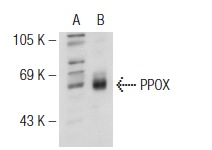
Western blot analysis of PPOX expression in non-transfected: (A) and mouse PPOX transfected: (B) 293T whole cell lysates.| Product Name | PPOX Antibody (H-180) |
|---|---|
| Antibody Type | Primary Antibodies |
| Antigen Alias | epitope corresponding to amino acids 298-477 mapping at the C-terminus of PPOX of human origin |
| Modification Notes | Protoporphyrinogen oxidase, the penultimate enzyme in the heme biosynthetic pathway, catalyzes the 6-electron oxidation of protoporphyrinogen IX to form protoporphyrin IX. The PPOX protein localizes to the inner membrane of mitochondria from various tissues, including heart, brain, placenta, lung, liver, skeletal muscle, kidney and pancreas. Genetic deficiency of PPOX results in variegate porphyria, a low penetrance, autosomal dominant disorder characterized by cutaneous photosensitivity and/or various neurological manifestations. The rare homozygous variant of VP is characterized by severe PPOX deficiency, and results in the onset of photosensitization by porphyrins in early childhood, skeletal abnormalities of the hand, and, less constantly, short stature, mental retardation and convulsions. |
| Clonality | Polyclonal |
|---|---|
| Isotype | IgG |
| Host Species | Rabbit |
| Tested Applications | WBIPIFELISA |
| recommended for detection of PPOX of mouse, rat and human origin by WB, IP, IF and ELISA also reactive with additional species, including equine, canine, bovine and porcine: |
|
| Species Reactivity | HumanMouseRat |
| Concentration | 1mg/ml |
| Purification | Affinity purified |
| Alternative Names | epitope corresponding to amino acids 298-477 mapping at the C-terminus of PPOX of human origin |
|---|---|
| Tissue Specificity | epitope corresponding to amino acids 298-477 mapping at the C-terminus of PPOX of human origin |
| Entrez Gene | 5498 |
|---|
Application
Western blot analysis of PPOX expression in non-transfected: (A) and mouse PPOX transfected: (B) 293T whole cell lysates.| Application Notes | recommended for detection of PPOX of mouse, rat and human origin by WB, IP, IF and ELISA also reactive with additional species, including equine, canine, bovine and porcine: |
|---|
| Form | Liquid |
|---|---|
| Storage Instructions | For short-term storage, store at 4° C. For long-term storage, aliquot and store at -20ºC or below. Avoid multiple freeze-thaw cycles. |
| Storage Buffer | phosphate buffered saline , pH 7.4, 150mM NaCl, 0.02% sodium azide and 50% glycerol. |


