IHC
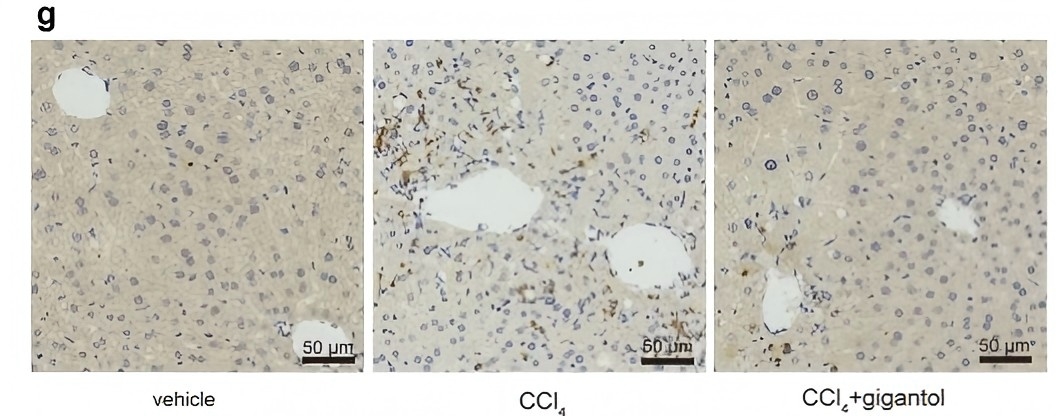
g Representative images of immunohistological staining showing C9 expression in the livers of mice.| Product Name | C9 Antibody (H-210) |
|---|---|
| Antibody Type | Primary Antibodies |
| Modification Notes | C9 is a plasma protein synthesized in the liver and monocytes consisting of a single polypeptide chain. C9 is a part of the membrane attack complex (MAC), an important component of the immune system. The MAC forms upon complement system activation by invading pathogenic bacteria and consists of the four major complement proteins: C5b, C6, C7 and C8. These complement proteins bind to the outer surface of the plasma membrane of the invading cell. C9 binds to the membrane associated C5b-8 protein, which leads to the circular polymerization of 12-18 C9 molecules. These polymerized C9 molecules form a ring structure in the membrane. Molecules can then diffuse freely through this transmembrane channel, causing cell lysis and destruction of the invading bacterial cell. |
| Clonality | Polyclonal |
|---|---|
| Isotype | IgG |
| Host Species | Rabbit |
| Tested Applications | ELISAIFIHCIPWB |
| recommended for detection of C9 of human origin by WB, IP, IF and ELISA also reactive with additional species, including equine: |
|
| Species Reactivity | HumanMouseRat |
| Concentration | 1mg/ml |
| Purification | Affinity purified |
| Alternative Names | epitope corresponding to amino acids 350-559 mapping at the C-terminus of C9 of human origin |
|---|---|
| Tissue Specificity | epitope corresponding to amino acids 350-559 mapping at the C-terminus of C9 of human origin |
| Entrez Gene | 735 |
|---|
IHC
g Representative images of immunohistological staining showing C9 expression in the livers of mice.| Application Notes | recommended for detection of C9 of human origin by WB, IP, IF and ELISA also reactive with additional species, including equine: |
|---|
| Form | Liquid |
|---|---|
| Storage Instructions | For short-term storage, store at 4° C. For long-term storage, aliquot and store at -20ºC or below. Avoid multiple freeze-thaw cycles. |
| Storage Buffer | phosphate buffered saline , pH 7.4, 150mM NaCl, 0.02% sodium azide and 50% glycerol. |


