Application
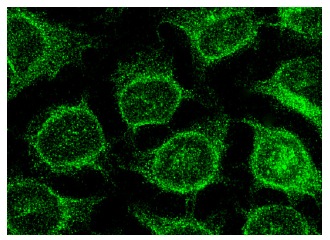
Immunofluorescence staining of methanol-fixed HeLa cells showing cytoplasmic localization.| Product Name | MDA5 Antibody (H-61) |
|---|---|
| Antibody Type | Primary Antibodies |
| Antigen Alias | epitope corresponding to amino acids 957-1017 mapping near the C-terminus of MDA5 of human origin |
| Modification Notes | The gene that encodes MDA5 (interferon induced with helacase C domain protein 1, IFIH1, melanoma differentiation-associated gene 5) is induced during differentiation, cancer reversion, and programmed cell death (apoptosis) and contains both a caspase recruitment domain and supposed DExH group RNA helicase domains. The irregular helicase motifs of MDA5 avert from consensus sequences but are well conserved in a potentially new group of cloned and hypothetical proteins. MDA5 is an early response gene which is activated by IFN and tumor necrosis factor å, and responds primarily to IFN-∫. Expression of MDA5 is upregulated in the presence of MEZ (a protein kinase C activating compound). Expression of MDA5 in tissues is low overall, with highest levels observed in the placenta, pancreas and spleen; MDA5 is undetectable in brain, lung and testis tissues. MDA5 also recognizes polyinosine-polycytidylic acid and RNA viruses while playing a critical role in picornavirus detection. |
| Clonality | Polyclonal |
|---|---|
| Isotype | IgG |
| Host Species | Rabbit |
| Tested Applications | WBIPIFELISA |
| recommended for detection of MDA5 isoform 1 of m and h origin by WB, IP, IF and ELISA also reactive with additional species, including equine, canine, bovine and porcine: |
|
| Species Reactivity | HumanMouseRat |
| Concentration | 1mg/ml |
| Purification | Affinity purified |
| Alternative Names | epitope corresponding to amino acids 957-1017 mapping near the C-terminus of MDA5 of human origin |
|---|---|
| Tissue Specificity | epitope corresponding to amino acids 957-1017 mapping near the C-terminus of MDA5 of human origin |
Application
Immunofluorescence staining of methanol-fixed HeLa cells showing cytoplasmic localization.| Application Notes | recommended for detection of MDA5 isoform 1 of m and h origin by WB, IP, IF and ELISA also reactive with additional species, including equine, canine, bovine and porcine: |
|---|
| Form | Liquid |
|---|---|
| Storage Instructions | For short-term storage, store at 4° C. For long-term storage, aliquot and store at -20ºC or below. Avoid multiple freeze-thaw cycles. |
| Storage Buffer | phosphate buffered saline , pH 7.4, 150mM NaCl, 0.02% sodium azide and 50% glycerol. |


