Application
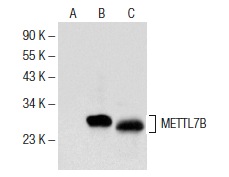
Western blot analysis of METTL7B expression in non-transfected: (A) and human METTL7B transfected: (B) 293T whole cell lysates and mouse liver tissue extract (C).| Product Name | METTL7B Antibody (E-14) |
|---|---|
| Antibody Type | Primary Antibodies |
| Antigen Alias | epitope mapping near the C-terminus of METTL7B of human origin |
| Modification Notes | METTL7B (methyltransferase-like protein 7B) is a 244 amino acid protein belonging to the methyltransferase superfamily. METTL7B is believed to have methyltransferase activity, wherein METTL7B catalyzes the transfer of a methyl group from one compound to another. The gene that encodes METTL7B maps to chromosome 12 which makes up about 4.5% of the human genome. A number of skeletal deformities are linked to chromosome 12 including hypochondrogenesis, achondrogenesis and Kniest dysplasia. Chromosome 12 is also home to a homeobox gene cluster which encodes crucial transcription factors for morphogenesis, and the natural killer complex gene cluster encoding C-type lectin proteins which mediate the NK cell response to MHC I interaction. Trisomy 12p leads to facial development defects, seizure disorders and a host of other symptoms varying in severity depending on the extent of mosaicism and is most severe in cases of complete trisomy. |
| Clonality | Polyclonal |
|---|---|
| Isotype | IgG |
| Host Species | Rabbit |
| Tested Applications | WBIPIFELISA |
| recommended for detection of METTL7B of mouse, rat and human origin by WB, IP, IF and ELISA non cross-reactive with METTL7A also reactive with additional species, including canine and bovine: |
|
| Species Reactivity | HumanMouseRat |
| Concentration | 1mg/ml |
| Purification | Affinity purified |
| Alternative Names | epitope mapping near the C-terminus of METTL7B of human origin |
|---|---|
| Tissue Specificity | epitope mapping near the C-terminus of METTL7B of human origin |
| Entrez Gene | 196410 |
|---|
Application
Western blot analysis of METTL7B expression in non-transfected: (A) and human METTL7B transfected: (B) 293T whole cell lysates and mouse liver tissue extract (C).| Application Notes | recommended for detection of METTL7B of mouse, rat and human origin by WB, IP, IF and ELISA non cross-reactive with METTL7A also reactive with additional species, including canine and bovine: |
|---|
| Form | Liquid |
|---|---|
| Storage Instructions | For short-term storage, store at 4° C. For long-term storage, aliquot and store at -20ºC or below. Avoid multiple freeze-thaw cycles. |
| Storage Buffer | phosphate buffered saline , pH 7.4, 150mM NaCl, 0.02% sodium azide and 50% glycerol. |


